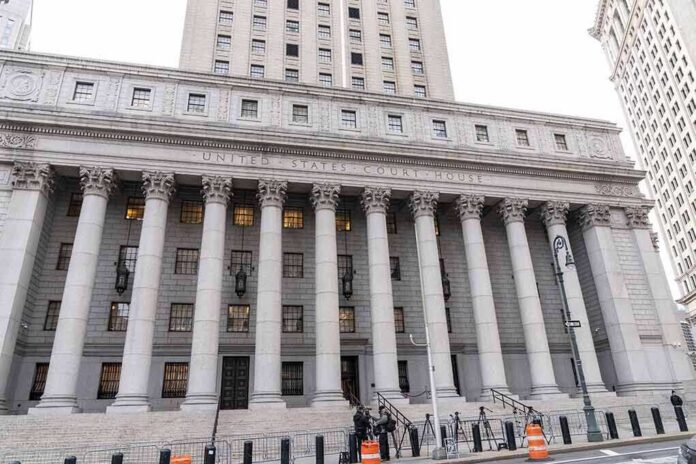
Police arrested a 56-year-old Massachusetts woman outside the Lindsay Clancy trial after she allegedly tried to film jurors, raising fresh fears about a mistrial as deliberations drag on.
Story Snapshot
- State Police arrested Dawn Light, 56, outside the Plymouth courthouse during the Clancy trial.
- Prosecutors charged her with intimidation of a witness or juror under Massachusetts law.
- Jurors have struggled to reach a verdict after days of deliberation.
- Court leaders tighten controls to shield jurors in high-profile cases.
An Arrest At The Courthouse Steps, And A Jury Under Strain
Massachusetts State Police took Dawn Light of Sutton into custody around mid-afternoon outside the Plymouth courthouse where the Lindsay Clancy murder trial continues. Reports say she tried to photograph or film jurors as they left or moved about the building. The Boston Herald identified Light and the approximate time of the arrest, placing the incident squarely at the courthouse during ongoing deliberations. The Patriot Ledger reported that Light faces a charge tied to intimidation of a witness or juror.
Police and courts treat recording jurors as a serious threat to a fair trial. State guidance teaches that pointing a phone camera toward a participant can qualify as intimidation because it can chill a person’s willingness to serve or speak honestly. The risk is not only what someone intends, but what a juror might reasonably fear. Jurors who believe they are being tracked may shut down, rush, or bend to outside pressure. That undermines the entire process.
What The Law Says About Juror Intimidation
Massachusetts law covers intimidation of a witness, juror, court official, or law enforcement officer. Courts have long recognized that photographing a participant can send a message: we know who you are; we can find you later. That is why many judges ban recording devices anywhere near jurors and enforce strict hallway rules when trials become media magnets. Federal court leaders explain that high-profile trials require extra steps to protect jurors from contact and harassment, both real and perceived.
These guardrails do not exist to coddle juries. They protect the defendant’s right to a fair trial and the public’s trust in the verdict. When a person aims a camera at a juror, it blurs the line between public access and intimidation. On that line, courts will choose safety first. That choice aligns with common sense and with a basic conservative instinct: keep the process clean so the outcome can stand.
Deadlock Pressure And The Mistrial Shadow
The Clancy jury has signaled difficulty reaching a unanimous decision, and the court has sent them home on multiple days after long sessions. Outside noise during a deadlock phase is gasoline near a match. Even a hint that jurors are under watch can harden doubt or rush compromise. Local coverage tied Light’s arrest to the jury’s movements and to the broader security push around the case, which has drawn steady crowds and tight rules in the courthouse corridors.
The judge in the Lindsay Clancy murder trial opened court Wednesday with a pointed warning that the rules governing conduct in the case are being enforced, a day after Massachusetts State Police announced an arrest outside the courthouse on a witness intimidation charge.
"I just…
— Alec Nolan (@AlecOnFOX7) September 2, 2026
The path forward remains with the judge. If contact with jurors is proven and deemed harmful, the court can question jurors, issue fresh instructions, or in the most serious case, declare a mistrial. That choice would weigh the scale of the contact and the jurors’ stated ability to stay fair. Appellate decisions show courts give wide berth to security steps that calm juror fears, including escorts and restricted access, because a safe jury is a reliable jury.
Hold The Line: Firm Enforcement Protects Every Side
Law enforcement sent a clear message by moving fast on the courthouse steps. If the facts hold, this arrest reinforces a basic rule: you can watch justice in public, but you cannot put your phone in a juror’s face. That is not a speech issue; that is a fairness issue. Respect the box, respect the verdict. The Clancy case will be judged by evidence, not by fear. Strong security and swift charges are how courts keep it that way.
Sources:
nypost.com, bostonherald.com, coastalabc.com, youtube.com, boston.com
© patriotnewsdaily.com 2026. All rights reserved.