Ukraine says a six-rotor drone lifted a wounded soldier off the front line and saved his life.
Story Snapshot
- Ukraine’s 92nd Brigade released video of an aerial casualty pickup and called the mission a success.
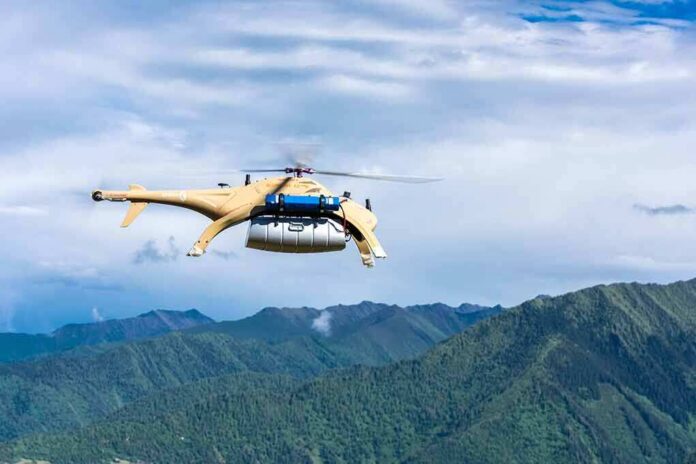
- The aircraft was named: Ayudag-6, a heavy hexacopter built by Gurzuf Defence, used with multiple Ukrainian units.
- Ground routes were reportedly blocked by mines and hostile drone activity, prompting the air lift.
- Experts and even the maker warn this is not yet a routine method and carries real risk.
What Ukraine Says Happened, And Why It Matters
Ukraine’s 92nd Separate Assault Brigade says it used a heavy-lift drone to evacuate a wounded infantryman from a front-line position. The unit posted video and said the soldier was moved to safety for onward care, and that his life is not in danger. Reports identify the drone as the Ayudag-6, built by Ukraine’s Gurzuf Defence, and cite support from the 30th Separate Mechanized Brigade and the 10th Army Corps. Several outlets covered the claim on October 19–20, 2026.
Ukraine’s stated reason was simple and grim. The brigade said mines and hostile drones made ground extraction impossible. That problem is common on today’s battlefield, where cheap eyes in the sky hunt anything that moves. A drone that can lift a person changes the rescue math at short range. It removes a stretcher team from the kill zone and cuts time. That is the tactical promise on display, if the method proves repeatable.
The Hardware And The Limits We Can Infer
The Ayudag-6 is a heavy hexacopter, which means six rotors share the load. That design spreads lift and adds some fault tolerance. The mission likely used a sling or winch and a simple harness, as seen in posted footage. Payload, battery life, and electronic warfare hardening set the ceiling for this concept. Public reports describe one completed lift, not a flight log of many sorties. No open data show range, weather limits, or jamming resilience yet.
The manufacturer’s voice urges caution. Gurzuf Defence co-founder Pavlo Feldblium said planners should not treat aerial evacuation as routine. Each mission needs its own plan and risk check. That sober guidance lines up with common sense: a slow, low drone is easy to see, hear, and target. The winch process also takes time near the ground. These factors suggest the method fits niche cases where cover, timing, and enemy activity line up well for a short hop.
Claimed “First,” Public Proof, And What’s Still Missing
Outlets framed this as Ukraine’s claim of a world first. That is careful wording, and it is fair. The video shows a lift, and Ukraine names the units and maker. But no public record verifies every step of the chain, from pickup to handoff to hospital. The patient’s identity, injury, and medical outcome are not confirmed by independent records. One report also noted the “first” description had not been independently verified.
Prudent readers should separate two points. First, the report that a drone evac happened in combat, backed by video and unit statements. Second, the bigger claim that this is the first in history. The first point stands on public evidence and wide coverage. The second needs historical proof. Prior militaries have tested unmanned lifts with dummies or different aircraft categories, which makes “first” depend on how you define it. That does not erase the feat; it narrows it.
Combat Reality Check And The Conservative Read
Drone warfare analyst Samuel Bendett warned that large, slow drones are soft targets and that Russian forces spend real effort to hunt heavy-lift aircraft. That view matches battlefield logic and should temper hype. A smart force tests, measures, and scales only when results hold up in the worst conditions. American conservative values prize results, accountability, and cost-effectiveness. By that yardstick, this rescue is promising but unproven at scale.
Ukraine conducts first drone airlift of wounded soldier from front line
The Ukrainian armed forces disclosed footage that they say shows the world’s first drone airlift of a wounded soldier directly from the front line. The operation was carried out by the 92nd Assault Brigade,…
— AiSeek (@Ai__Seek) October 20, 2026
Here is the practical next step. Ukraine can release redacted telemetry, geolocation, and timed launch-to-landing tracks to strengthen the public record. It can run controlled trials to chart payload margins, landing accuracy, and jamming resistance. Commanders can compare this method with ground robots, manned vehicles, and stretcher teams on speed, risk, and cost. If the data show better survival with acceptable risk, commanders will not need headlines to be convinced.
Sources:
en.lb.ua, france24.com, kyivindependent.com, independent.co.uk, pravda.com.ua
© patriotnewsdaily.com 2026. All rights reserved.