France is absorbing nationwide riots with mass arrests and burned schools—yet still refusing a national emergency.
Story Snapshot
- About 5,000 people detained and hundreds of schools shut or disrupted.
- Fires, clashes, and vandalism erupted alongside large peaceful marches.
- Officials stress proportionate policing and listening to students’ demands.
- Injuries mounted among students and police, heightening pressure on Paris.
What Happened And Why It Matters
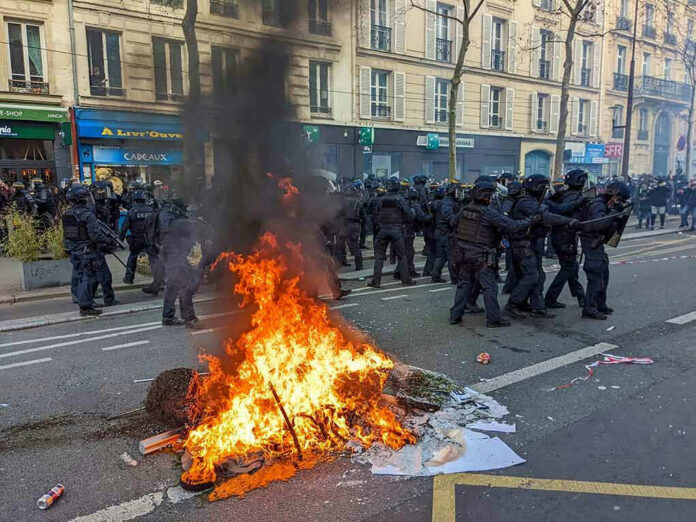
Interior officials counted roughly 5,000 detentions within days, with most involving teenagers, as protests over school conditions spread across France. Education disruptions grew fast. Authorities closed or heavily constrained operations at hundreds of high schools while staff assessed safety and damage. Street scenes mixed peaceful crowds with hot spots of violence. Some rioters torched bus shelters and attacked police, while firefighters battled school blazes in multiple towns. The core grievance stayed focused on failing schools, not ideology.
Protest numbers reached a quarter million nationwide, according to government estimates, while Paris saw tens of thousands march. Police and gendarmes took injuries in the hundreds as they tried to break blockades and stop arson. Students and bystanders were hurt too, including a reported case of a 15-year-old who lost a hand during clashes in Lens, a grave marker in a tense week. The result felt like a country trying to keep routine life going while hallways and courtyards turned into front lines.
Why No National Emergency
French leaders framed the answer in one word: proportionality. Officials said they would preserve peaceful protest while moving hard against violence, vandalism, and blockades that shut down schools. The Interior Minister described orders to intervene when there was serious violence and to do so with restraint. The Prime Minister urged listening to students’ demands and seeking fixes. That stance makes sense when crowds are mixed and many marches are peaceful, yet it strains when classrooms burn and police fill hospitals.
History hangs over every choice. In 2005, France used the 1955 emergency law to curb suburban riots, enabling curfews and broad searches. That tool carries heavy baggage from colonial times and modern terror fights. Each use widens the state’s reach and sets precedent. Today’s government appears keen to show that ordinary law, not special powers, can still keep order while it tackles school decay and staff shortages. The gamble is clear: contain violence without branding students as enemies of the state.
The Scale Versus The Signal
The counts tell a messy story. Media and ministries cite between about 5,000 and more than 6,000 arrests or detentions across different periods, and between roughly 400 and almost 900 schools disrupted or closed. Such gaps occur in fast-moving crises, but they also let each side pick a number that suits its case. What does not change is the footprint: large crowds nationwide, pockets of real violence, serious property loss, and hundreds of injuries among police and youth.
France in flames.
Riots in more than 20 French cities.
Chaos explodes nationwide as streets turn into battlegrounds.
Widespread looting, arson and vandalism.
Emergency responders under siege.
This crisis is escalating rapidly. pic.twitter.com/T3jWF3pXD6
— Michael Snyder (@Revelation1217) October 18, 2026
Claims that extremists or foreign-backed groups led the riots remain unproven in the available reporting. Outlets and officials point first to education failures, crowded classes, absent teachers, and aging buildings. That picture tracks with common sense. Schools break; teens push back. Yet responsibility for arson and assaults still needs clear charges and trials. A society that excuses criminal acts because the crowd is young invites more fires. A state that ignores peaceful students invites more rage.
What A Conservative Lens Sees
Public order is not optional. The state must protect kids who want to learn, shopkeepers who want to open, and commuters who need roads clear. That means fast arrests for violence and real penalties that stick. At the same time, order without trust fails. Fixing broken schools is basic governance. Leaders should publish a clean ledger: where arrests happened, what charges were filed, what schools burned, and what repairs start this month. Sunlight calms rumor and sharpens accountability.
The Smart Path Forward
France can show strength without overreach. Keep arrests focused on arson, assaults, and blockades. Speed charges in open court. Release weekly data that reconciles detentions, prosecutions, and outcomes by city. Fund urgent school repairs and hire substitute teachers now, not next spring. Set a public bar for when emergency powers would trigger, tied to clear metrics. Citizens tolerate firm policing when leaders are candid about facts, fair about causes, and fast about fixes.
Sources:
townhall.com, npr.org, reuters.com, bbc.com, cnbc.com, afp.com, nbcnews.com, itv.com, bbc.co.uk, academic.oup.com
© patriotnewsdaily.com 2026. All rights reserved.