A Florida city followed its own agenda, invited a Muslim imam to pray, and the room erupted before order—and the prayer—won out.
Story Snapshot
- The Bartow City Commission formally called an imam to give the opening prayer.
- Some attendees shouted and recited the Lord’s Prayer over him before officials paused proceedings.
- The imam finished a civic-themed invocation after order was restored.
- A national group then urged the city to end prayers at meetings altogether.
The Agenda Was Set, And So Was The Storm
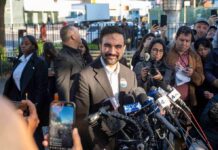
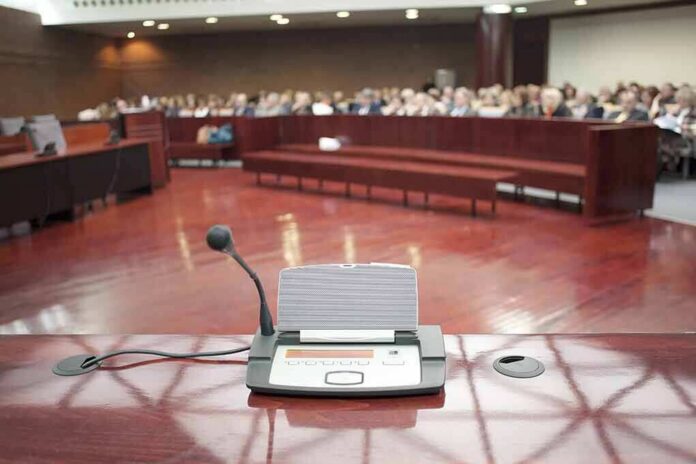
Bartow’s November 16 meeting began with a plan: call Imam Sajid R. Bhuiya for the opening invocation on the official agenda. The dais followed the schedule and asked him forward. Parts of the crowd did not agree. Shouts rose. Some recited the Lord’s Prayer on top of the imam’s words. Commissioners called for order and paused the meeting. The disruption grabbed headlines, but the record shows the city stuck to its plan and resumed when calm returned.
The city attorney had told the imam the prayer slot was open to any faith and matched the Constitution, according to the imam’s account. That point matters. The Supreme Court has said legislative bodies can open with prayer if they do not push one faith or slam another. Equal access is the guardrail. Process, not popularity, keeps it lawful. Bartow’s stated approach tracked that line on paper and in practice that night—let the scheduled speaker proceed.
What The Prayer Actually Said
The imam did not sermonize about doctrine. He asked for wisdom, fairness, justice, and compassion. He reminded the room that differences in background and faith should not block basic dignity and kindness. He prayed for safety and honest service. These are civic themes that fit the setting. People can still disagree about tone or timing, but the words aimed at shared virtues, not sectarian demands. That undercuts claims that the invocation itself crossed a line.
Officials reinforced that tone through action. They paused, urged decorum, and let the invitation stand. He finished the prayer to close the disruption loop. That sequence matters more than the clips online. Short videos push the most charged seconds. The full arc shows a government body using its rules to host the invited prayer without endorsing theology. It upheld both order and opportunity in the room that night.
Protest, Free Speech, And The Line Between Voice And Veto
Citizens Defending Freedom said Christians had a right to challenge teachings they see as clashing with human dignity, equality, religious liberty, and America’s founding ideals. That case lands on familiar ground: speak up, and speak boldly. That is welcome in public comment. But drowning out any speaker during the invocation crosses from speech to disruption. Common sense says robust debate works best when each side gets its turn, not when one side uses volume as a veto.
No religion in politics unless you're a Muslim? 🤬
An Imam attempted to deliver an Islamic prayer at a council meeting in Bartow, Florida before the audience members began to recite the Lord's prayer in unison in protest. pic.twitter.com/fISmCbjTun
— MarLa With a La (@marlawithala_la) November 20, 2026
Then came the blowback from another direction. The Freedom From Religion Foundation condemned the disruption and urged Bartow to scrap prayers at meetings. That would end the practice for everyone. Equal access would shrink to zero access. The law does not require that outcome. The Supreme Court has allowed opening prayers in towns that keep doors open to all and avoid attacks on any faith. Ending the practice would trade inclusion for silence without solving the core civics problem.
The Constitutional Centerline: Access, Not Preference
The Supreme Court’s Town of Greece decision upheld legislative prayer when the town welcomed many faiths, did not police prayer language, and did not pressure the audience. The point was tradition with neutrality. Translating that to city halls is straightforward: publish a fair process, rotate invitations, and enforce decorum so each invited voice is heard. Bartow’s stated “all faiths welcome” rationale fits that model if carried out over time.
Here is the conservative, constitutional north star: the government should not pick winners in religion, and citizens should not shut down lawful speech they dislike. That mix protects Christian prayer in many towns, allows a Jewish or Muslim prayer in others, and leaves room for a moment from a secular speaker. When process is neutral, tradition stands. When crowds override process, tradition breaks. Bartow’s choice to finish the prayer held the line that night.
What Leaders Should Do Next
Codify a simple, neutral invitation policy. Publish the schedule. Enforce time limits and decorum evenly. Give public comment space for objections after the invocation. Post the full video so the story does not belong to clips. Those steps shield prayer from partisanship and protect dissent without turning the room into a brawl. When everyone knows the rules and sees them enforced, faith and freedom can share the same dais—without shouting.
Sources:
thegatewaypundit.com, pembrokepinesflnews.com, hoodline.com, tampabay28.com, yahoo.com, x.com, wfla.com, almonline.org
© patriotnewsdaily.com 2026. All rights reserved.