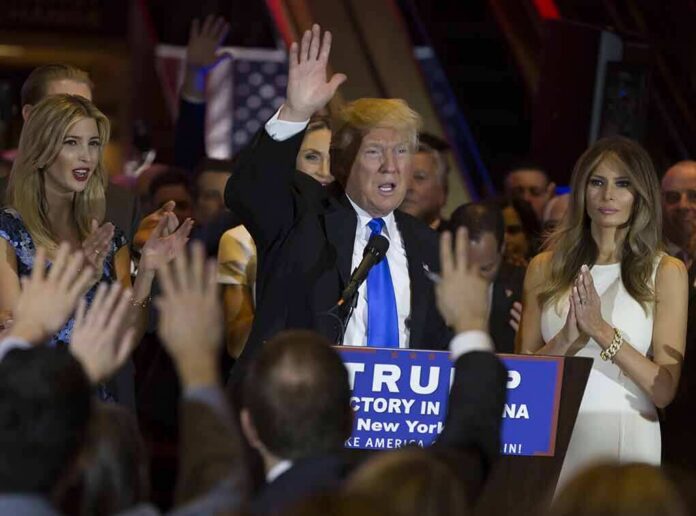
Nine days before Israelis vote, President Trump threw his full weight behind Benjamin Netanyahu’s comeback.
Story Snapshot
- Trump issued a “Complete and Total Endorsement” of Netanyahu on October 18, 2026.
- He praised Netanyahu as a “great partner for peace” against Iran and a security ally.
- The endorsement landed nine days before Israel’s October 27 national election.
- Netanyahu publicly thanked Trump and embraced the support on social media.
Trump’s Letter, Netanyahu’s Race, and the Clock
President Trump posted a formal letter endorsing Prime Minister Benjamin Netanyahu’s reelection on October 18, 2026. He called the Israeli leader a “Great Warrior Prime Minister, and an even greater Partner for Peace in combatting the Islamic Republic of Iran.” The message arrived with Israel’s vote less than two weeks away, putting a high-profile American stamp on a tight race. Major outlets documented the timing and wording as central facts of the intervention.
Trump framed the stakes around Iran and security cooperation. He linked Netanyahu’s leadership to joint efforts that, in his view, strengthen both nations. Coverage of the letter noted language warning that replacing Netanyahu could strain coordination against Iran, which Trump cast as a shared threat. The stress on peace-through-strength echoed language Trump has used for years when arguing that tough posture and clear alliances deter wider war, not invite it.
The Immediate Response From Jerusalem
Netanyahu publicly thanked Trump for the “tremendous support” and promised to “complete the mission” together. His campaign highlighted the endorsement as proof of steady ties with Washington during a volatile moment. The Israeli leader has long used American backing as a domestic validator, and this was no exception. The quick, on-record response also removed any guesswork about whether the endorsement was welcomed or shrugged off by the intended audience.
The embrace mattered because the race appeared close and emotions ran high. Israeli voters often weigh security first, then economics, then everything else. A visible pledge of U.S.-Israel alignment can sway undecided voters who worry about Iran, rocket fire, and regional shocks. While endorsements from abroad do not decide elections, they can sharpen contrasts and frame a choice in familiar, concrete terms: who keeps the country safest, and who keeps key allies close.
The Timing Whiplash and What It Signals
The move followed months of hedging. Reports show Trump had declined to endorse Netanyahu in the days prior, saying he had a good relationship with him but was not ready to commit. That changed with a swift, clear letter nine days before ballots were cast. The reversal drew attention because it created a before-and-after line that campaigns and commentators could easily draw on television and social media.
On the merits, the late timing looks strategic, not random. Issuing the endorsement close to election day ensures maximum relevance and minimal time for rivals to blunt it. It also matches a familiar playbook in U.S.-Israel politics: high-visibility gestures right before voting to rally core supporters and project stability. That pattern dates back decades and crosses party lines, suggesting a recurring logic more than a one-off whim.
Iran, Peace Claims, and the Conservative Read
Trump called Netanyahu a “partner for peace” in the fight against Iran. Critics might search for a named treaty, but the claim points to deterrence and joint operations, not a signing ceremony. The conservative case reads simple: peace comes when enemies fear the cost of aggression, allies trust each other, and red lines mean something. On that measure, Trump’s praise lines up with his long-stated view that strength and clarity prevent bigger wars and secure American interests.
Israel: Trump Endorses Netanyahu Ahead of October 27 Elections
Former U.S. President Donald Trump has issued a "complete and total" endorsement for Israeli Prime Minister Benjamin Netanyahu ahead of Israel's parliamentary elections on October 27. Trump referred to Netanyahu as a…
— InfactoWeaver (@InfactoWeaver) October 19, 2026
The Iran frame also fits domestic realities on both sides. Israelis who see Iran and its proxies as existential threats will reward a leader seen as steady with Washington. American voters who value allies pulling weight prefer a partner who confronts shared enemies. Whether one likes or dislikes the rhetoric, the logic mirrors kitchen-table common sense: stick with the teammate who shows up, knows the field, and shares the goal of keeping families safe.
The Bigger Pattern: Politics Meets Policy
U.S. presidents and Israeli leaders have often fused policy with politics. Past American gestures, from statements to diplomatic recognitions, have landed near Israeli elections and became campaign assets. Trump’s endorsement fits that arc and reflects a public language of unity that both sides use, even when private interests can diverge. The through-line is practical: leaders trade political capital to shore up strategic narratives when voters are listening most closely.
Sources:
thegatewaypundit.com, nytimes.com, cnn.com, aljazeera.com, rmb.reuters.com, wsoctv.com, winnipeg.citynews.ca
© patriotnewsdaily.com 2026. All rights reserved.