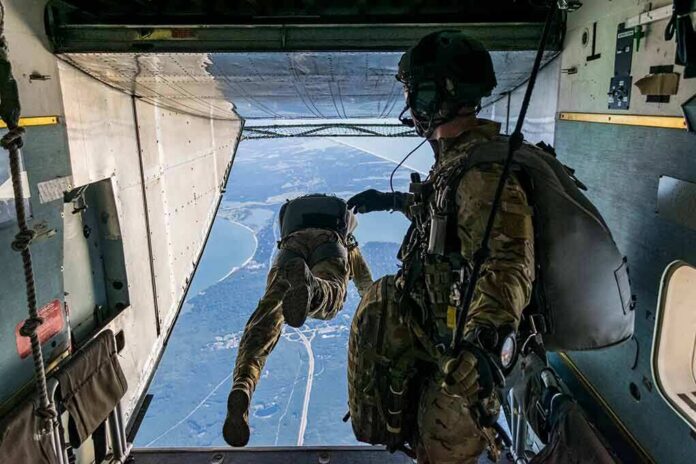
The Air Force has identified Tech. Sgt. Ian Patterson as the airman who died after a fall during a fast-rope demonstration at the Alamodome.
Story Snapshot
- Nellis Air Force Base named Tech. Sgt. Ian Patterson as the fallen airman.
- He fell during a pregame fast-rope display before the UTSA–Navy football game.
- Four service members were slated to descend from the rafters during the ceremony.
- The crowd went silent as first responders rushed in, and Patterson later died at a hospital.
Official Identification And The Immediate Facts
Nellis Air Force Base publicly identified the airman as Tech. Sgt. Ian Patterson, a Tactical Air Control Party instructor with the 6th Combat Training Squadron, Detachment 2, at Joint Base San Antonio. Officials said he died after a fall during a pregame demonstration at the University of Texas at San Antonio game at the Alamodome. He was part of an event honoring service members before kickoff. The Air Force statement confirmed his unit, role, and the time and place of the incident.
Video and eyewitness accounts describe a planned fast-rope descent from the stadium rafters that turned tragic. Patterson fell from a significant height in view of thousands of fans. On-field medics and emergency crews reached him within moments. He was transported from the field and later died at a hospital, according to outlets that reviewed the sequence and verified video from the scene. The stadium atmosphere shifted from celebration to shock as the emergency unfolded.
What The Demonstration Involved
Event planners arranged a pregame tribute that included a team of Air Force personnel descending to the field by rope. Reports indicate four service members were scheduled to come down from the rafters as part of the ceremony. Fast-roping is a combat technique used to insert teams quickly without a landing zone. Stadium exhibitions add risk because they involve temporary rigging, bright lights, and a hard surface below. Crowds and cameras heighten pressure. Even seasoned instructors face a narrow margin for error in these settings.
Military units practice fast-rope procedures under strict training standards. In the field, teams use rehearsed steps, redundancy, and supervision. Stadium events compress timelines and change the environment. The venue is not a training range. The ceiling height, anchor points, rope length, and landing area can all differ from standard facilities. Commanders usually layer safety checks. When any link fails, the results can be severe. That is why mishap investigations exist and why they proceed with care.
The Human Cost And The Public Moment
Spectators described a sudden hush after Patterson fell, followed by quick medical action on the turf. The scene stunned fans, band members, and players in equal measure. News reports noted the crowd’s silence as first responders worked and the airman was taken from the field. Many in attendance came to honor the military with applause and thanks. They left carrying the weight of a loss they witnessed up close. That burden sits first with the family and unit, who now grieve a teammate.
The Air Force has named the airman who died in the Alamodome fall on Saturday. Tech. Sgt. Ian Patterson, a 15-year veteran and Tactical Air Control Party instructor from Fort Stewart, Georgia, was one of four airmen in the pregame fast-rope demonstration before the UTSA game. He…
— The Daily Headlines (@DailyHeadHQ) October 19, 2026
Nellis Air Force Base’s release focused on respect for next of kin and on Patterson’s service record details. That restraint aligns with basic duty: inform the family, honor the fallen, and avoid speculation. Outside voices will push for quick blame, but common sense says facts first. Public trust grows when leaders share confirmed details, protect privacy, and then show what they will fix. That is not a political stance; it is the right order of operations in any serious enterprise.
What Comes Next And Why It Matters
The Air Force will conduct a formal mishap investigation. That process typically reviews equipment, rigging, procedures, supervision, and medical factors. Investigators will map out the minute-by-minute decisions and checks. They will test hardware and inspect the venue. They will interview witnesses and experts. When done, they will brief findings and corrective actions. The goal is clear: prevent another family from living this same day. A culture of accountability demands nothing less.
Sources:
nypost.com, ettoday.net, people.com
© patriotnewsdaily.com 2026. All rights reserved.