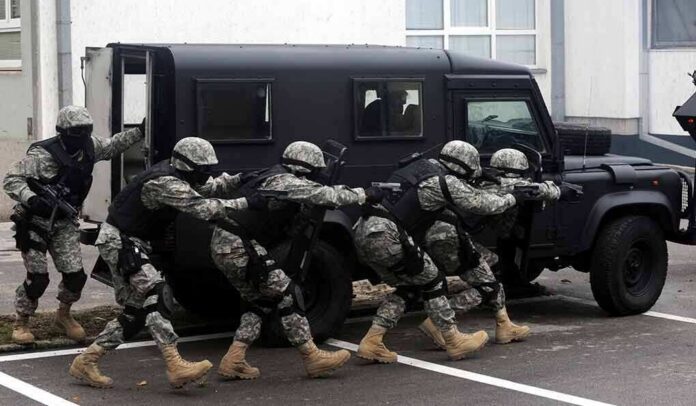
Four Salvadoran soldiers vanished after their armored vehicle was hit with explosives and set ablaze in Haiti’s capital region, marking the new force’s most serious test yet.
Story Snapshot
- Armed men attacked an armored vehicle in Croix-des-Bouquets near Port-au-Prince.
- Four Salvadoran aviation technicians became unaccounted for after escaping the burning vehicle.
- The Gang Suppression Force confirmed the attack as operations continued.
- Rescue helicopters took fire while searching the area, showing gang reach.
What happened in Croix-des-Bouquets
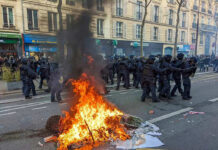
Armed groups struck a patrol vehicle carrying four Salvadoran members of the Gang Suppression Force in Croix-des-Bouquets, a gang-controlled community near Port-au-Prince. The attackers used firearms and explosives, and the vehicle caught fire. The Armed Forces of El Salvador said the four aviation technicians escaped the burning vehicle but then became unaccounted for as fighting intensified. The attack occurred Sunday before the October 19 reports. This was described as the biggest attack on the force since it began operations.
The multinational mission confirmed the attack in a separate statement, while search efforts moved fast to locate the missing personnel. Salvadoran commanders said helicopters sent to assist came under fire, showing that gangs can contest the air as well as the streets. Ground units also faced heavy gunfire, which slowed the search. Authorities did not name a specific gang responsible. Reports referred to the assailants as armed men or criminal groups.
Why this attack matters now
The strike targeted both morale and mobility. Hitting an armored vehicle in daylight conditions sends a clear signal: gangs intend to deny the force safe passage on key routes around the capital. Croix-des-Bouquets sits on an approach that links neighborhoods, markets, and transport lines. If gangs disrupt these corridors, they choke the economy and control the flow of people. That power over movement is a core lever for extortion and protection rackets that feed Haiti’s criminal economy.
Labeling this the biggest attack since operations began also shifts the risk picture for the mission. The force now faces a smarter enemy that blends roadside bombs, ambush fire, and rapid dispersal. When rescue helicopters take fire, commanders must rethink flight paths, landing zones, and the timing of quick reaction forces. That means thicker armor, counter-ambush drills, drone overwatch, and tighter route clearance. It also means faster intelligence on who controls which block at any hour.
How this fits Haiti’s conflict pattern
Haiti’s gangs often adapt when confronted. Past interventions pushed them back for a while, but gains faded when missions left or shrank. Armed groups then regrouped, rearmed, and reimposed control piece by piece. Analysts describe gangs not as lone wolves but as networks that plug into politics, business, and smuggling. They survive by taxing trade corridors, guarding safe houses, and brokering favors across the capital’s patchwork of neighborhoods.
That is why an attack on foreign troops can serve several goals at once. It can punish patrols that threaten a revenue stream. It can pressure local leaders who lean toward the state. It can also test the mission’s rules for returning fire and pursuing suspects. If the force must slow down or pull back, gangs win time to plant more bombs, shift fighters, and set traps. If the force charges ahead without precise intelligence, civilians pay the price and trust erodes.
The stakes for the mission and for Haiti
The mission must show it can protect its people and still keep pressure on gang strongholds. That balance is hard in dense urban zones where a side street can become a kill zone. Commanders will likely adjust by pairing every convoy with aerial eyes, staggering movements, and sweeping for explosives before and after contact. The goal is simple: deny gangs the initiative. The cost of not doing so is clear after this ambush.
🇭🇹 Four Salvadoran military aviation technicians remain missing after armed gangs ambushed their armored vehicle in Haiti. The vehicle burned, and helicopters attempting rescue took heavy fire. The missing El-Salvadoran troops serve with the international Gang Suppression Force. pic.twitter.com/NslfHE1cob
— freeledger (@thefreeledger) October 19, 2026
Families of the missing Salvadoran soldiers need answers. The public expects the mission to bring them home and to hold attackers to account. That requires joint work with Haitian authorities and honest communication about risks. It also demands a sharper focus on the money and weapons that keep gangs alive. Cutting off illicit finance, arms flows, and protection networks matters as much as any patrol. Order will not return if the streets are cleared but the rackets remain.
What to watch next
Watch for a formal incident report and a revised force-protection plan. Look for targeted operations to secure transport corridors in and out of Croix-des-Bouquets. Expect more drone use, more route clearance, and tighter patrol discipline. Also watch for named suspects or groups if investigators match explosive residue, shell casings, or radio chatter to known operators. Most of all, track whether the mission can restore safe movement without giving gangs new propaganda wins.
Sources:
youtube.com, abcnews.com, apnews.com, aljazeera.com, upi.com, usnews.com
© patriotnewsdaily.com 2026. All rights reserved.