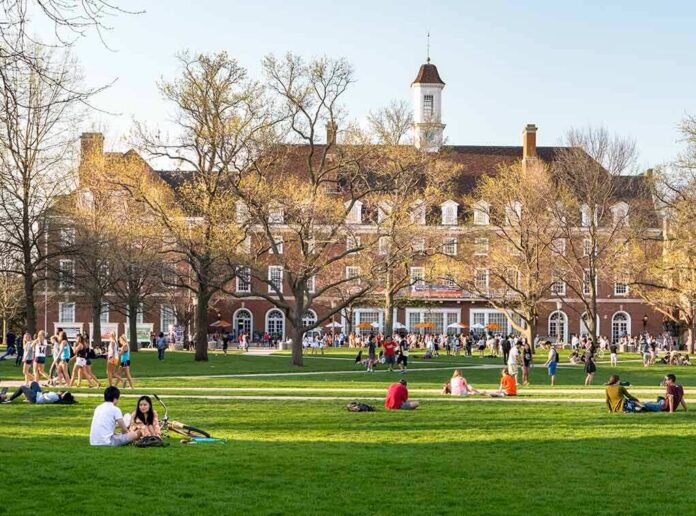
The university moved to expel two College Republicans over “doxxing,” then dropped the case after a public storm.
Story Snapshot
- The University of Utah opened inquiries into two College Republicans over alleged doxxing tied to a viral “Kirkiversary” cake post.
- Officials cited allegations of harassment, threats, and improper sharing of personal information.
- The university later dismissed both inquiries, saying there was not enough to proceed.
- The dispute spotlights the line between protected speech and targeted harassment on public campuses.
How a Photo, a Cake, and a Caption Lit a Fuse
A student appeared at a College Republicans booth holding a “Happy Kirkiversary” cake, tied to anger over conservative activist Charlie Kirk. A photo and caption then went viral. The University of Utah said a campus dispute produced allegations of harassment, threats, and the inappropriate sharing or amplification of personal information. Administrators opened accountability inquiries into College Republicans leaders Riley Beesley and Rylie Barnes after complaints reached the dean’s office.
The official message went further on policy grounds. The school stated that calls to harm someone, electronic harassment, and inappropriate sharing of information fall outside protected speech under university rules. That stance tracks common conduct codes, but it hinges on proof that private information was exposed or threats were made. The public record did not identify the exact personal details allegedly shared in this case, which left the core “doxxing” claim hard to pin down.
What The Inquiries Said—and What They Did Not
News reports showed at least one notice letter stated the case involved an alleged attempt to doxx another student over a political issue, with a date around September 11, 2026. Other outlets reported the dean’s office received anonymous complaints that posts by Barnes and Beesley amounted to doxxing or electronic harassment. The school’s public statements stressed harm prevention and safety, but they did not release a charge sheet, policy citations, or a hearing record.
The missing specifics mattered. Without a named address, phone, or private identifier, the claim of doxxing looks more like a dispute over political criticism and a photo taken in a public setting. Beesley was reportedly out of state during the in-person encounter, which further blurred the link between the physical moment and any later online activity attributed to him. This lack of detail raised due-process concerns that many conservatives see again and again on public campuses.
Dismissed Cases and the Backlash That Shaped Them
After days of pressure from all sides, the university dismissed both accountability inquiries. Officials said there was not enough to move forward. Neither student faced further discipline. Coverage across local outlets and national media conveyed that shift and framed the episode as a free-speech fight over a controversial post, not a proven case of targeted privacy invasion or threats.
JUST IN: After ENORMOUS public backlash, the University of Utah has formally TERMINATED plans to consider expelling College Republicans VP Rylie Barnes after she simply exposed that a leftist student celebrated Charlie Kirk's assassination
The email confirms it: "I apologize for… pic.twitter.com/Fqjvk176i0
— Sergeant News Network (@sgtnewsnetwork) September 18, 2026
Protesters and online voices had demanded “accountability,” arguing that doxxing is not protected speech. Administrators echoed the principle in policy terms. That claim is true in the abstract. Publishing private personal information with an intent to expose someone can be punished. But this case never showed that kind of proof in public. When the facts do not clear that bar, common sense and the First Amendment point in the same direction: criticize the message, not the messenger’s right to speak.
Where The Line Actually Runs on Public Campuses
Public universities sit on a narrow ledge. They must protect students from real harassment and true threats. They must also avoid punishing lawful political speech. Courts and scholars draw the line at conduct like targeted threats or the exposure of private identifying data. Offensive or viral speech alone is not enough. The scholarly record on campus speech and doxxing underscores that precision matters. Vague standards invite selective enforcement and chill debate, which harms everyone.
Administrators should publish tight definitions for electronic harassment and doxxing and link them to clear evidence thresholds. They should document specific private data, intent, and impact before opening cases that threaten expulsion. They should also disclose, with legal redactions, the policy basis and findings once cases conclude. That sunlight builds trust. It also deters the all-too-familiar pattern: vague allegations, broad rules, and a quick retreat when scrutiny arrives.
What This Episode Teaches Going Forward
This controversy shows how fast outrage can outrun facts. A photo and a sharp caption led to calls for punishment. The institution responded with process language but little detail. The result was a chilling message to students who speak up on campus—until the case was dropped. That arc rewards noise over proof. On a public campus, the answer is not speech codes with rubber edges. The answer is narrow rules, transparent files, and equal treatment across viewpoints.
Universities should protect students from real harm and let the rest of us argue, protest, and persuade. That is the American way. It is also the only policy that survives contact with the Constitution—and with common sense.
Sources:
townhall.com, abc4.com, ksl.com, attheu.utah.edu, kutv.com, thegatewaypundit.com
© patriotnewsdaily.com 2026. All rights reserved.