As Washington quietly normalizes firing missiles at commercial tankers in international waters, Americans on the left and right are left to wonder who really gave the government the power to police the world’s oil flow in their name.
Story Snapshot
- U.S. Central Command says it disabled a tanker with a missile for approaching an Iranian port under a U.S.-declared blockade.
- The action fits a broader pattern of American forces redirecting or disabling dozens of commercial ships near Iran in recent weeks.
- Supporters frame the moves as necessary pressure on Tehran; critics see another unelected escalation risking war and energy shocks.
- Both conservatives and liberals worry these operations expand elite power while ordinary Americans shoulder the economic and security risks.
What The U.S. Military Says Happened At Sea
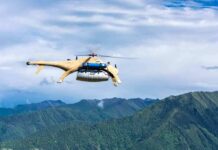
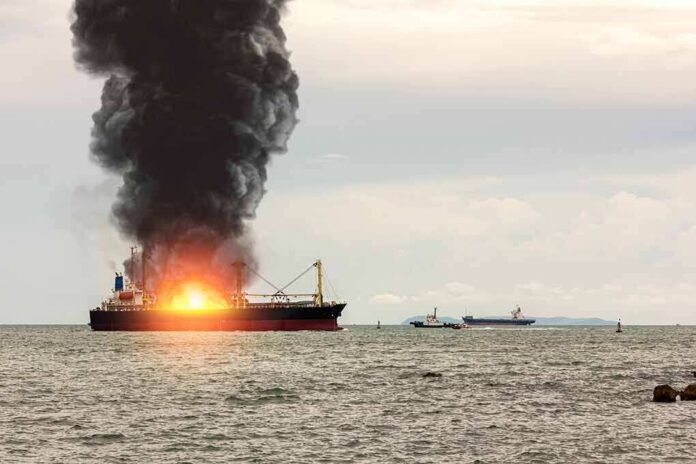
U.S. Central Command (CENTCOM) publicly stated that American forces intercepted and disabled the Botswana-flagged oil tanker M/T Lexie as it traveled through international waters toward Kharg Island, a key Iranian export terminal.[2][3] Military officials said the ship ignored repeated warnings and failed to follow directions issued under a U.S.-enforced maritime blockade that has been in place since mid-April.[1][2][3] According to CENTCOM, a U.S. aircraft ultimately fired a Hellfire missile into the tanker’s engine room, stopping it before it could reach Iranian waters.[2][3] Officials emphasized that the vessel was unladen, meaning it was not carrying oil or other cargo when it was struck.[2][3]
CENTCOM has openly touted this operation as part of a broader naval blockade of Iran’s ports, which the command says began four weeks earlier.[1] In its own public summary, the command claimed American forces have redirected sixty-seven commercial ships, allowed fifteen humanitarian vessels to pass, and disabled four ships “to ensure compliance.”[1] U.S. officials argue these moves are necessary to enforce sanctions, squeeze Tehran’s revenue from oil exports, and gain leverage amid stalled ceasefire and nuclear-related negotiations.[1][2] The government has not, however, released a detailed legal opinion explaining the blockade’s basis under international law.
A Pattern Of Quiet Escalation On The High Seas
Reports on the Lexie incident arrive alongside other recent disclosures that U.S. forces have seized or disabled multiple tankers linked to Iranian oil shipments in the Indian Ocean and Gulf of Oman.[1][2][4][5] The Wall Street Journal, cited by several outlets, reported that the United States seized an Iran-linked tanker named Skywave that had previously been sanctioned for transporting Iranian oil.[1][2][4] Maritime analysts describe a growing “shadow fleet” of tankers using flags of convenience, shell ownership structures, and route games to keep Iranian oil flowing despite sanctions.[4] U.S. naval operations against these ships are increasingly framed as routine enforcement actions instead of extraordinary steps edging toward conflict.
At the same time, the data available to the public are fragmentary and filtered. Ship-tracking reports and maritime press accounts document interdictions, route changes, and seizures, but often lack primary documents such as formal blockade orders, detailed rules of engagement, or court filings tied to any specific tanker.[1][2][4][5] In effect, Americans are being asked to accept on faith that each ship targeted truly violated clear legal lines, even when officials decline to provide evidence beyond brief statements and anonymous leaks. For citizens already suspicious of a “deep state” that hides key decisions behind classification labels, this opacity deepens mistrust across the political spectrum.
Shared Concerns: Energy, War Risk, And Unchecked Power
For many conservatives, the idea of U.S. forces aggressively policing global oil routes is a double-edged sword. Some back hard pressure on Iran yet still remember decades of “endless wars,” soaring energy prices, and Washington elites promising quick victories that never materialize. They see a government that can rapidly launch missiles at tankers but still struggles to control the border, tame inflation, or reduce the cost of fuel at home.[1][2][3] When the Pentagon boasts of redirecting dozens of ships, some hear not strength but mission creep that may ultimately drive up gasoline and heating costs again.[1]
Seizure and inspection of a sanctioned ship linked to the Islamic Republic in the Indo-Pacific region
US naval forces, during a maritime operation in the Indian Ocean, have inspected and intercepted a stateless and sanctioned vessel linked to the Islamic Republic named "MT… pic.twitter.com/CjeCkFOvoe
— Iran Observatory (@IRObservatory) June 5, 2026
Many liberals, meanwhile, view the blockade and tanker strikes as another example of “America First” power being used in ways that harm ordinary people while protecting major energy interests. They worry that escalation at sea could trigger Iranian retaliation, disrupt global supply, and widen the gap between wealthy investors and working families already squeezed by housing and medical bills. Both sides notice that these major steps—announcing a naval blockade, disabling foreign ships, flirting with a wider war—were not put to a direct vote by Congress or the public, but rolled out by executive decision and military command.[1][2]
What This Episode Says About The Direction Of U.S. Policy
Stepping back, the Lexie strike and the broader Iran blockade fit a long-term trend: key national-security and economic decisions are increasingly made by a small circle of officials, then presented to citizens as faits accomplis. CENTCOM’s own social media posts show how easily an extraordinary step—firing a precision missile at a commercial vessel in international waters—can be described as a routine enforcement of “compliance.”[1][2][3] That framing may reassure insiders, but it alarms Americans who already believe an unaccountable class of elites is making choices far removed from everyday concerns.
Whether one believes the tanker was rightly targeted or not, the deeper issue is democratic oversight. If the United States can unilaterally declare and enforce a blockade on Iranian ports, redirect or disable scores of ships, and potentially shake global energy markets, citizens naturally ask where their voice fits into these decisions.[1][2][4] Conservatives who resent globalist overreach and liberals who fear militarized foreign policy now find themselves aligned on one basic point: a federal government that cannot restrain its own war powers or explain them clearly may be drifting even further from the nation’s founding promise of accountable, limited authority that serves the people rather than rules over them.
Sources:
[1] Web – US says it fired on, disabled tanker that violated Iran port blockade
[2] Web – US seized Iran-linked oil tanker in the Indian ocean, WSJ reports
[3] Web – US seizes Iran-linked oil tanker in Indian Ocean – WSJ
[4] YouTube – Video: US seizes Iranian linked oil tanker
[5] Web – Report: U.S. Navy Has Seized Third Iranian Shadow Fleet Tanker
© patriotnewsdaily.com 2026. All rights reserved.