A 7.8 offshore earthquake slammed the southern Philippines, unleashing fast-changing casualty counts, fractured buildings, and a brief local tsunami that exposed how fragile coastal cities remain when the ground lurches without warning.
Story Snapshot
- U.S. Geological Survey data and regional alerts flagged a magnitude 7.8 offshore quake near Mindanao with tsunami warnings following [1].
- Casualty reports shifted through the day, with outlets citing deaths ranging from at least 19 up to at least 32 as assessments evolved [2][7].
- Video and local reporting showed interior damage, cracked facades, and a collapsed structure in urban centers like General Santos City [3][4].
- Small tsunami waves reached multiple coasts, validating early warnings and coastal monitoring protocols [7].
What Hit, Where It Hit, and Why It Turned So Fast
The quake struck offshore near Mindanao, with initial magnitude set at 7.8 by the United States Geological Survey, a level that routinely triggers regional tsunami protocols and urgent structural checks across cities tied to vulnerable soil and older construction [1]. Reporters on the ground and videos from urban corridors documented visible interior destruction and debris in commercial spaces. Coverage consistently placed the heaviest urban impacts in and around General Santos City, where dense development and busy infrastructure magnified disruption [3][4].
Tsunami alerts rippled through local and regional agencies within minutes, a textbook reaction for a shallow, powerful offshore rupture [1]. By later reports, small tsunami waves reached several coastlines, which aligned with early warning center guidance and validated siren-tested evacuation habits in communities accustomed to typhoon threat but less regularly drilled for fast-arriving seismic seas [7]. Emergency managers face a persistent dilemma: warn quickly with imperfect data or wait for precision. Here, early flagging appears to have erred on the side of prudence [1][7].
The Human Toll, Counted While Dust Still Hung in the Air
Casualty figures diverged as responders moved from shock to triage: at least 19 deaths appeared in first-wave reports, then later tallies rose to at least 32 as medical transfers and search efforts advanced [2][7]. That progression tracks with long-observed disaster math, where day-one numbers skew low until outlying clinics call in and remote barangays reconnect. Serious injuries in the hundreds circulated across outlets, with hospital staff focusing on crush trauma, lacerations, and falls consistent with violent shaking and stampede risk [4][6].
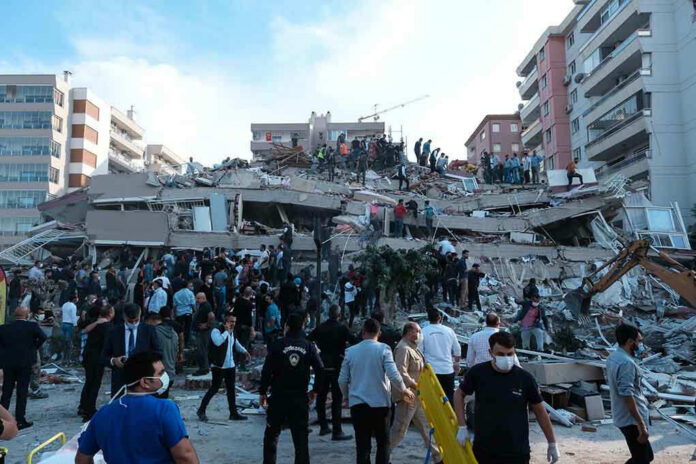
Structural damage spanned cracked columns, dislodged cladding, buckled storefronts, and a collapse captured in urban footage, which matched what engineers expect from ground motion interacting with variable build quality [3][4]. Schools and commercial buildings featured in multiple clips, a reminder that daytime quakes turn classrooms and markets into hazard zones within seconds. Rapid building assessments targeted load-bearing elements first, the right choice when aftershocks threaten to push stressed structures over the edge [3][8].
What Stood Up, What Failed, and the Lessons for the Next Shock
Modern codes in the Philippines have tightened after prior disasters, but enforcement and retrofits remain uneven across provinces, budgets, and private ownership. Early photos and video suggest non-structural failures—ceilings, glass, signage—dominated many scenes, which often injure more people than total collapses in contemporary concrete frames. A notable collapse still appeared in city footage, which will draw forensic scrutiny about soft-story design, poor detailing, or aging materials under lateral loads [3][4]. Clear-eyed accountability demands inspections and transparent findings, not political theater.
Death Toll from Philippines Earthquake Rises to 32..
A powerful 7.8-magnitude #earthquake struck the southern #Philippines on Monday, killing at least 32 people and injuring more than 135 others, according to disaster officials. The quake, centered off the coast of Sarangani… pic.twitter.com/QgyNmQYlNn
— Ayman Mat News (@AymanMatNews) June 8, 2026
Local tsunami performance offered a mixed but encouraging signal. Alerts moved quickly, and measured waves stayed in the small range, which is common when fault geometry channels energy unevenly along coasts [7]. Coastal families who heeded the first warning did the right thing, even when the water looked benign. That mindset—trust the siren, not the horizon—saves lives. Conservative common sense favors preparedness muscle memory over second-guessing experts mid-crisis, especially when minutes decide whether children reach higher ground [1][7].
Where Coverage Agrees, Where It Wobbles, and What to Watch Next
Outlets converged on the core: a magnitude 7.8 offshore quake, widespread shaking across the southern Philippines, interior and facade damage in key cities, and a brief local tsunami [1][3][4][7]. The wobble lies in casualty counts and the exact scope of structural failure, including whether a handful of emblematic collapses reflect outliers or systemic weakness. Those numbers will stabilize as engineers tag buildings, hospitals finalize registries, and remote towns restore communications. Expect revised magnitudes, refined epicenter parameters, and a tighter injury ledger as data firms up [2][7].
Sources:
[1] YouTube – Destruction seen inside building in Philippines after 7.8 magnitude …
[2] Web – Magnitude 7.8 earthquake strikes off the coast of the Philippines, …
[3] Web – A 7.8 magnitude quake in the Philippines kills at least 32
[4] YouTube – Powerful 7.8-magnitude earthquake devastates southern Philippines
[6] Web – 7.8-magnitude earthquake in southern Philippines causes …
[7] Web – Philippines earthquake kills at least 19 people, unleashes small …
[8] YouTube – Damage at a school in Philippines as 7.8 magnitude earthquake …
© patriotnewsdaily.com 2026. All rights reserved.