A single arrest on Okinawa triggered a month of curfews for thousands of U.S. troops.
Story Snapshot
- Japanese police arrested a U.S. Marine after a woman was found dead in Naha.
- U.S. commanders imposed a 30-day nighttime curfew and a 48-hour alcohol halt.
- Japan lodged formal protests and pressed for accountability.
- The Marine Corps pledged full cooperation with Japanese authorities.
What Happened In Okinawa And Why It Mattered Fast
Okinawa prefectural police arrested Lance Cpl. Devin Jacob Ballard, 20, on suspicion of killing 39-year-old Anna Yagi in a Naha hotel and stealing her belongings. Police said the Marine, stationed at Marine Corps Air Station Futenma, denied the allegations, and the case moved forward under Japanese jurisdiction while the investigation continued. The III Marine Expeditionary Force said it took the allegations seriously and was cooperating with Japanese authorities as procedures advanced.
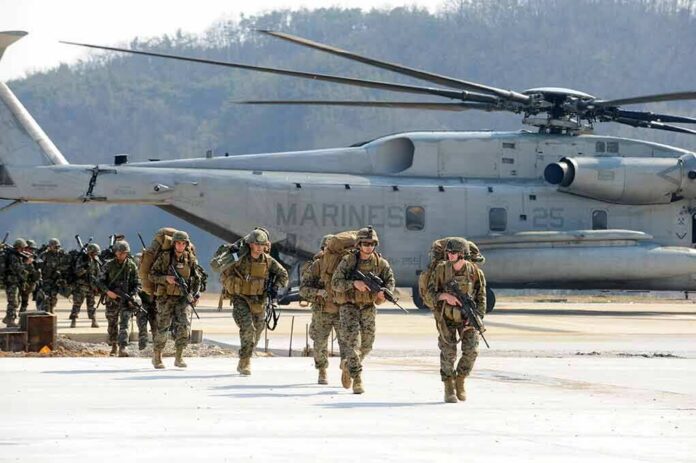
Within days, U.S. forces in Okinawa faced tight new limits. Commanders ordered a 48-hour pause on alcohol consumption and set a monthlong curfew from midnight to 5 a.m. for personnel across the island. Reports attributed the announcement to Lt. Gen. Benjamin T. Watson, the Okinawa area coordinator and III Marine Expeditionary Force commanding general. The measures aimed to reduce risk, calm tensions, and show immediate command control while police and prosecutors worked the case.
How The U.S. Military Responded To Rising Pressure
Tokyo delivered sharp messages as outrage spread. Japanese officials summoned the U.S. ambassador and lodged formal protests, underscoring that national leaders wanted swift, visible accountability. Local anger on Okinawa grew, with public attention tied to the island’s long history of friction over foreign troops and crime. U.S. commanders matched the political tempo with broad restrictions to limit nightlife and alcohol-related trouble during the most sensitive window.
The Marine Corps framed its stance around standards and stewardship. Leaders emphasized expectations for discipline and pledged cooperation with Japanese law enforcement at each step. The approach echoed past crisis playbooks on Okinawa, where fast, blanket rules have often followed high-profile cases. The order did not claim to solve deeper issues. It was designed to stop near-term flashpoints and signal respect for the host nation while the legal process unfolded.
The Pattern Beneath The Headlines
Okinawa hosts a large share of U.S. bases in Japan, and that footprint shapes public life. Over decades, serious incidents linked to U.S. personnel have reignited debate over the Status of Forces Agreement and whether discipline off base is tight enough. Police data and case histories show spikes of protest after violent crimes. Leaders then roll out curfews, alcohol bans, and training, seeking to steady relations and prevent repeat harm during the highest-risk period.
"US forces in Japan's southern prefecture of Okinawa have been ordered a 48-hour halt to operations and a month-long nighttime curfew following the arrest of a Marine on suspicion of murder and robbery."https://t.co/fwZauyTofk
— Conrad Hubbard (@conradhubbard) October 7, 2026
Recent reporting fits that pattern. The curfew and the 48-hour alcohol halt were packaged with messaging about restraint and respect for the community. The goal was simple and concrete: fewer off-base hours at night, fewer chances for trouble, and a public sign that commanders were on task. Whether the accused Marine is ultimately convicted will be decided in court, but the command’s duty to maintain order and protect the alliance demanded action now.
What Comes Next For Okinawa, Justice, And The Alliance
Japanese investigators will continue building the case, and prosecutors will weigh charges under Japanese law. The Marine remains under Japanese jurisdiction, consistent with the rules for off-base violent crimes. U.S. commanders will keep enforcing the curfew and alcohol rules as ordered. If the past is a guide, they will also push more training, town halls, and engagements with local leaders to lower tensions and rebuild trust during and after the legal process.
Conservative common sense points to twin duties. First, justice for the victim through due process in the proper court. Second, command responsibility to protect the mission and the community by tightening liberty when risk spikes. The Marine Corps’ cooperation pledge and the swift curfew meet both aims. They show respect for Japanese sovereignty and reinforce discipline within the ranks while the courts do their work.
Sources:
cbsnews.com, independent.co.uk, arabnews.jp, aljazeera.com
© patriotnewsdaily.com 2026. All rights reserved.