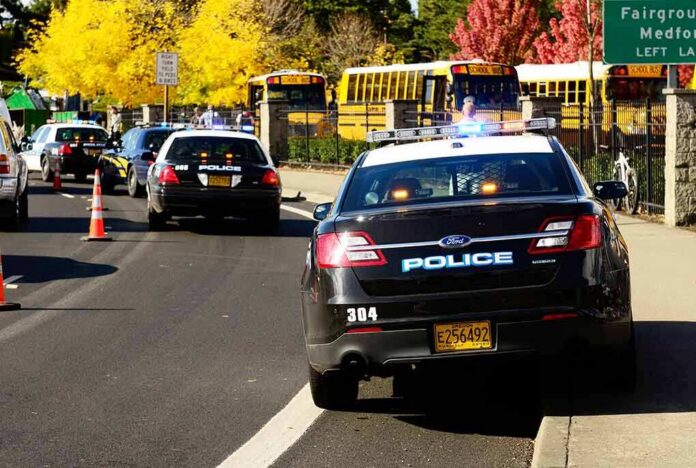
Portland police say a 15-year-old brought household chemicals from home, mixed them in a high school cafeteria, and now faces domestic terrorism and multiple attempted-murder charges for the toxic gas release.
Story Snapshot
- Police list 19 counts, including terrorism and attempted aggravated murder.
- The cafeteria incident led to evacuation and sent several people for medical care.
- Prosecutors moved to shift the case from juvenile to adult court.
- Police say the teen acted alone; investigators are still probing intent.
Charges That Signal Intent, Even Before It Is Proven
Portland Police Bureau announced a sweeping set of charges after the September 8 incident at Benson Polytechnic High School. The list includes ten counts of attempted aggravated murder, additional attempted-murder counts, and both first- and second-degree domestic terrorism. It also includes making and possessing a destructive device, bringing a weapon into a public building, unlawful use of a weapon, and reckless endangerment. Prosecutors often stack charges in cases that could have killed many people. That approach preserves options as evidence firms up.
The case moved fast from hazmat scare to major-felony posture. News reports describe an evacuation and several people receiving medical attention after exposure to the gases, while the student himself suffered a severe medical emergency. Police later clarified he did not drink the chemicals, as some early reports implied. He mixed them and inhaled the off-gassing fumes. That gap between early chaos and later clarity is common in emergency response. It does not soften the legal stakes when a school is involved.
What Investigators Say They Know—and What They Do Not
Police say the teenager brought the chemicals from home and mixed them in the school cafeteria. They also say he acted alone and that there is no ongoing threat to the public. Detectives are still working on the hardest question: intent. Officials said investigators are examining whether the act aimed to harm others, the student himself, or both. That is the hinge between a reckless disaster and a planned attack. It is also the piece most readers want answered and the court must test.
The Multnomah County District Attorney’s office requested the case transfer from juvenile to adult court, which signals how seriously prosecutors view the threat to students and staff. That move aligns with a public-safety-first mindset many parents expect. It also puts heavy weight on a teenager’s shoulders. The law allows it in grave cases, and communities often demand it when many lives may have been at risk.
Defense Pushback and the Mental Health Dimension
The defense denies the allegations and says the teen is in inpatient mental health treatment deemed “appropriate and necessary”. Defense attorney statements highlight serious depression, a high suicide risk, cooperation with treatment, strong family support, and no prior court history. Those points do not erase the facts police laid out, but they matter for motive, culpability, and sentencing. A fair system must weigh both safety and the reality of a child in crisis.
Portland teen faces terrorism, attempted murder charges after school cafeteria chemical scare
— JV (@joveg8) October 5, 2026
American conservative values hold two lines at once here. First, schools must be safe, and consequences for endangering kids must be real and swift. Second, justice should be tied to proven intent and personal responsibility, not only headlines. The state chose the most serious path with domestic terrorism and multiple attempted-murder counts. That says the government believes the mixture and release could have killed people. The courtroom will now demand proof that the student meant that outcome.
What To Watch Next
Several items could settle the debate. The probable-cause affidavit will show the state’s narrative of planning and target awareness. Forensic chemistry will identify the substances and whether the reaction functioned like a destructive device. Digital forensics may reveal searches, notes, or messages. Witness accounts from staff and students could describe statements made before or during the incident. Each piece moves the question of intent from speculation to evidence the public and a jury can test.
Parents care less about labels and more about prevention. Schools should review access controls, bag checks for repeat concerns, and rapid communication protocols. Police and fire can continue joint drills for chemical and air-quality events. Prosecutors can charge firmly while avoiding the trap of overreach. Defense counsel can press for treatment and transparency. The goal is simple: make sure every kid who walks into a cafeteria walks back out, healthy and alive.
Sources:
nypost.com, portland.gov, nytimes.com, straitstimes.com, kgw.com, foxnews.com, yahoo.com, youtube.com
© patriotnewsdaily.com 2026. All rights reserved.