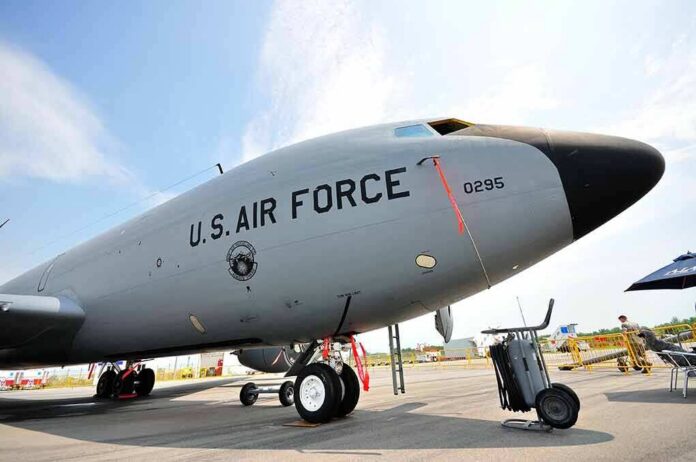
All 12 U.S. B-1 bombers left RAF Fairford after police uncovered a suspected terror plot targeting the base.
Story Snapshot
- The Pentagon confirmed every U.S. bomber at RAF Fairford redeployed to the United States.
- Reports said the move involved all 12 B-1 bombers at the base.
- British leaders cited strong indications of an Iran link, while Tehran denied involvement.
- Police arrests, home evacuations, and a major incident declared near the base preceded the withdrawal.
Pentagon Confirms Urgent Redeployment
The Pentagon said all U.S. bombers at Royal Air Force Fairford re-deployed to home stations in the United States. Officials moved fast after a suspected plot near the base raised force-protection concerns. Media reports identified the aircraft as B-1 bombers, and multiple outlets counted twelve that departed. The base hosts American bomber rotations and supports missions central to U.S. deterrence. This step shows how fast the military can pivot when threats rise and how seriously commanders treat risk to aircrews and assets.
NBC News reported the rushed removal involved at least twelve B-1s, matching what British and American outlets described on the ground. The action came as part of a broader security posture review that weighed the risk of keeping high-value aircraft in a potential target zone. The choice to bring the bombers back to the United States reduced exposure, ensured maintenance and security under tighter control, and kept combat power intact for future taskings if conditions change abroad.
Police Actions Triggered Security Response
British police arrested five men after reports of three suspicious vehicles near the base. Authorities declared a major incident and evacuated dozens of homes around Whelford as bomb disposal teams and counterterrorism officers moved in. The arrests were on suspicion of preparing a terrorist act and explosive offenses. Local reporting described a large cordon and a careful search effort. These actions, happening just before the bomber withdrawal, show why commanders treated the threat as real and immediate.
Royal Air Force Fairford is a U.S.-run installation used for American bomber operations. The site’s mission profile makes it a high-value target for enemies who want to blunt U.S. reach. That reality shapes every security decision at the base. When risk rises, the smart move is to secure people and planes first, then continue the investigation. That is what happened here, with the United States moving aircraft and the British police pressing ahead on the criminal side of the case.
Iran Link Claimed, Denied, and Still Under Review
United Kingdom Prime Minister Andy Burnham said there were strong indications Iran played a part in the suspected plot. That framing came as British counterterrorism teams explored whether a foreign state or proxies were involved. Iran’s embassy in London pushed back and denied any role. These claims and denials are public, but the underlying intelligence has not been released. Officials often protect sources and methods early in a case, which limits what can be shown to the public right away.
The evacuation of all 12 B-1 Lancer bombers from RAF Fairford was driven by fears of a plot against the base, according to NYT.
U.S. officials believe a branch of Iran's Islamic Revolutionary Guard Corps recruited UK nationals to attack the bombers and kill personnel.
The plan… pic.twitter.com/D5392XHaTG
— Comandante🎖️ (@commandante_) October 4, 2026
For readers who value peace through strength, the key point is simple. U.S. commanders protected our bombers first. That keeps deterrence strong and our aircrews safe. If investigators later prove an Iran-backed hand, then the case for firmer pressure grows. If not, the rapid redeployment still made sense based on known risks at the time. Either way, this episode shows why secure borders, clear red lines, and a hard line on state terror proxies remain vital to American safety and to our allies.
What Comes Next for Security and Accountability
Investigators will work to confirm who planned what, and how close the suspects came to action. The public record does not yet show charge sheets that tie arrests to a specific foreign command structure. That gap will need court-tested proof. On the military side, the United States will keep options open. Bombers can return to Europe or operate from home bases with aerial refueling as needed. The goal remains the same: deny enemies any chance to strike our people, planes, or partners.
Sources:
aljazeera.com, abcnews4.com, newsmax.com, bbc.com
© patriotnewsdaily.com 2026. All rights reserved.