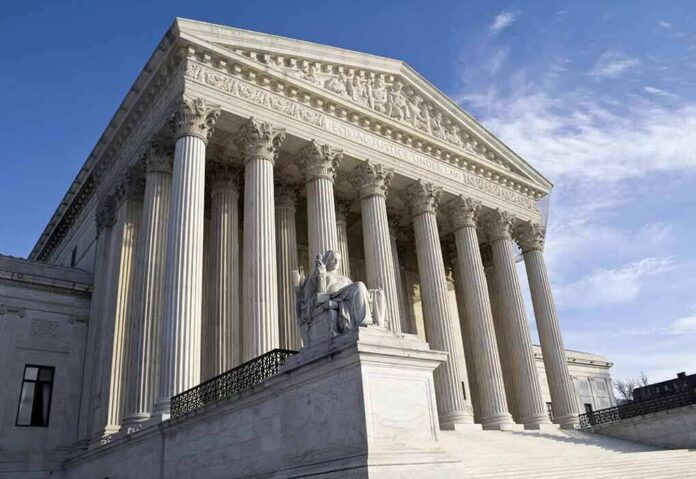
The Supreme Court’s 6-3 ruling that the emergency-powers law cannot support tariffs rewired trade power in one morning.
Story Snapshot
- The Court held the International Emergency Economic Powers Act does not authorize tariffs.
- The administration tied tariffs to drug-trafficking and trade-deficit emergencies, but lost on the law’s text.
- Billions were collected before the ruling, making refunds and follow-on cases likely.
- New fights under other trade statutes show the battle moved, not ended.
What the Court Decided and Why It Matters
The Supreme Court decided that the International Emergency Economic Powers Act does not let a president impose tariffs. Chief Justice John Roberts wrote that tariffs look like taxes. The Constitution puts taxing power in Congress. The Court said a president must show clear permission from Congress before using emergency law to do something that big. That single line of reasoning pulled a pin in a large policy program and set new limits that will shape every future tariff plan.
The opinion also rejected the government’s core reading of the statute’s words. The administration argued that the power to “regulate importation” includes tariffs. The Court said regulation is not the same as taxing. That gap matters. It keeps emergency law in its lane—asset freezes and sanctions—while leaving broad tariffs to trade laws that name them outright. For conservatives who care about separation of powers, this tracks the plain text and common sense.
How the Tariffs Worked Before the Ruling
The administration declared emergencies tied to drug trafficking and the trade deficit, then set sweeping global tariffs. Agencies treated the program as live law while courts weighed it. Reporters documented heavy collections and wide coverage before the Court struck most of it down. That run-up shows how fast executive tools can move money and markets. It also shows the risk: when a court says stop, the bill can come due for refunds and compliance costs.
Supporters said emergency powers allowed the president to act fast when Congress stalled. They pointed to the statute’s text on regulating imports and argued that tariffs defend national security. The government briefed that the law’s words could carry the load. The justices said the load was too heavy for that hook. They treated tariffs as a major economic act that needs clear, specific words from Congress, not general emergency language.
What Comes Next: New Statutes, New Fights
The loss under the emergency law did not end the tariff push. The administration turned to other trade statutes that name tariffs. Courts quickly faced fresh suits over 10 to 12.5 percent duties tied to claims like forced labor and unfair trade. The Court of International Trade began probing those new measures, testing whether they fit within the limits Congress wrote into those laws. The shift proves the policy goal remains; only the legal road changed.
The U.S. Supreme Court ruled that President Donald Trump overstepped his executive authority by using a 1977 emergency law to unilaterally impose sweeping global tariffs without clear congressional approval.
— Silver miner (@johnnylightnin) October 2, 2026
Expect more trench warfare in trade court and maybe another trip to the Supreme Court. The new cases will turn on statutory fit and process. Did the agency build a solid record? Did it tailor the tariff to the harm found? If yes, courts tend to defer. If not, judges will push back. For right-leaning readers, this is the healthy check: strong borders and fair trade, but done by the book and backed by Congress.
The Conservative Reading: Power with Permission
The Court’s message was simple: big economic moves need clear laws. That view locks in two core American ideas. First, Congress writes the taxes and tariffs. Second, presidents act fast in emergencies, but within the lines. The opinion nodded to history, noting no president had used the emergency law to set tariffs in its half-century life. That point matters because practice guides meaning. When in doubt, stick to the text and the structure that guards liberty.
The practical stakes are real. Businesses plan investments on rules they can trust. Families feel tariff costs at the store. If a president can flip global rates by emergency memo, planning dies. If Congress sets the terms, markets can hedge the path. The ruling pushed trade policy back onto that steadier track. Supporters of tough trade tools still have paths under named statutes. They just have to prove the harm, follow the steps, and accept limits that voters can see and Congress can amend.
Bottom Line
The Court closed the emergency shortcut for tariffs and reopened the front door—Congress. The administration can still defend American industry and pressure bad actors, but it must anchor tariffs in laws that say “tariffs.” That keeps power tied to the people, through their lawmakers, and keeps presidents focused on targeted sanctions when true emergencies hit. Policy can be tough and fast. It also has to be lawful, clear, and built to last.
Sources:
redstate.com, supremecourt.gov, yahoo.com, abcnews.com
© patriotnewsdaily.com 2026. All rights reserved.