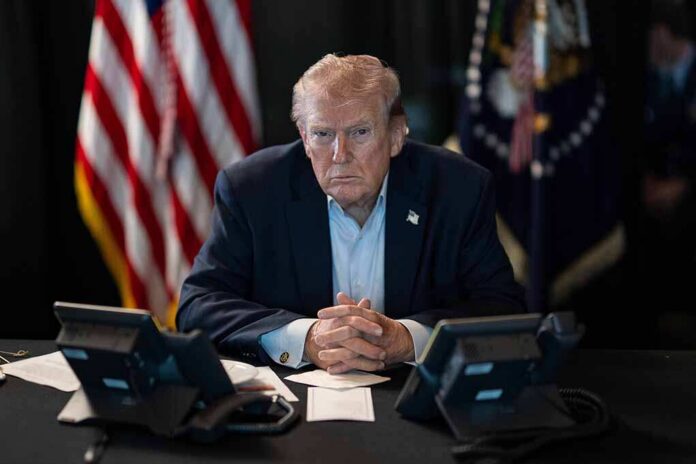
Taxpayer-funded TV spots that showcase President Trump and declare “Paid for by the U.S. government” are set to surge just weeks before the midterms, and Congress is bracing for a fight.
Story Snapshot
- Democratic senators say Homeland Security steered $20 million to the ad blitz.
- The ads feature Trump and carry a U.S. government pay tag, not a campaign label.
- Watchdogs asked federal agencies to investigate propaganda and Hatch Act issues.
- The White House says they are patriotic public service announcements, not politics.
How the Money Trail Sparked a Political Fire
Two Senate Democrats, Patty Murray and Chris Murphy, told the Department of Homeland Security that the agency “appears” to have dedicated $20 million to a national media campaign that looks like a Trump reelection ad without the disclaimer. Their letter calls the spending illegal and demands the ads come down. Reporters traced the funding path to Department of Homeland Security accounts that flow through United States Customs and Border Protection, not a neutral public information line. The total scope of spending remains in dispute across outlets, which fuels the heat of the moment.
The ads are not shy about their sponsor. The spots include “Paid for by the U.S. government,” while showcasing the president in a flattering, leader-at-the-helm frame. That mix—tax dollars, a sitting president’s image, and prime pre‑election airtime—creates a classic test of the line between information and self‑promotion. The question is not whether the government can speak. The question is whether this message crosses into what federal watchdogs call self-aggrandizement or partisan advocacy.
The White House Defense: PSAs, Patriotism, and Precedent
The White House says these are public service announcements meant to remind Americans to love their country and to value what is worth defending at home, the borders, and abroad. Officials stress two points: President Trump is not on the ballot in November, and the ads do not tell viewers to vote or donate. Aides also point to past government campaigns that promoted policy priorities, such as Medicare drug coverage or Affordable Care Act enrollment, as proof that such messaging is normal government business.
This defense leans on a narrow reading of “political.” If there is no call to action and no ballot mention, it is not a campaign ad. That frame can sway busy viewers. But precedent cuts both ways. Government Accountability Office guidance has long warned against using appropriations for propaganda or self‑praise. If the core of the message is the man more than the mission, many Americans will see a line crossed, even if lawyers insist the letter of the law is safe.
Why Watchdogs and Some Conservatives Still Bristle
Good-government groups pressed regulators and investigators to step in. Public Citizen asked for reviews by the Federal Trade Commission, the Federal Communications Commission, the Government Accountability Office, and the Office of Special Counsel, flagging possible propaganda and Hatch Act concerns. News coverage has noted criticism from both Republicans and Democrats, which is rare in a polarized age. Bipartisan unease shows this is not only an inside‑the‑Beltway spat. It is about trust. Voters do not want their own money used to boost the politician who commands the purse.
Trump administration used DHS funds for pro-Trump ads, Dems say https://t.co/QKV5ghaBHr
— POLITICO (@politico) September 30, 2026
American conservative values start with stewardship, limits on federal power, and respect for the taxpayer. On that score, the crux is purpose. If Congress funded the Department of Homeland Security to secure the border, then dollars for television spots that celebrate a president’s image look off‑mission. Claiming the ads are “educational” will not persuade skeptics unless the content directly teaches a clear, lawful program and avoids self‑praise. If the message is patriotic mood music, the defense weakens fast.
The Tests That Decide What Happens Next
Three tests will settle this. First, the statutory test: Does the appropriation used here allow this kind of creative and media buy, or does it run into longstanding bans on publicity or propaganda? Lawmakers say the money was meant for United States Customs and Border Protection events tied to border security, not for celebratory messaging about a president. Second, the content test: Do the ads explain a policy or mainly burnish a leader? The “paid for by the U.S. government” tag does not cure self‑promotion if that is the thrust. Third, the timing test: Running the spots right before an election heightens the appearance problem, even if a court later blesses the letter of the law.
What Voters Should Watch For
Look for paper, not spin. Contract files, statements of work, and insertion orders will show the true aim. Government Accountability Office opinions and the Office of Special Counsel will weigh in on legality and ethics. Stations might also pause the buys if they fear airing improper government propaganda. Until those facts land, one thing is clear: public trust wears thin when leaders use the public dime to sing their own praises. If the message serves citizens, prove it with the script, the budget code, and the timing.
Sources:
cnbc.com, finance.yahoo.com, ground.news, commondreams.org
© patriotnewsdaily.com 2026. All rights reserved.