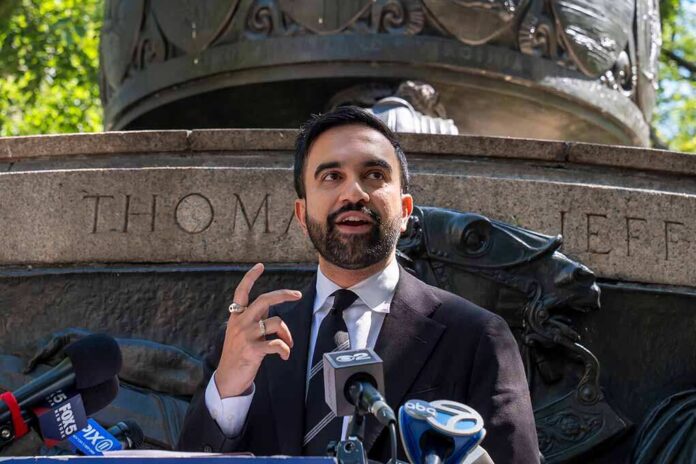
One dinner reservation turned a solemn night into a citywide Rorschach test about loyalty, grief, and political judgment.
Story Snapshot
- Mamdani joined an Oct. 7 vigil, was booed, then went to a Palestinian restaurant the same night.
- Reports say he planned to meet Palestinian New Yorkers after the vigil, per his schedule.
- Coverage described the dinner as meeting with Palestinian families, not a celebration.
- Critics cast the meal as a taunt to Jewish New Yorkers on a raw anniversary.
What Happened, In Order, And Why It Lit The Fuse
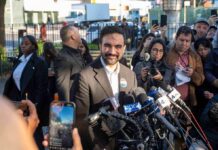
Mamdani marked the third anniversary of the Hamas attacks with a statement that mourned Israelis and referenced Palestinian suffering. He then appeared at a Union Square vigil, where crowds booed and shouted at him. Reporters on scene said he stood in silence and did not address the vigil or the protesters. Later that evening, he headed to Ayat, a well-known Palestinian restaurant. His public schedule and multiple write-ups framed that stop as a planned meeting with Palestinian New Yorkers after the vigil.
The dinner instantly became the headline. The New York Post and others reported that he met with Palestinian families at the restaurant, which matches his stated intent to engage both communities that night. That framing does not prove who sat at the table, but it offers a plausible through-line: show up for grief at the vigil, then sit with Palestinian New Yorkers in a public place aligned with their culture. In a city that reads symbolism fast, the optics did the rest.
Why Critics Saw A Provocation
Conservative and pro-Israel outlets argued the choice sent a “clear message” to Jewish New Yorkers because of the timing. They pointed to the emotional weight of Oct. 7 and the charged scene at the vigil. In their telling, dinner at a Palestinian restaurant within hours looked like a rebuke, not balance. That claim gained oxygen because his earlier statement had already angered many Jewish groups and leaders, priming the ground for outrage to stick.
The accusation rests more on sequence than on proof of intent. There is no released guest list or on-record quote explaining who joined him and why that venue was chosen. That gap let detractors fill in the blanks with the harshest read. From a common-sense, conservative lens, leaders should remove doubt on days of mourning. Clarity beats clever symbolism. If the meeting’s goal was bridge-building, show the bridge: name attendees, share topics, and explain the pick of place and time.
What The Record Actually Supports
The record supports three firm points. First, he condemned the Oct. 7 attacks and expressed grief for Israeli victims in writing that day. Second, he attended the vigil and remained silent there, as contemporaneous reporting noted. Third, his schedule and later accounts said he planned to meet Palestinian New Yorkers after the vigil, and outlets described Ayat as that meeting point rather than a casual celebration. Those facts do not erase the sting many felt. They do narrow which claims stand on solid ground.
🚨 BREAKING OVERNIGHT: Zohran Mamdani was reportedly CONFRONTED by pro-Palestinian protesters after attending an October 7 vigil, with demonstrators calling him a “TRAITOR” and an “opportunist piece of sh*t.” 🔥
🚨 “SHAME ON YOU!”
Mamdani’s attendance at the vigil appears to… pic.twitter.com/bJLP4iYywk
— NanceMace (@Nancymace55) October 8, 2026
Beyond those points, intent is inference. The lack of a direct, on-the-record explanation created an opening for rivals to define the moment first and loudest. That is Politics 101 in the smartphone era: if you do not narrate your choice in real time, someone else will narrate it for you. On a date that cuts deep for many Jews, the margin for symbolic missteps is near zero. The burden sits with the official to make empathy obvious and avoid scenes that compete with grief.
What Would Have Defused The Fire
A short, specific statement could have changed the arc: who he met, what they discussed, and why Ayat hosted it that night. A photo with clergy or bereaved families from both communities would have signaled unity, not sides. Publishing the schedule entry and names in advance would have drained suspicion. The lesson for any big-city leader is simple and old-fashioned: on days of pain, show your work. Transparency lowers temperature. Silence spikes it.
The Larger Pattern New Yorkers Keep Reliving
Oct. 7 has become a double bind in public life. Any move to honor Israeli victims, Palestinian victims, or both tends to spark anger from the other side. Vigil spaces turn into tests of loyalty. University quads become speech battlegrounds. Officials who split the difference often get hit from both directions. Media clips then flatten all nuance into one frame or one photo, and that snapshot becomes the story people remember.
Bottom Line
The dinner at a Palestinian restaurant after the vigil was either a bridge or a burn, depending on where you stand. The documented facts leave room for both reads, but only because the mayor’s office left that room open. On days when memory bleeds into politics, leaders earn trust by removing doubt fast and in daylight. New York rewards grit and grace. It punishes coy.
Sources:
mediaite.com, dailywire.com, townhall.com, foxnews.com
© patriotnewsdaily.com 2026. All rights reserved.