One team bowed heads and skipped handshakes; the other wore “7/10” and asked the world to remember why.
Story Snapshot
- Ireland refused the prematch handshake with Israel and wore black armbands as a Gaza protest.
- Israel’s players also wore black armbands, commemorating victims of the October 7 attacks.
- Irish players bowed their heads during Israel’s anthem and kept hands behind backs.
- Goalkeeper Gavin Bazunu withdrew on moral grounds and said taking part would be wrong.
What happened on the pitch and why it mattered
Republic of Ireland players refused the traditional prematch handshake with Israel before a Nations League match and wore black armbands as a protest over the Gaza war. The Football Association of Ireland said the armbands were in recognition of all lives lost in the conflict. Several outlets reported the Irish squad had debated a full boycott but chose to play while making the protest visible. That choice set the tone for a tense fixture watched as much for politics as for football.
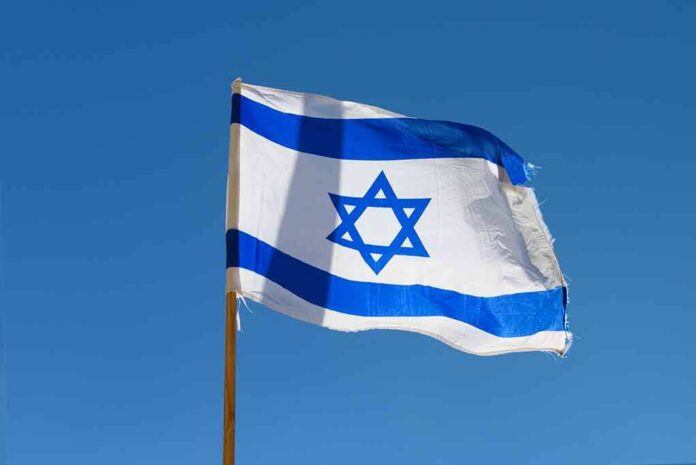
Israel’s team also took the field with black armbands that bore “7/10,” a direct memorial to the victims of the October 7 attacks. That countermove ensured the visual story had two threads: Ireland signaling objection to Israel’s war conduct, Israel signaling grief and resolve tied to a specific terror attack. The match became a screen where two narratives ran side by side, each legible to its own public, each braced for backlash.
The anthem, the handshake, and the camera’s lesson
Irish players bowed their heads during Israel’s anthem and kept their hands behind their backs, a posture that television cameras made impossible to miss. They shook hands with officials but not with Israeli players, which punctured the normal script and forced viewers to pick a side. Critics framed the choice as disrespect. Supporters called it conscience. The gestures were planned, not spontaneous, which made them clearer and sharper to audiences already primed by months of grim headlines.
Gavin Bazunu, Ireland’s goalkeeper, went further and sat out. He believed taking part would be wrong, citing the killing of innocent people. His absence mattered because it carried a personal cost and put names and faces to a stance that can otherwise feel abstract. For many fans, a player’s choice to give up his place speaks louder than a federation statement. For others, it crosses the line that keeps politics from overwhelming sport.
Was this protest or provocation? The facts and the frame
Reports squarely frame Ireland’s actions as protest over Gaza, not as a taunt aimed at October 7 victims. That distinction matters. A protest about wartime conduct is not the same as contempt for the dead. At the same time, refusing a handshake in this context predictably reads as personal to Israeli players and supporters. Common sense says symbols cut both ways when grief is fresh. The stronger facts support the protest framing; the sting landed anyway.
Irish soccer players made multiple attempts to disrespect their Israeli opponents during the highly controversial UEFA Nations League match between Israel and Ireland that took place on Sunday in Debrecen, Hungary.
All of the Republic of Ireland players bowed down their heads… pic.twitter.com/Dp8piTOBDd
— Rita Rosenfeld (@rheytah) September 29, 2026
Claims that Ireland set out to insult October 7 victims exceed the record. The sources do not show such an intent, and they do show care to phrase the armbands as honoring all lives lost. The most credible pushback is not about motive but effect. A skipped handshake is a blunt tool. It advertises moral outrage but also withholds a basic sign of mutual regard. That tradeoff might rally domestic support while hardening opponents. It rarely persuades the middle.
What sports bodies tolerate and where the line sits
Tournament officials allowed the modified ceremony to proceed, according to contemporaneous reporting, which suggests room inside current rules for controlled displays. Soccer has long absorbed political gestures so long as they stop short of hate symbols or disorder. The unwritten rule is simple: do not incite, do not endanger, do not hijack the whole event. Ireland stayed on the allowed side of that line. Israel answered with its own memorial signal. The game held both.
Bottom line for fans who want both sport and standards
One match carried two griefs and two messages. Ireland chose protest centered on Gaza. Israel chose remembrance centered on October 7. The handshake refusal turned a ceremony into a statement and made the night’s highlight reel even if you skipped the goals. You do not have to like the tactic to see the logic. In a world that scrolls past nuance, a missing handshake is the clip that keeps replaying.
Sources:
apnews.com, timesofisrael.com, bbc.com, espn.com, heute.at, independent.co.uk, aljazeera.com
© patriotnewsdaily.com 2026. All rights reserved.