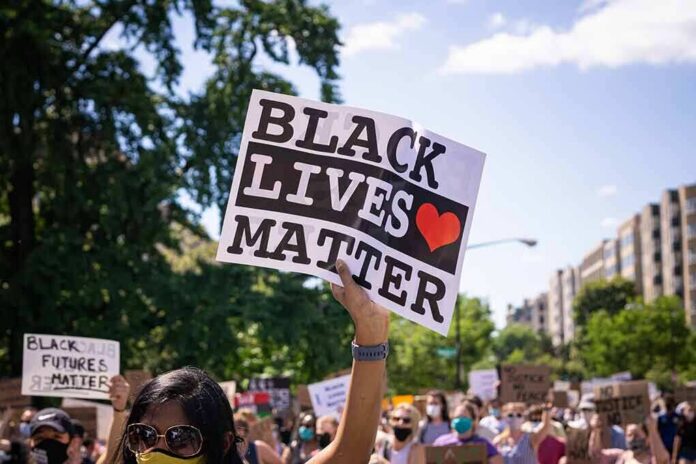
Madison officials are managing a charged protest encampment tied to a fatal police shooting while critics say the city is enabling a fortified street blockade with risky defenses.
Story Snapshot
- Protesters set up a memorial-style encampment after a fatal police shooting.
- Reports describe barricades and boards with nails used as defensive measures.
- The city is providing basic services, framing it as safety management.
- Madison has a history of protests leaving visible marks and policy debates.
What Sparked The Encampment And Why It Matters
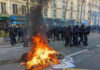
Protesters gathered in downtown Madison after police fatally shot a man, turning a stretch of street into a memorial and a round-the-clock protest space. Coverage shows public anger, calls for answers, and an immediate push for accountability. Chants, signs, and artwork showed Black Lives Matter themes common in Madison since 2020. That context matters because it shapes how locals view the site: some see mourning and speech; others see a hard-edged occupation that strains patience and safety.
City leaders say they are focused on safety and de-escalation. That has meant routine city tasks like trash pickup, traffic controls, and basic sanitation near the encampment. Supporters argue this prevents bigger problems. Skeptics call it a subsidy for a blockade. Both sides can point to recent Madison history. Officials have managed temporary encampments before, including sanctioned sites for people without housing, which framed municipal aid as a tool to reduce harm and keep order.
The Barricades, The Nails, And The Public Risk Debate
Reports describe barricades and boards studded with nails at the perimeter, set up to deter vehicles and outsiders from entering the protest zone. That choice raises obvious safety issues for drivers, cyclists, and emergency crews, and it heightens tensions with neighbors and businesses. It also reframes the space from a candlelight vigil to a defended encampment. The New York Post reported boards with nails and compared the scene to earlier autonomous zones in other cities, a claim that fuels public alarm.
Reasonable people can disagree on protest tactics, but weapons-grade obstacles cross a line of common sense. Americans support speech, even angry speech, but not hazards that can injure bystanders. Conservative values place safety and equal enforcement first. If a neighborhood group planted nail boards in the street, the city would remove them on sight. Officials should apply the same standard here. Manage speech, yes. Remove dangers, also yes. That split stance protects rights and the public at the same time.
How Madison Got Here: A Pattern The City Knows Well
Madison has seen this movie before. After the 2020 protests, storefronts on State Street stayed covered in plywood, which became canvases for Black Lives Matter art and slogans. The boards signaled both damage and dialogue, and they stuck around for months, keeping a civic argument in plain view. The current encampment follows that same pattern: a flashpoint, a visible claim on public space, and a long fight over where protest ends and disorder begins.
University grounds saw similar friction in 2024 when campus and state police dismantled a student encampment and made arrests. That episode set expectations about how authorities respond when tents turn into semi-permanent protest sites. City policymakers now face the same tradeoffs off campus: protect speech, keep streets open, and avoid force until risks demand it. The balance is tough, but the principle is clear. Rights come with guardrails, and streets belong to everyone.
What Responsible Management Should Look Like Now
City services that reduce disease, trash, and traffic confusion make sense. That said, any aid must not harden a blockade. Remove weapons, clear hazards, and keep emergency lanes open. Publish clear, short rules: no nail boards, no barricades in the roadway, no overnight structures in traffic. Enforce them equally. Offer protest zones nearby where people can gather and mourn without endangering passersby. That approach honors speech and protects the quiet majority that just needs to get to work.
What Comes Next And The Stakes For Madison
Public patience will hinge on time limits and safety. The longer barricades stay, the more neighbors see a double standard. If the city sets and keeps fair deadlines, the chant shifts from “why won’t they act” to “what are the facts in the shooting.” That is where attention belongs. Officials should promise a transparent review of the shooting, share updates on a fixed schedule, and let the findings drive next steps. Facts, not fortifications, should carry the day.
Sources:
wpr.org, youtube.com, isthmus.com, fox6now.com
© patriotnewsdaily.com 2026. All rights reserved.