
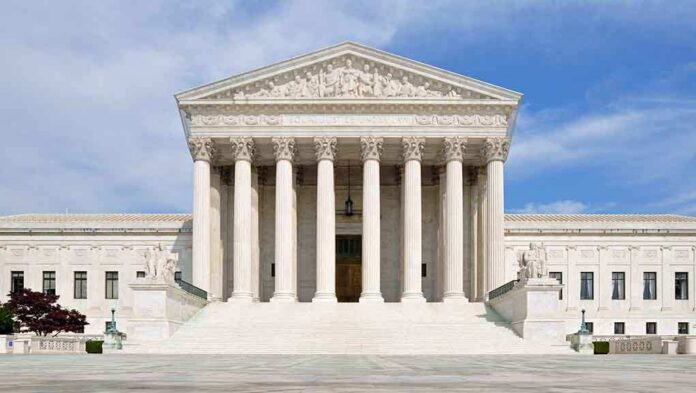
Democrats’ Senate sweep turned two lifelong seats into the hottest pressure points in Washington.
Story Snapshot
- Democrats captured the Senate, sharpening focus on Supreme Court succession fights.
- Justice Samuel Alito says the election will not change his plan to remain through the term.
- Justice Clarence Thomas shows no public sign of retiring as speculation swirls.
- The Senate controls confirmations, so timing shapes who gets a vote and when.
Control Of The Senate Rewires The Confirmation Clock
Democrats will run the Senate next year. That flips the gatekeeper for Supreme Court confirmations. The Congressional Research Service says the Senate decides whether a nominee gets a hearing, a vote, and a lifetime seat on the Court. That power matters more when a vacancy looks possible. Even without a vacancy, leaders and activists start gaming scenarios. They count months, scan health rumors, and ask one blunt question: who moves first, a justice or the Senate calendar?
President Trump still makes the pick. But a Democratic Senate can slow, reshape, or stop a nominee. That is why pressure built on the Court’s oldest conservatives, Samuel Alito and Clarence Thomas. One retirement could reset the Court’s 6–3 balance. That math fuels chatter in every green room in town. It also spurs a familiar warning from conservatives: do not blink, because once you leave, you cannot control your replacement.
Alito Says He Is Staying, For Now
Justice Samuel Alito, 76, signaled he will remain on the bench through the current term, even after the Democratic wave. He told reporters and contacts that the election did not change his plans. He also said he believed he still makes a valuable contribution, which guided his decision not to step down this year. Bloomberg Law reported the same bottom line the next day: the win by Democrats did not move him toward retirement. That stance narrows options for a lame-duck confirmation sprint.
Conservatives see risk in delay. A retire-now camp argues that if Alito left during the lame-duck, Republicans could confirm a successor before the new Senate is sworn in. That window is tight and invites a brawl. A stay-the-course camp says lifetime tenure means justices should not time exits to politics. Alito himself has called retirement talk part of the job and not a calculation game. That view aligns with judicial independence and with common sense restraint.
Thomas Sends No Retirement Signal
Justice Clarence Thomas, 78, has offered no public hint that he plans to leave. Reporting after the election said Thomas had given no sign of stepping down as Democrats prepared to take the Senate. Over the years, he has brushed off retirement talk and suggested he would serve for a long time. Allies say he will not let activists or pundits set his clock. That view tracks the oath and resists the fever that breaks out every time a map flips.
Speculation about Thomas and Alito spikes because age is simple to see and Senate math is simple to count. But the underlying data cut against the idea that politics always rules the timing. The Congressional Research Service notes that most modern vacancies come from retirements, yet academic work finds political timing does not dominate those choices overall. Health, purpose, and the work itself often outweigh election maps. That truth frustrates partisans but steadies the Court.
What Pressure Means And What It Does Not
Pressure does not equal a plan. Democrats now control the hearing room and the final vote, but they cannot force a vacancy. Republicans cannot conjure one either. If a justice chooses to retire before the new Senate is sworn in, Republicans could try to confirm in the lame-duck. If not, any opening lands in a Democratic Senate’s hands. Both parties know these rules well. The rest is noise, leverage, and calendar math, not destiny.
How Conservatives Should Read The Board
Conservatives gain nothing by panic and risk much by rushing. A hurried exit could backfire if the clock runs out mid-process. A steady course respects the role of life tenure and avoids teaching future Senates to expect timed exits. The firmer ground is merit, clarity, and patience. Win arguments in the Court’s opinions, not in retirement rumors. If a vacancy comes, then fight on qualifications and the Constitution, not on gamesmanship that voters hate.
Sources:
seattletimes.com, newsweek.com, politico.com, news.bloomberglaw.com, rawstory.com
© patriotnewsdaily.com 2026. All rights reserved.