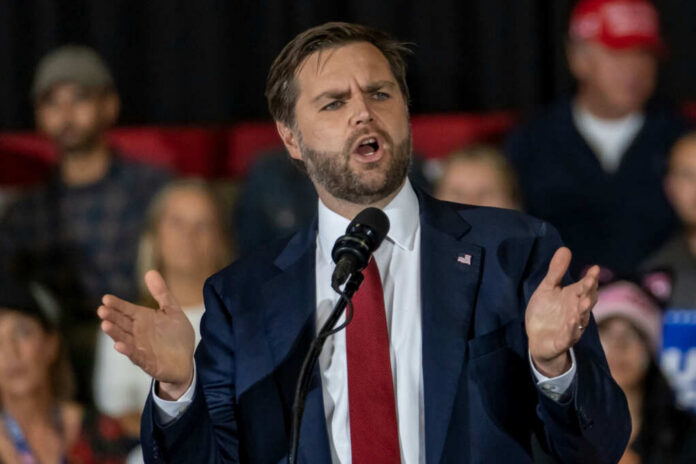
Vice President JD Vance says Republicans lost the 2026 midterms for one reason: the Iran war.
Story Snapshot
- Vance blamed the Iran war directly for the GOP’s midterm defeat.
- He says 2024 Trump-Vance voters flipped to Democrats in 2026.
- He lists four voter priorities: end the war, cut costs, America First, reset ties with Israel.
- Reports link the war to higher oil prices, intensifying cost-of-living pain.
Vance’s Diagnosis: War First, Everything Else Second
Vice President JD Vance posted that “the reason we lost is the war,” turning the Iran conflict into the central explanation for the Republican rout. His message drew a sharp line: voters punished the party in power over a costly, open-ended fight. Vance argued many 2024 Trump-Vance supporters crossed over to Democrats two years later, and he anchored that switch to war fatigue and pocketbook strain, not a broad ideological shift or candidate-by-candidate quirks.
Vance also said voters answered with four clear demands. End the Iran war. Lower the cost of living. Put America First. Change the United States relationship with Israel. He framed them as direct signals, not think-tank abstractions. He pointed to a pollster he trusts and implied these were the top answers showing up again and again, though he did not publish the survey or its methods in the posts reported at the time.
The Claimed Voter Switch: 2024 Supporters, 2026 Defectors
Vance’s case centers on a simple mechanism: Trump-Vance 2024 voters bailed out in 2026. He said they did not become liberals overnight. They voted to stop a war they saw as costly and to protest higher prices hitting gas, groceries, and rent. Multiple outlets reported his claim that this specific group moved to Democrats in enough places to swing control, making the midterms a targeted rebuke of foreign policy, not a wholesale realignment.
Reports also noted a feedback loop between war headlines and wallets. Oil markets respond fast to risk. Coverage linked the Iran conflict to higher oil prices in a year when families were already cutting back. Vance shaped that link into a blunt message: if you raise global risk, you raise prices at home, and voters will send a bill to the party in charge. That chain helps explain why he pairs “end the war” with “cut costs” as twin demands.
What “Change” With Israel Could Mean Politically
Vance added a fourth point that grabs attention: change the United States relationship with Israel. He did not lay out a full plan in the statements covered—no aid figures, arms conditions, or diplomatic red lines. But the political marker is clear. He wants a debate inside the Right about goals, burden sharing, and whether Washington’s support should have tighter terms tied to American interests. That stance aims to keep traditional allies while insisting on measurable returns for the United States.
COLLABORATION AND POWER STRUGGLES INSIDE TRUMP'S CAMP
According to Fox News, JD Vance is seeking to build a “new right” coalition among disillusioned Trump supporters following the Republicans' crushing midterm election defeat.
His strategy reportedly involves winning back… pic.twitter.com/qwazGQzzcO
— Rohoza (Дев'ятий) Mykhailo 🇺🇦🇱🇹🇨🇦 (@Oct7NeverForget) November 5, 2026
This posture also sets a contrast inside the administration. Reporting said President Trump defended the war even while saying it was “part of” the midterm result, while Vance called it the reason. For voters who prize peace through strength and clear limits, Vance’s framing sounds like common sense: define the mission, limit the mission, or end it. That is a conservative instinct rooted in prudence, cost control, and putting American families first.
How This Fits The Midterm Pattern—And Where It Breaks It
Midterms usually punish the president’s party. That is a hard historical baseline. Analysts have shown this pattern across the postwar era, which means any single-issue claim must beat a strong current to stand out. Vance does not deny the midterm drag; he argues the war turned a normal headwind into a gale. If he is right, Republicans can reverse course by meeting voters where they are: end the conflict and focus on the home front.
War politics often hinge on costs and clarity. Research on conflict and elections has found that military setbacks and visible costs can erode support for parties in power. When the economy feels tight, voters grow less tolerant of long or vague missions abroad. That mix—higher prices and a grinding war—tracks with how Vance reads 2026. His fix is blunt and testable: shut off the source of pain, and trust voters to swing back.
The Road Ahead: From Slogans To Specifics
Vance’s four-point map begs for details. Ending the war needs a timetable, a regional off-ramp, and a plan to keep Americans safe. Cutting costs needs energy supply, permitting, and a dollar-stable budget. America First asks for clear tests that tie every commitment to direct gains for citizens. A reset with Israel requires conditions and measures that protect allies while guarding American resources. Deliver those specifics, and the thesis moves from a postmortem to a platform.
Republicans now face a clean choice. Keep arguing process and blame the map, or face the voters’ message that Vance claims they sent. If the message was “no more costly wars and fix the bills,” the winning play is obvious. End the war. Unleash affordable energy. Put America’s interests first, every time. Elections reward leaders who hear the pain, move fast, and prove it with results.
Sources:
facebook.com, cbsnews.com, boston.com, cp24.com, lemonde.fr, nbcchicago.com
© patriotnewsdaily.com 2026. All rights reserved.