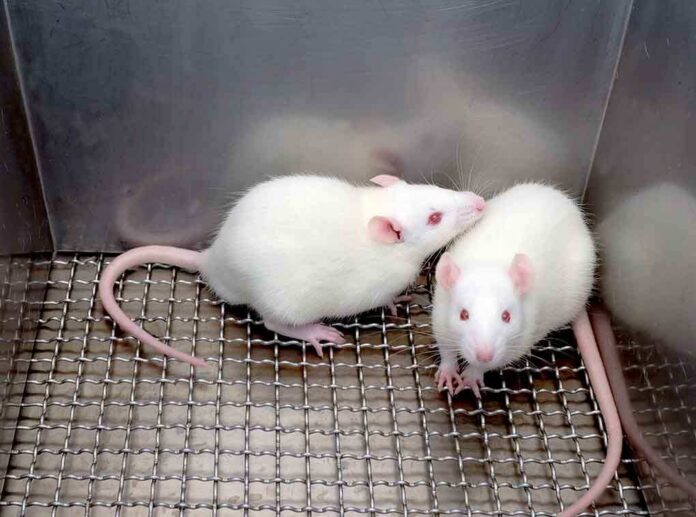
Scientists have found a real warning sign, not a movie monster: city rodents in the Northeast are carrying poison-resistance genes at startling rates.
Quick Take
- Rutgers researchers found that 84% of sampled house mice had at least one Vkorc1 mutation linked to rodenticide resistance [3].
- Nearly 70% of those mice carried mutations already known to help them survive common rodenticides [3].
- About 35% of sampled Norway rats also carried Vkorc1 mutations, but researchers said the effect on resistance is still unclear [1][3].
- The study points to a bigger problem: poison-only control can fall behind fast when rodents keep adapting [2][13].
The New Jersey Study That Changed the Conversation
The Rutgers team tested DNA from 147 house mice and 143 Norway rats gathered in New York, New Jersey, Pennsylvania, and Washington, D.C. They focused on a gene called Vkorc1, which helps control the vitamin K cycle and makes anticoagulant rodenticides work. When that gene changes, the poison can lose some of its edge. The study also found several genetic variants never before reported in these rodents, which adds intrigue but not proof.
That last point matters. The headline is not that every rodent is now super-resistant. The stronger claim is narrower and more troubling: in some crowded urban areas, resistant mice may already be common enough to blunt routine control efforts. The Rutgers release said scientists do not yet know whether the new mutations actually cause resistance, so the evidence is strongest for known variants and weaker for brand-new ones [1][3].
Why House Mice Draw the Most Attention
House mice are the clearest signal in the data. Rutgers reported that 84% of sampled mice had at least one resistance-linked mutation, and nearly 70% carried mutations already tied to survival after poison exposure [3]. One related peer-reviewed study also reported that mutations at codon 139 of Vkorc1 are a major marker of resistance in commensal rodents more broadly [12]. That is why the mouse finding feels less like a footnote and more like a shift in the battlefield.
Norway rats are a different case. Rutgers found mutations in about 35% of the sampled rats, but the researchers were careful not to overstate what those changes mean [1][3]. Some mutations may matter. Some may not. The study itself says the team does not yet know whether most of the rat mutations affect susceptibility to rodenticides. That caution is important, because public fear grows fastest when science is turned into certainty before the tests are done.
What This Means for Pest Control
The practical message is plain: poison alone is a weaker plan than it used to be. Rutgers researchers urged integrated pest management, which means sanitation, habitat changes, sealing entry points, and traps instead of leaning only on chemicals [3]. That advice fits common sense. If rodents can keep finding food, shelter, and openings, then more poison does not solve the root problem. It only buys time while the animals keep adapting.
Breaking News
Mutant sewer rats spreading through major US cities as scientists discover disturbing DNA changesScientists have uncovered a disturbing change in both mice and rats infesting America's biggest cities, making the rodents harder to kill than ever before.… pic.twitter.com/0g7LLDgTaZ
— News News News (@NewsNew97351204) June 24, 2026
This is also why the story has spread so quickly online. A “mutant rat” headline grabs attention, but it can overshoot the science. The better reading is more sober and more useful: cities that rely on repeated poisoning may be selecting for rodents that survive. That does not mean every bait station has failed. It means pest control now has to treat genetics, not just droppings and burrows, as part of the problem [13][19].
Why the Alarm Should Be Measured, Not Ignored
There is a useful counterweight in the broader literature. A separate surveillance effort found no Vkorc1 resistance mutations in sampled Norway rats from Richmond, Virginia, or Helsinki, Finland [3]. Other studies also show that resistance can be highly local, not universal [9][12]. That does not erase the Rutgers findings. It does, however, block the lazy leap from “some cities show resistance” to “all American cities are overrun.” Good policy starts with that distinction.
The most responsible next step is more sampling, more places, and real-world testing. Scientists still need in vivo confirmation for some of the newly identified variants, and they need better maps of where the mutations are most common [1][4]. Until then, the safest conclusion is not panic. It is pressure. Urban rodent control may be entering a stage where the old poison-first habit no longer does enough on its own.
Sources:
[1] Web – Scientists Find Poison-Resistant Mutant Rats Spreading Across …
[2] Web – Novel mutations in the VKORC1 gene of wild rats and mice – PMC
[3] Web – Urban Rodents May Be Evolving Against Common Poisons
[4] Web – Surveillance of the Vkorc1 Gene Finds No Evidence of Rodenticide …
[9] Web – [PDF] Detection of Vkorc1 single nucleotide polymorphisms indicates …
[12] Web – [PDF] VKORC1-based resistance to anticoagulant rodenticides … – …
[13] Web – Large‐scale identification of rodenticide resistance in Rattus … – …
[19] Web – Widespread exposure to anticoagulant rodenticides among common …
© patriotnewsdaily.com 2026. All rights reserved.