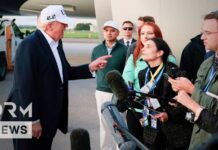
President Trump’s clash with CNN’s Kaitlan Collins over Iran did not come out of nowhere; it exploded at the exact point where personal danger, war politics, and his long-running war on “fake news” collide.
Story Snapshot
- Trump says he is “number one on the kill list” for Iran and treats questions about the war as life-or-death, not routine politics.
- He insists his Iran Memorandum of Understanding blocks nuclear weapons and “achieves everything,” while critics say key terms remain vague or secret.
- Collins presses him on strikes, missiles, and the deal’s gaps; Trump calls CNN reporting “fake,” erupts, and orders the press out.
- The confrontation fits Trump’s long pattern of targeting named journalists and outlets to rally supporters and deflect scrutiny.
Trump’s Iran Stakes And Personal Threats
Trump did not face Kaitlan Collins’ question as just another media jab. He has openly said that being president is “a very dangerous profession” and that he is “number one on the kill list for Iran.” That is not casual rhetoric. It reflects a war posture where he sees himself as a marked man and believes hostile questions about Iran are not neutral, but loaded in ways that could weaken America’s hand and embolden an enemy regime.
Those security fears show up in his travel choices. Reporting on his decision to abandon a newer jumbo jet bought from Qatar and return to the older Air Force One points to hard concerns, not vanity. The Qatari aircraft reportedly lacks many of the defensive systems built into the traditional presidential plane. In a shooting war with Iran and proxy forces, a president who thinks he is at the top of a kill list will not treat that as theory. He acts as if the risk is real.
The Iran Deal Trump Says “Achieves Everything”
The clash with Collins comes against the backdrop of Trump’s framework agreement with Iran, the Memorandum of Understanding meant to halt hostilities and open the Strait of Hormuz. Trump has repeatedly claimed this deal “achieves everything we set out to accomplish” and warned that bombing would resume if a final agreement is not locked in within sixty days. To his supporters, that sounds like tough leverage, not appeasement.
The document language backs up some of his claims. In public and leaked texts, Iran reaffirms that it will not acquire or develop nuclear weapons and accepts supervised changes to its uranium work under the International Atomic Energy Agency. That nuclear pledge matches Trump’s insistence that the deal is, at its core, about stopping Iran from ever getting a bomb, by building it or buying it. For conservatives focused on hard power, that is the central test.
Missiles, Contradictions, And Collins’ Line Of Questioning
Collins’ questioning digs at the weak seams in Trump’s narrative. On television and in briefings, Trump has claimed that Iran’s missile and military capabilities were “totally obliterated” by American strikes. Yet elsewhere he has said Iran “has to have some” missiles, arguing it would be unfair for every other regional player to maintain arsenals while Iran has none. Those two positions sit uneasily together, and Collins presses on exactly that tension.
Her push also connects to Trump’s own early assessments of the strikes on Iran’s nuclear and military sites. Intelligence updates aired on Collins’ program noted that Iran’s key enrichment facilities were damaged, not “completely and totally obliterated.” That kind of careful, sourced reporting cuts against Trump’s sweeping language. For a president who believes he is under physical threat and political siege, a reporter saying his favorite phrases do not match the facts feels less like honest doubt and more like sabotage.
Reflecting Pool Claims, Evidence Gaps, And Media Pushback
The fight over truth is not limited to missiles. Trump’s public threats of ten-year prison terms for alleged vandalism and chemical tampering at the Reflecting Pool in Washington ran ahead of the evidence that has been shared. Legal experts on CNN pointed out that simply touching the monument is not a crime, and damage under one thousand dollars is a misdemeanor, not a major felony that draws a decade behind bars. That breaks sharply with Trump’s tough talk.
Trump rage-quits press gaggle,… after CNN's Kaitlan Collins questions new war strikes
"That girl is always mean to me."https://t.co/dg0OJkdZ12
— Roshan Rinaldi (@Roshan_Rinaldi) July 14, 2026
So far, officials have not presented forensic proof that chemicals were used to damage the pool. The lack of disclosed evidence weakens Trump’s position when he accuses Collins and CNN of spreading “fake news,” because it is his own claims that sit on shaky ground in this case. From a conservative common-sense view, punishment for real vandalism is fine, but penalties must match the law and the facts, not a president’s anger at how networks frame the story.
Trump’s Pattern Of Targeting The Press
This courtroom-style confrontation did not surprise anyone who has watched Trump’s media battles over the years. Studies of his social media show more than six hundred posts attacking specific outlets by name, led by CNN and the New York Times. He brands them “fake,” “corrupt,” and “enemy of the people,” and he sometimes picks out individual reporters for public scorn at rallies and gaggles, just like he did with Collins.
Historians note that presidents have clashed with the press since the early days of the Republic. The pattern with Trump is different in scale and personal tone. His frequent legal threats and even massive defamation suits against media organizations mirror the playbook of leaders who see critical journalism as something to be punished, not answered. For his base, that sounds like righteous defense against liberal media. For skeptics, it looks like an effort to shut down hard questions on war, deals, and power.
Where Facts Stand And What Could Settle The Debate
Much of the Iran framework is documented, but not all of it is transparent. Trump has said the agreement runs just a page and a half, yet the full final text has not been publicly released, making it hard for outside experts to confirm his claim that it “achieves everything.” A complete, official release of the Memorandum of Understanding would either vindicate his nuclear and security claims or expose soft spots he has glossed over.
Independent analysis of the Reflecting Pool and clear reports from the National Park Service would clarify whether any serious vandalism or chemical tampering occurred. Detailed testimony from military security officials about the Qatari jet’s defenses would show whether Trump’s switch back to Air Force One was driven by real threats or symbolic politics. Until that kind of evidence is on the table, each new clash with a reporter like Kaitlan Collins will feel less like a one-off blowup, and more like another round in Trump’s long war over who gets to say what is real.
Sources:
thegatewaypundit.com, npr.org, bbc.com, youtube.com, nytimes.com, archive.org, boston.com, dw.com
© patriotnewsdaily.com 2026. All rights reserved.