Two men are dead after ICE traffic stops, and Donald Trump’s answer is not retreat, but to double down.
Story Snapshot
- ICE paused most vehicle stops nationwide after two deadly shootings in Texas and Maine.
- Trump publicly blasted the pause and pushed for traffic stops to restart fast.
- The Supreme Court cleared the way for aggressive immigration sweeps with vehicle stops back in 2025.
- Critics point to rising use of force and training gaps, while Trump calls traffic stops “vital.”
How two shootings forced ICE to slam the brakes
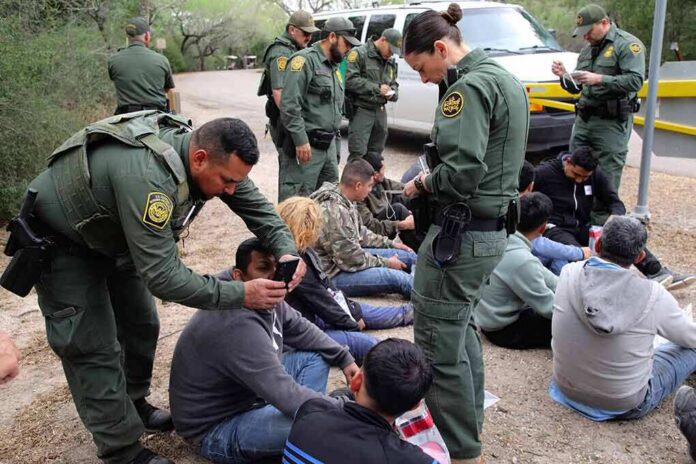
Federal immigration agents shot and killed two men in less than a week, first in Texas and then in Biddeford, Maine, during traffic-stop style encounters tied to Trump’s mass deportation push. Neither man was the original target of the underlying operation, and one, Maine driver Joan Sebastian Guerrero, had legal work authorization. After the second shooting, Department of Homeland Security officials told reporters that Immigration and Customs Enforcement agents must temporarily halt most vehicle stops nationwide while investigators review what went wrong.
The order covers the division that handles civil immigration arrests, not the unit that runs criminal investigations. Agents may still join stops when they ride with local police on serious criminal cases, but routine roadside pulls for immigration checks are on hold. Officials frame this as a “pause,” not a long-term policy shift, while officers receive new training on vehicle-stop tactics and use-of-force standards. In other words, ICE did not wake up one day and embrace restraint; it was forced there by blood and bad headlines.
Supreme Court opened the door to aggressive roadside enforcement
This pause lands on top of a Supreme Court decision from September 2025 that handed Trump’s team a major victory. In a 6–3 ruling, the Court allowed Immigration and Customs Enforcement and Border Patrol to restart wide-ranging immigration sweeps in the Los Angeles area, overturning lower court limits that had blocked ethnicity-based stops. Justice Brett Kavanaugh wrote a concurrence saying race can be one relevant factor when officers judge whether someone might be in the country illegally, as long as it is not the only factor.
The Court kept one guardrail: federal officers must still have “reasonable suspicion” that a person is in the United States unlawfully before they pull over a car. That standard is lower than probable cause but higher than a hunch. It fits with older guidance that immigration agents can make vehicle stops if they can point to specific facts pointing to an immigration or federal crime concern. From a conservative rule-of-law view, the Court’s message was clear: enforce the law, but do it inside the Constitution’s lines.
Trump wants the engine back on, critics want the keys taken away
Trump did not hide his anger at the pause. While his own Department of Homeland Security leadership told agents to stop most traffic stops, Trump publicly called traffic stops one of the most important and effective ways to find and remove people in the country illegally, and said halting them “won’t happen on my watch,” according to multiple news and social reports. He framed the shootings as tragedies, but blamed rising political pressure and what he casts as media hysteria, not the tactic itself.
That stance matches his broader goal of large-scale deportations. Former acting Immigration and Customs Enforcement director John Sandweg said there is strong pressure on officers to “ramp up arrests” to meet Trump’s mass-deportation targets, and that has driven a surge in roadside encounters instead of quieter jailhouse arrests. Sandweg, who served under President Obama, argues vehicle stops are outside ICE’s traditional core mission and that agents are not trained like big-city patrol officers for split-second car-stop decisions. That gap in training matters when guns, moving vehicles, and confused drivers mix.
Rising force, missing cameras, and a fight over what “accountability” means
Documents gathered by watchdog groups show a sharp jump in reported federal immigration use-of-force incidents early in Trump’s second term, including a 353 percent increase over a short window in 2025. Civil rights lawyers say that spike, paired with court findings that agents violated the Fourth and Fifth Amendments in earlier California stops, shows an agency culture that pushes the edge of the law when political leaders demand more arrests. For many on the left, the Maine and Texas deaths are not flukes; they are the predictable result of that pressure.
Two shootings from ICE in the past week.
Trump is singing their praises and directly contradicting his administration’s move to pause traffic stops.
How many more lives will be at risk because of this? pic.twitter.com/fmTPLF8ppl
— Rep. Suhas Subramanyam (VA-10) (@RepSuhas) July 15, 2026
Supporters of strong enforcement counter that Immigration and Customs Enforcement targets “the worst of the worst,” pointing to cases where agents arrested people with serious criminal records during recent operations. They argue that pulling back on traffic stops lets dangerous offenders slip away and that most agents act within policy. From a common-sense conservative view, both things can be true at once: the nation needs firm border and interior enforcement, and it needs that power chained tightly to training, cameras, and consequences when force goes wrong.
Political heat from Maine to Mexico City
Trump’s push to restart traffic stops runs into growing bipartisan pushback. Republican Senator Susan Collins of Maine urged the Department of Homeland Security to end all non-urgent vehicle stops until basic questions are answered about the shootings, calling the situation serious enough to demand a pause. Democratic Senate hopefuls go further, tying the deaths to calls to weaken or even dismantle Immigration and Customs Enforcement, turning every new incident into campaign fuel. That is exactly the map Trump seems ready to fight on rather than avoid.
Abroad, leaders add more pressure. Colombia’s outgoing president Gustavo Petro labeled the Maine killing “murder” and called for legal action, even as investigations by the Department of Homeland Security inspector general, the Federal Bureau of Investigation, and Maine’s attorney general remain open and have not ruled on whether the shootings were justified. That foreign condemnation plays on loop in American media and social feeds, making it harder for enforcement defenders to keep the debate focused on law, training, and deterrence rather than emotion and global outrage.
Sources:
mediaite.com, cbsnews.com, noticias.foxnews.com, youtube.com, deseret.com, axios.com, time.com, wtop.com, english.elpais.com, chicagotribune.com
© patriotnewsdaily.com 2026. All rights reserved.