A 21-year-old student’s life ended when a wrong-way pickup hit his car head-on on I-91.
Story Snapshot
- University of New Haven senior Ryan O’Shea died after a wrong-way crash on I-91 South.
- Connecticut State Police said a northbound pickup in southbound lanes sparked a multi-vehicle chain.
- The medical examiner cited blunt impact injuries as the cause of death.
- The investigation continued as the campus and family honored O’Shea’s life and leadership.
A wrong-way pickup triggered a lethal chain on I-91
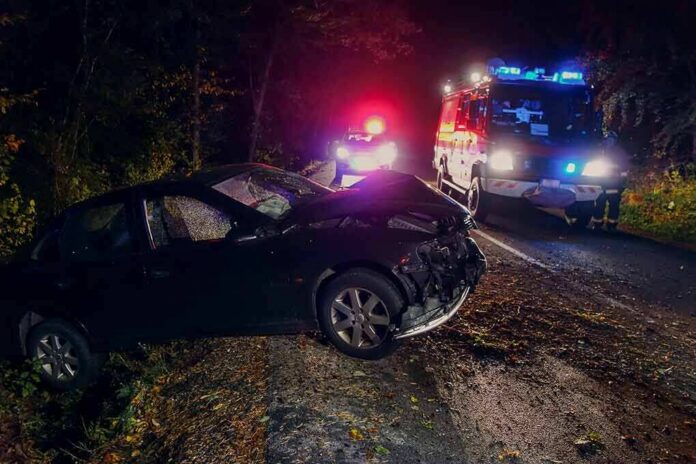
Connecticut State Police reported a pickup traveling north in the southbound lanes of Interstate 91 in North Haven around 11:45 p.m. on October 16. The truck struck a Honda Accord driven by University of New Haven senior Ryan O’Shea head-on. The Honda then moved into the left-center lane, where an SUV hit it. The car continued to the right lane and shoulder, where another SUV struck it again. O’Shea died from his injuries shortly after the crash.
The University of New Haven told students and parents that O’Shea’s car “was struck head-on by a wrong-way driver on Interstate 91 South in North Haven.” Officials shared the update as counselors, coaches, and staff supported classmates and teammates. The school’s statement anchored the early facts while police reconstructed the sequence on the highway. The university’s message focused on the student, his family, and the shattered team he helped lead.
Medical findings confirm the force and finality
The Connecticut Office of the Chief Medical Examiner identified the cause of death as blunt impact injury to the head, neck, torso, and limbs. That finding matches the crash sequence police described and the physics of a head-on hit at highway speeds, followed by two more collisions. Wrong-way crashes are rare but often deadly. National research shows these crashes doubled from 278 in 2014 to 520 in 2023 and kill far more often than typical wrecks.
Policy and roadway engineering analysts point to common risk flags in wrong-way events. Alcohol impairment, driving at night, older age, and invalid licenses appear often in national data. Divided highways magnify risk because closing speeds spike with even small mistakes. While each case turns on facts, the pattern holds: head-on wrong-way hits rarely end with minor harm. That is why states add brighter signs, ramp treatments, and median barriers where feasible to slow or stop the wrong-way driver.
A campus grieves a co-captain and friend
O’Shea’s teammates and coaches described a steady, upbeat leader who lifted others. The university said he was a senior assistant captain on the men’s club hockey team. Tributes poured in from the New Haven community and from home in New York’s Hudson Valley. Memorial plans took shape on campus. The team later moved to retire his jersey, a signal to new players that standards of character matter as much as skill on the ice and in life.
RT @WTNH: The man who was driving the wrong way on I-91 South in North Haven earlier this month, resulting in a crash that killed a University of New Haven student, was in the country illegally, federal officials confirmed Friday.https://t.co/dy5jI5du5Z pic.twitter.com/6ldiQHXWKV
— So says, The 70 y.o. Colored Lady…#TeamTrump (@PareshaPraying) October 31, 2026
Family members and friends sketched a life pointed forward. O’Shea studied criminal justice and talked about serving in law enforcement. The New Haven Register chronicled his volunteer spirit and tight bonds with teammates. That portrait explains the wider response. When a young leader with a service goal dies this way, people feel both loss and anger. Honoring him means seeing the facts straight and then fixing what can be fixed to reduce the next tragedy.
What the facts say and how to act on them
Police accounts and the university statement align on the core event: a wrong-way pickup struck O’Shea’s Honda head-on on I-91 South in North Haven. The medical examiner confirmed fatal blunt-force trauma. Reporting noted that the police investigation continued as of publication, a standard step after a severe highway crash. The most conservative reading of common sense is also the most direct one here: target proven causes first and harden the roads where people are dying.
States that make progress against wrong-way deaths do three things fast. They light up the entries drivers misuse. They add “wrong way” alerts tied to cameras and sensors. They back that with strong impaired-driving enforcement. National research and field tests show this bundle saves lives. It will not stop every case, but it trims the odds where seconds decide outcomes. The cost is modest compared with the lifetime lost when a driver crosses into oncoming lanes.
Sources:
pjmedia.com, newhaven.edu, nhregister.com, wtnh.com, wfsb.com
© patriotnewsdaily.com 2026. All rights reserved.