One burst of “military-grade” tear gas turned a routine live shot into a coughing fit that exposed how fast Minneapolis’ immigration crackdown spiraled into a crisis of trust.
Story Snapshot
- CNN correspondent Sara Sidner inhaled tear gas on live TV while covering Minneapolis protests after the shooting death of 37-year-old U.S. citizen Alex Pretti.
- Federal officials said officers faced obstruction and assaults after a targeted operation; protesters said aggressive enforcement keeps harming ordinary residents.
- Another recent Minneapolis death, Renee Good, a U.S. citizen and mother of three, sharpened public anger toward ICE and related agencies.
- The protest story widened when ex-CNN anchor Don Lemon was arrested after an anti-ICE disruption at a St. Paul church service.
A live broadcast becomes a case study in crowd control and accountability
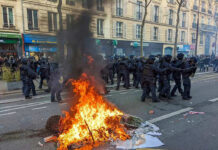
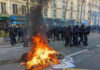
Sara Sidner’s on-air choking didn’t just look painful; it revealed how indiscriminate chemical irritants can be in a packed, chaotic street. Federal agents deployed tear gas as crowds surged in the aftermath of Alex Pretti’s fatal shooting by U.S. Border Patrol officers during a Minneapolis operation. Sidner described the gas as “extreme,” briefly regained composure, then started choking again as smoke thickened around her and the standoff continued.
Viewers saw the central dilemma of modern protest policing in real time: a tool intended to regain control hits everyone in its cloud, including press and bystanders. That matters because the public’s picture of events depends on what journalists can safely record. When a reporter can’t breathe, reporting stops, rumors fill the vacuum, and each side assumes the worst about the other’s intentions.
The shooting that ignited the street, and the story officials want remembered
Authorities described the triggering event as a targeted operation aimed at an individual wanted for violent assault. The official account says Pretti approached agents with a 9mm handgun, a struggle followed, and officers fired defensively. Officials also said protesters quickly arrived afterward, obstructed enforcement activity, and assaulted law enforcement—framing tear gas as a response to an escalating threat rather than a first resort. Those details shape how Americans judge legitimacy.
Common sense and conservative values start with a basic principle: government has a duty to keep the peace and protect officers doing lawful work, especially when firearms appear in a confrontation. The other side of that same principle demands discipline and clear standards because force without restraint erodes consent. A defensive shooting can still spark outrage when the community believes federal agencies operate with too much secrecy, too little local accountability, and too much political messaging.
Minneapolis’ deeper fuse: two citizen deaths and a crackdown’s credibility gap
Minneapolis did not reach “all-time high” tension on one incident alone. Renee Good’s death earlier in January—described as a U.S. citizen, a mother of three, shot by an ICE agent while in her car—hung over the city like an unresolved argument. Add reports of prior video showing Pretti in a scuffle with agents and disputes over what that footage proves, and the public gets two competing narratives: dangerous resistance versus heavy-handed enforcement.
That credibility gap explains why Sidner’s tear-gas moment mattered beyond television drama. When citizens hear “targeted operation,” they want to see a tight, accountable action against a truly dangerous suspect. When they hear “tear gas deployed,” they picture a broad spray of force against a crowd that includes ordinary residents. The more federal operations touch people who are citizens, not foreigners, the harder it becomes to sell the public on slogans instead of evidence.
The church disruption and the Don Lemon arrests widen the fight to civil rights
The conflict jumped city lines and arenas when an anti-ICE protest disrupted a service at Cities Church in St. Paul, where an ICE official reportedly serves as a pastor. Federal authorities later arrested Don Lemon and three others on civil-rights-related charges tied to what officials called a coordinated attack on worshipers. Lemon’s lawyer described the case as an unprecedented attack on the First Amendment, insisting Lemon acted as a journalist covering events.
The competing claims here demand careful thinking. Conservative Americans usually defend religious liberty and the right to worship without intimidation, so a “service disruption” understandably triggers a strong law-and-order response. At the same time, conservatives also know the danger of politicized prosecutions and vague accusations when the government dislikes the speaker. If Lemon functioned as press, arresting him chills coverage; if he functioned as an organizer, accountability follows.
What this episode signals for protest coverage and federal operations next
Trump’s appointment of Tom Homan as the point man for Minneapolis operations, paired with reports that agents involved in the Pretti shooting were placed on leave, reads like an attempt to regain control of both tactics and optics. Officials can de-escalate without retreating from enforcement by tightening rules, improving communication with city leaders, and building a trackable public record of incidents. The alternative is a cycle of protests, force, and distrust.
'I Just Got Hit!' CNN Reporter Chokes Live On Camera As Trump ICE Agents Fire Irritants At Protesters https://t.co/wASH7FhexI
— Mediaite (@Mediaite) January 31, 2026
Sidner coughing on camera and Lemon sitting in custody both underline the same warning: when the state applies force broadly, it rarely hits only “the bad guys.” It hits witnesses, reporters, worshipers, and neighbors—people whose reactions determine whether order returns or fractures. Minneapolis now faces a simple test with complicated consequences: can federal power prove it uses restraint, and can protesters prove they can dissent without turning public spaces into battlegrounds?
Sources:
Reporter Violently Chokes on Tear Gas During Protests
Trump administration orders arrest of ex-CNN anchor covering Minneapolis protests