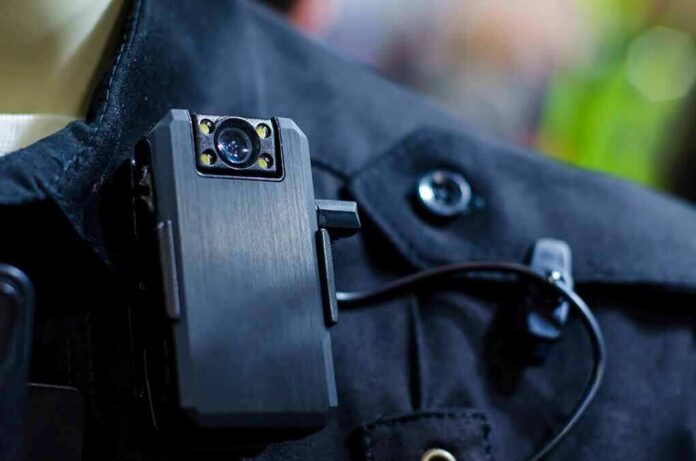
Four short bodycam clips show Minneapolis officers sprinting into a high-rise as gunfire echoes above them, and they keep going.
Story Snapshot
- Police rushed 15 East Grant Street after reports of multiple victims and active gunfire.
- Three people died, including the suspect; several others, including officers, were hurt.
- City officials released bodycam clips that capture the ninth-floor push toward the gunman.
- The area was secured and no further threat remained after the confrontation.
What Happened Inside the Loring Park High-Rise
Minneapolis police arrived at 15 East Grant Street around 4:39 p.m. after calls of shots fired in a downtown apartment tower. Officers entered, found wounded victims, and heard more gunfire from an upper floor. They moved toward the shots, reached a higher level, and confronted the gunman. The suspect died in that exchange. City officials later confirmed that one other person also died at the scene, while others, including officers, were injured in the attack and response.
City leaders urged people to avoid the area as units flooded the scene. Commanders worked to seal off streets around Loring Park to stop more harm and to guide medics to the injured. Officials later said the area was secure and the wider public faced no further danger. That fast shift—from chaos to control—matches the playbook for active shooter calls in dense urban spaces, where seconds and stairwells matter.
What the Bodycam Shows—and Why It Matters
The City of Minneapolis released four body-worn camera clips from the hallway fight on an upper floor. The video shows tight quarters, shouted commands, and officers closing distance under fire. The footage aligns with the city’s timeline: officers entered, climbed toward the sound of shots, and met the threat on a higher level. The Star Tribune’s description underscores the close-in nature of the final moments, on the ninth floor, where the suspect and officers exchanged fire.
Bodycam is not a full answer key; it is a window. It captures one angle in a loud, fast, and narrow space. Courts and agencies know this gap well and have built norms for staged releases after large incidents. Past mass shootings showed the same pattern: early clips shape public memory while investigative files take weeks or months to complete. That is why the initial bodycam drop is a scene-setter, not a whole case file.
The Human Cost and the On-Scene Risks
Officials reported three deaths, including the suspect, and several injuries, among them police officers. Early counts varied by outlet as hospitals sorted trauma loads and police tallied victims from multiple floors. The consistent thread is clear: officers went up as others went out, and that choice carried real risk. The numbers reflect that burden. MPR News confirmed three dead and three injured officers in the final tally released soon after the shooting.
The clips also show how training meets reality. Hallway pushes shorten reaction time and raise the chance of blue-on-blue confusion. Clear commands and disciplined fields of fire matter more than ever. The Las Vegas precedent reminded the country that selective releases are common and often necessary, but they also place pressure on leaders to speak plainly and on the public to judge fairly. What we see should inform us, not inflame us.
What Comes Next—and What Common Sense Says Now
Detectives will map rounds, review radio traffic, and match statements to timestamps. That process will test whether tactics followed policy and whether equipment worked as planned. Based on the record so far, the bodycam clips and the city timeline point in the same direction: officers heard shots, advanced, and ended the threat on an upper floor. That is the hard job we ask them to do, and when they do it under fire, the community owes them clarity and support.
Sources:
minneapolimedia.town.news, mprnews.org, fox9.com, content.govdelivery.com, kttc.com, georgialawreview.org, cnn.com
© patriotnewsdaily.com 2026. All rights reserved.