Two Cal Poly students say a late-night Tesla strike shattered their lives—and now a judge has ordered the driver to face trial.
Story Snapshot
- Two women were hit while crossing near campus on January 8 in San Luis Obispo.
- Police arrested a student after finding a dark-gray Tesla Model 3 tied to the crash.
- The driver pleaded not guilty; a judge later ordered him to stand trial on felonies.
- A new civil lawsuit targets the driver, two students, and a fraternity chapter.
What Happened On Crandall Way
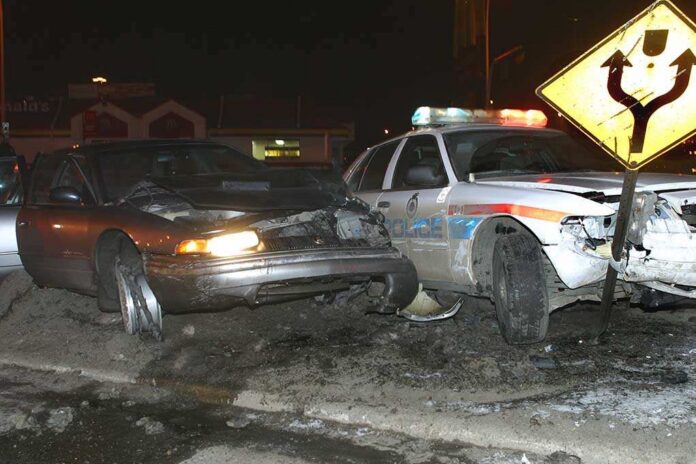
San Luis Obispo Police said two women suffered major injuries around 9:30 p.m. on January 8 while crossing the 100 block of Crandall Way, near the California Polytechnic State University campus. Officers identified a dark-gray Tesla Model 3 from witness details and located it the next morning. Police arrested student Ishan Pandhare in connection with the collision and listed hit-and-run among the alleged offenses. The department described a serious scene and a fast-moving search that led to the car and suspect.
Prosecutors charged felony driving under the influence causing injury, reckless driving causing injury, and hit-and-run causing injury. Court coverage reported that Pandhare pleaded not guilty on February 4, 2026. A later hearing featured a witness who said one victim was thrown into the air and traveled 20 to 30 feet. After that preliminary review, a San Luis Obispo County judge ruled the case would proceed to trial, signaling the evidence met the threshold for felony adjudication.
The Civil Lawsuit’s Targets And Claims
On July 10, 2026, the injured students, identified in reporting as Burke and Archibald, filed a negligence lawsuit in San Luis Obispo County Superior Court. The complaint names Pandhare as the driver and also names Kappa Sigma, along with students Aidan Jameson Kennedy and Kip Stackle. The filing alleges Kennedy owned the Tesla and let Pandhare drive it despite signs of intoxication, and that Kennedy and Stackle provided alcohol to an underage Pandhare at a fraternity-related event that night, contributing to the crash.
The lawsuit seeks damages for medical care, pain, and lasting harm. It frames the crash as the predictable result of mixing alcohol, speed, and a pedestrian-heavy area near campus. The complaint also uses sharp language about the aftermath, aligning with witness accounts of severe injuries and chaos on the street. While the civil case runs on its own track, its core claims mirror the heart of the criminal counts: impaired driving, reckless conduct, and leaving the scene, all tied to the same timeline.
Why Fraternity Liability Is The Hard Part
California law often draws a bright line on social-host liability. Plaintiffs must do more than show that people drank before a crash. They must establish duty, control, and causation that go beyond serving alcohol. Courts have limited suits against universities and national fraternities for off-campus events unless there is direct control and foreseeability tied to the harm. That pattern makes claims against a chapter or peers tougher than the direct negligence case against a driver.
The complaint tries to cross that line by tying specific people to specific acts—providing alcohol to an underage driver and handing over a car to someone who appeared drunk. That factual path, if proven with messages, receipts, and testimony, can resonate with jurors and align with common sense. You do not give keys or alcohol to someone who should not be behind the wheel. Conservative instincts about personal duty and accountability cut cleanly here: actions have consequences for those who take them.
What Evidence Will Decide Both Cases
The most important pieces now are science and data. A chemical test result, collection time, and expert analysis would set the impairment picture with clarity. The Tesla’s event data recorder and any telematics can lock down speed, braking, and steering seconds before impact. Street cameras and phone location data can trace movement after the crash. Witness interviews and 911 recordings can fill gaps about what the driver knew and did. These items move a case from allegation to proof.
On the civil side, discovery will focus on who hosted, who supplied, and who decided to hand over the Tesla. Group chats, photos, invitations, and payment records can show planning and control. Medical files and expert reports will support the scope of injuries and the cost of care. If those bricks line up, the driver case looks straightforward, and the fraternity-adjacent claims gain weight. If they do not, the driver remains the main legal bullseye while others step back behind legal shields.
Sources:
nypost.com, m.dailyadvent.com, mustangnews.net, sanluisobispo.com, calcoastnews.com
© patriotnewsdaily.com 2026. All rights reserved.