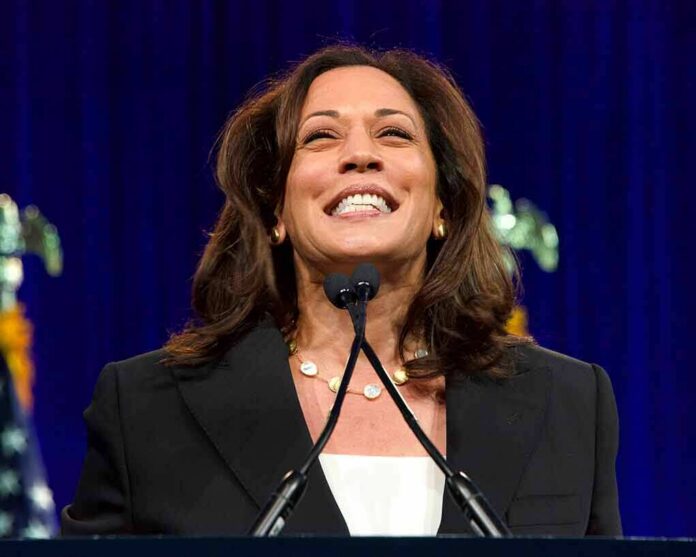
Kamala Harris’s latest policy preview drew attention less for the platform itself than for how quickly the online conversation turned into a fight over what she was actually proposing.
Quick Take
- Harris was linked in reporting and commentary to a broad reform agenda that centered on Senate rules and other major institutions.
- The strongest documented material in the research package focuses on filibuster reform, not on a fully verified 2028 campaign platform.
- Multiple policy groups and Senate proposals show that filibuster changes are a real and established debate in Washington.
- The record provided here does not fully prove a single, official Harris plan covering the Electoral College, court expansion, and congressional restructuring.
What Harris Actually Put on the Table
The clearest part of the debate is the filibuster. Reform groups and Senate materials describe several familiar fixes: abolishing it, restoring a talking filibuster, or changing cloture so debate continues unless 41 senators keep it alive.
That matters because the filibuster is not a constitutional command. Brookings and Senate materials both explain that it is a Senate rule, and Senate rules have changed over time, including the cloture standard.
Why Supporters Say Reform Matters
Supporters argue that the current system lets a minority block action even when a majority wants to govern. The American Constitution Society’s proposal goes further and says the rule should favor senators who represent a majority of the population, not just a Senate majority.
Senator Jeff Merkley’s office has also pushed a talking filibuster model. His proposal would force objecting senators to keep speaking, and it would also limit other choke points like motions to proceed and conference-committee obstruction.
The broader reform case is easy to spot. It rests on the idea that the Senate should make decisions with more accountability, not endless delay. Reform forums also include exceptions for voting-rights and other democracy bills, showing that the goal is not just speed, but protecting core political rules.
Where the Evidence Gets Thin
The material supplied here does not give strong primary-source proof that Harris herself formally endorsed every item critics attach to her name. The package mainly includes commentary, summaries, and third-party descriptions, not a full campaign transcript or policy memo.
That is why some of the louder claims go farther than the record. The evidence here speaks most clearly to filibuster reform, while court expansion, ending the Electoral College, and congressional restructuring are not equally documented in the provided sources.
Why the Story Keeps Spreading
This fight fits a familiar pattern in American politics. Reformers call Senate rules and court design a representation problem. Opponents call the same moves a power grab. That split explains why a procedural debate can be packaged as scandal so quickly.
There is also a real strategic risk for reformers. Once a proposal sounds like retaliation, voters stop hearing the policy details. The debate over court size after Dobbs and the long-running argument over filibuster reform both show how fast institutional reform gets read through partisan fear.
In plain terms, the strongest confirmed story is not that Harris unveiled a fully mapped 2028 blueprint. It is that her orbit is being tied to a real Washington argument over whether Senate rules should keep empowering a minority to block action, or whether majority rule should have a cleaner path to govern.
Sources:
thegatewaypundit.com, polisci.northwestern.edu, filibusterreform.org, effectivegov.uchicago.edu, brookings.edu, nationalaffairs.com, en.wikipedia.org, scholarlycommons.law.northwestern.edu, merkley.senate.gov, acslaw.org, pogo.org, congressionalinstitute.org, thehill.com, reddit.com
© patriotnewsdaily.com 2026. All rights reserved.