
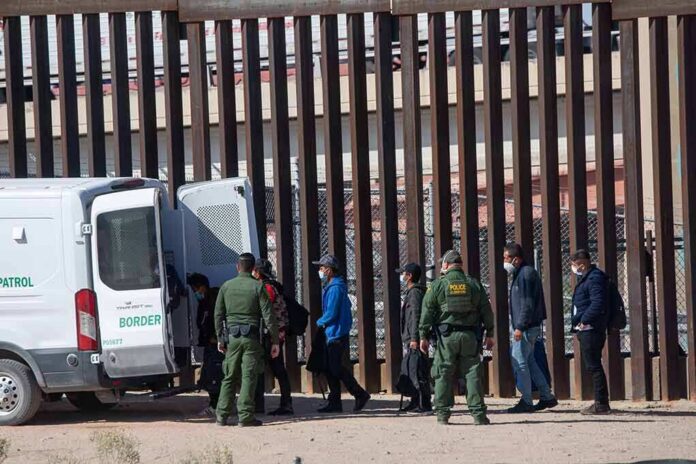
Trump’s tariff threat aims to make Mexico stop migrant caravans before they reach the U.S. border, using trade leverage to force action.
Story Snapshot
- Large caravans moved through Mexico toward the U.S., creating real enforcement strain.
- Some migrants tried to breach the border near Tijuana; arrests and deportations followed.
- Mexico can and did detain, deport, or redirect caravan groups in past surges.
- The tariff threat seeks faster results than talks alone, but costs are unquantified in current claims.
What triggered the tariff warning
President Trump linked trade pressure to border control and warned Mexico to stop large migrant caravans before they reached the United States. He laid out this logic years earlier: stop the flow far from the line, not at the line. The backdrop is not hypothetical. Organizers and reporters documented caravans of hundreds to thousands moving north through Mexico. One early estimate put a caravan at about 1,000 people, mostly from Honduras, with later waves counted in the thousands.
Pressure rose when border confrontations turned volatile. Near Tijuana in November 2018, some migrants tried to cross en masse. United States agents used tear gas. United States authorities arrested 42 people who crossed. Mexican officials reported returning 98 foreigners after the incident. That flashpoint proved the stakes: when a caravan reaches a congested port of entry, chaos invites bad decisions, and crowd control becomes the story.
What Mexico has already shown it can do
Mexico’s record shows capacity to slow or split caravans. Its Interior Ministry said it deported 11,000 Central Americans during a key period in late 2018. Security forces stopped smaller follow-on caravans, detaining 213 migrants in one case. Another group of about 200 to 300 was halted and more than 100 arrested. Mexico also offered legal off-ramps. The Estas en Tu Casa plan provided provisional residency, work papers, healthcare, and schooling for those who stayed in southern Mexico.
These actions undercut the claim that Mexico is helpless. They also support a basic conservative reading of cause and effect: clear rules and consistent enforcement change behavior. When routes get tougher, flows adjust. When lawful options appear, some people take them. Mexico’s mix of enforcement and humanitarian tools is not perfect, but it is real, and it can scale when leaders choose to scale it.
Why tariffs are on the table now
Trade leverage compresses timelines. Diplomacy asks; tariffs compel. Trump has used that lever before. He framed caravans as a national emergency and tied them to election debates, troop deployments, and the border wall. The message to Mexico is blunt: act early, or pay at the border and at the port. The policy bet is that higher costs on exports concentrate minds in Mexico City faster than communiqués or working groups ever will.
Critics counter that Mexico does not create caravans and cannot decide who the United States admits. Mexican officials say they enforce their own laws and do not promote illegal migration. They also stress that many participants are from Guatemala, Honduras, and El Salvador, not Mexico. Those points are fair about origin and sovereignty. They do not erase a hard fact for both countries: once large groups form and move, control gets harder at every mile.
The practical test for the threat
Two questions decide whether doubling tariffs makes sense. First, will Mexico surge enforcement soon enough to keep caravans from reaching the United States border? Past deportations, detentions, and redirected groups suggest it can, if it chooses. Second, do the gains at the border beat the possible cost to American consumers and importers? The current claims do not present a cost yardstick, so voters are judging on security first and spreadsheets later.
President Donald Trump on Thursday threatened to double tariffs on Mexico if it does not stop more than a thousand migrants walking north toward the United States after last week's US election, warning that they would not be allowed to enter. https://t.co/bEGq9DnZeV
— Reuters Legal (@ReutersLegal) November 12, 2026
Common sense says set clear, near-term benchmarks: more early Mexican apprehensions, fewer mass arrivals at ports, faster processing for legal paths, and steady communication lines. If Mexico delivers, tariffs stay holstered. If not, the White House escalates. American conservative values point to order at the border, laws that mean what they say, and tools that move partners from promises to results. Caravans test all three. The clock is running, and both capitals know it.
Sources:
facebook.com, abcnews.com, bbc.com, apnews.com, migrationpolicy.org, sandiegouniontribune.com, mprnews.org, trumpwhitehouse.archives.gov
© patriotnewsdaily.com 2026. All rights reserved.