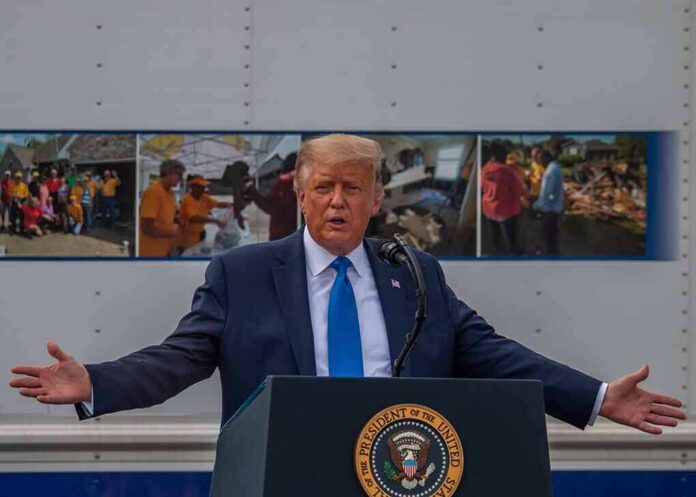
Domestic gridlock will push President Trump’s final two years onto the world stage, where a president can still move fast and hit hard.
Story Snapshot
- Congressional deadlock narrows big laws; foreign policy tools stay in the Oval Office.
- Sanctions, interdictions, and targeted strikes sit inside executive reach.
- Courts, funding, and allies still shape limits on tariffs and force.
- Energy, Iran, and Ukraine will test leverage and speed.
Why foreign policy now owns the calendar
White House aides see the path of least resistance abroad. Executive power gives speed on sanctions, maritime enforcement, and targeted military options even when Congress stalls on domestic bills. Presidents can flip pressure on and off in days, not months. That tempo shapes markets and behavior faster than a committee can schedule a vote. The practical effect is simple: when Capitol Hill locks up, the commander in chief still holds levers that bite and can show results on a tight clock.
Courts and statutes still matter. The War Powers Resolution forces notifications and clocks on deployments, while Congress controls money for long wars. Trade moves run into legal fences. A recent Supreme Court analysis and congressional research warn that the emergency powers law does not plainly grant tariff power, and judges have pushed back on efforts to stretch it. These checks do not erase executive reach, but they shape how far and how long any push can go.
The playbook: disrupt first, then deal
Trump’s foreign policy has long used shock to set terms. Analysts describe a pattern: unsettle the baseline, widen the pain, then drive toward a bargain from a stronger spot. That approach surfaced in fights over trade, security basing, and alliance costs. The method suits a crowded map. When time is short and votes are scarce, disruption can reset options without passing a bill. The risk is overshoot. The payoff, when it works, is speed and leverage that outpace slower diplomatic habits.
Energy is the fulcrum. The administration tied strategy to fuel prices and supply, knowing pain at the pump moves politics. The Russia diesel move aimed to swell supply, cool prices, and create space for talks by choking off strikes that spike energy risk. That is classic leverage: ease one market pressure while raising another. Critics call it blunt. Supporters see common sense—protect family budgets, split adversaries, and bring partners to the table with cash flow, not communiqués.
Iran pressure will define the edge of executive power
The Iran file shows where executive tools cut deep without new laws. Analysts argue the White House can tighten sanctions enforcement at sea, squeeze shipping insurance, and target illicit finance with daily actions led by the National Security Council and the Treasury Department. Some propose a mix of maritime interdiction and relentless sanctions to corrode revenue and limit arms transfers. This approach fits conservative priorities: strength without open-ended wars, and pressure that rewards compliance instead of speeches.
Congress can still force choices. Funding riders, reporting rules, and bipartisan oversight can slow or steer operations. Courts can check statutory reach on trade-linked penalties if the text runs thin. Those guardrails should push the White House to build cleaner legal hooks, coordinate with allies that control ports and insurers, and keep timelines tight. Done well, the strategy looks firm but measured: hard pressure, narrow targets, and clear off-ramps that do not demand regime change to declare success.
Ukraine, deals, and the clock
Ukraine policy will likely move from blank-check aid to conditional leverage. The administration has linked energy flows, battlefield targeting, and talks. Reports noted an energy supply push tied to curbing strikes that roil markets and harden Russian positions. That is a simple bargain frame: trade restraint for relief, and use price stability to calm Europe and the United States. The bet is that voters reward lower fuel costs and fewer body bags faster than they reward abstract pledges.
Conservatives should judge each step by three tests. First, does it protect Americans at home—energy, borders, and jobs—without sliding into forever missions. Second, does it force real choices on adversaries with costs they cannot ignore. Third, does it respect the law and the purse so wins last past one news cycle. Within those lines, foreign policy gives Trump the tools and timeline to drive outcomes in months, not years. That is why it will dominate the final stretch.
Sources:
realcleardefense.com, supremecourt.gov, congress.gov
© patriotnewsdaily.com 2026. All rights reserved.