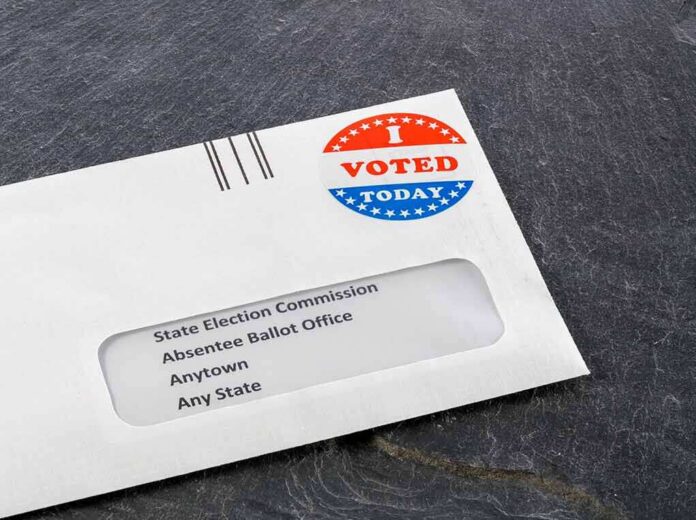
The Vatican says Pope Leo submitted his Illinois mail-in ballot, and that single sentence rewrote a page of civic history.
Story Snapshot
- The Holy See says Pope Leo submitted a mail ballot for Illinois midterms.
- Officials listed Robert Francis Prevost as requesting a Will County mail ballot.
- Reports tie the registration to a New Lenox address near Chicago.
- Coverage frames it as a first for a pope voting in a U.S. election.
The confirmation: what the Vatican actually said
The Holy See Press Office stated that Pope Leo submitted his mail-in ballot in Illinois and has voted whenever eligible as part of a long-standing practice. The statement framed the action as civic duty by a United States citizen, not a political stunt. It did not reveal how he voted, which is normal for ballot secrecy. The language was plain and direct: he submitted a ballot, he did so in Illinois, and he has voted before when eligible.
Multiple outlets reported that the name Robert Francis Prevost, Pope Leo’s civil name, appeared on the list of people who requested a vote-by-mail ballot in Will County. A senior official in the clerk’s office confirmed that listing. That matches reporting that linked his registration to a New Lenox address, which is in the Chicago area. These pieces together place the request and the submission in the same Illinois jurisdiction.
The where and when: Chicago area, 2026 midterms
Reports place the request and submission in the run-up to the November 2026 midterm elections, which included statewide and local races on the Illinois ballot. The focus remained on process, not picks. No one claimed to know the contests he marked or his choices. The point at issue was participation as a citizen who is also the pope, and doing it by mail from his registered home base in Will County near Chicago.
Coverage highlighted that this act was a first for a sitting pope in a United States election. That label matters because popes usually stand apart from secular civic rituals. Yet the Vatican’s framing stressed that voting was personal, lawful, and routine for him. The mix of ordinary mail voting and the extraordinary symbolism of the papacy turned a normal civic act into a benchmark headline that traveled far beyond Illinois.
Mail voting basics: stages, safeguards, and what “voted” means
Mail voting runs through steps: request, issuance, return, verification, and tabulation. Many stories compress those into a single word: voted. That can blur important details. In recent cycles, election researchers found rejection happens for clear reasons like late arrival or signature mismatch, and overall rates are low but real. The best takeaway here is simple: submitting a ballot starts a process that election officials complete under set rules, not vibes.
FIRST POPE TO VOTE IN US ELECTIONS
Pope Leo XIV made history as the first American-born pontiff to cast his ballot by mail in the US midterm elections, voting under his birth name, Robert Francis Prevost, in Chicago.
FULL REPORT: https://t.co/e00JjaGATW pic.twitter.com/U5G4MncRiW
— TV5 News (@TV5NewsPH) October 30, 2026
Common sense also says privacy is the point. No one should expect to see his selections. Ballot secrecy protects every voter, famous or not. That principle is not partisan; it is bedrock. Americans value transparent rules and private choices. When a faith leader who is also a citizen takes part, the right response is to defend those rules, apply them evenly, and move on without turning a private ballot into a public endorsement.
What this means: citizenship, symbols, and staying within the lines
The news lands at the crossing of two lanes. One lane is routine: a citizen registered in Illinois requested and submitted a mail ballot. The other lane is symbolic: the pope, an office with moral weight, took part in a United States election. The Vatican leaned hard on the civic lane, calling it long-standing and lawful. That framing tracks with American conservative values that prize duty, process, and the clean line between church office and private citizenship.
Practical minds should keep the focus narrow. The facts support three clear points. First, the Holy See says he submitted a mail ballot. Second, county officials show his civil name on the vote-by-mail request list. Third, media describe this as a first for a pope in a United States election. That is the story. Everything else is spin, speculation, or a demand to breach ballot secrecy, which no serious person should support.
Sources:
wlox.com, pbs.org, osvnews.com, cbc.ca, ncronline.org, elections-blog.mit.edu
© patriotnewsdaily.com 2026. All rights reserved.