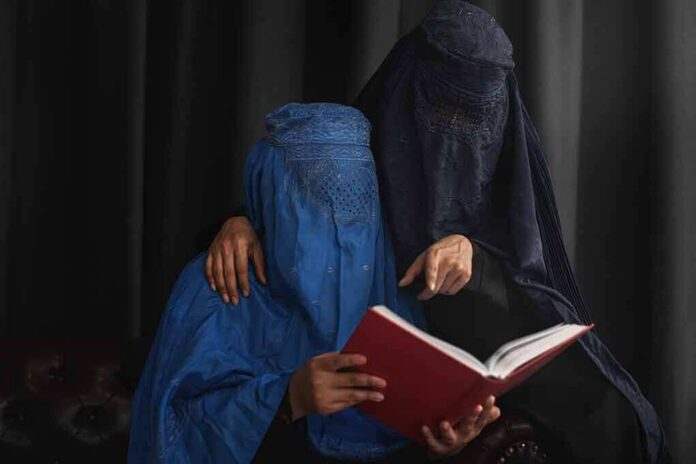
Italy’s prime minister drew a hard line in schools: faces uncovered, Italian spoken, and classes built to integrate, not divide.
Story Snapshot
- Prime Minister Giorgia Meloni said a school bill will ban burqas and niqabs in classrooms.
- The plan sets a legal cap on foreign students per class to boost language learning.
- Parents of students with major integration gaps must learn Italian under the proposal.
- Advocacy and opposition voices call the move discriminatory and a threat to religious freedom.
What Meloni Announced, And Why It Matters
Prime Minister Giorgia Meloni told a party youth event that her government will move a school measure to the Cabinet that does three things at once: bans full-face veils such as the burqa and niqab in schools, sets a maximum share of foreign students per classroom, and requires some parents to learn Italian to support their children’s schooling. She framed the cap as protection for learning. When non-Italian speakers become a large share of a class, she said, that stops integration and becomes neglect.
The announcement follows a longer push by Meloni’s Brothers of Italy to restrict face coverings tied to what the party calls “cultural separatism.” A related bill floated a broader public-space veil ban last year. The school-focused track is narrower and more defensible. Schools must verify who is present, keep order, and teach a shared language. That mission gives lawmakers a clearer case for dress and language rules than in parks or streets, where limits face higher legal risk.
How The Plan Would Work In Classrooms
The face-veil ban targets full-face coverings, not headscarves that leave the face visible. That distinction matters for identification, safety drills, and classroom interaction. The student cap would set a legal ceiling for foreign pupils per class, which Italy has not disclosed in detail yet. The parent-language clause would trigger when schools flag serious integration trouble. The aim is simple: help parents talk with teachers, read assignments, and guide homework so kids do not fall behind early.
European courts and policies give this approach mixed, but real, footing. Several European Union countries have national face-veil bans in some settings. Courts often uphold school rules that ensure identification or clear communication, especially for teachers and during instruction. Outcomes vary by scope and justification, which is why a narrow, school-based rule that serves pedagogy stands stronger than a sweeping public ban.
The Pushback And The Core Tension
Advocacy groups slammed the plan. The Council on American-Islamic Relations called face-veil bans “authoritarian” and “bigoted,” arguing that women should choose their dress and that rules which allow costumes or medical masks while blocking religious veils show bias. Euronews noted criticism from opposition leaders and some legal experts, who say the plan risks discrimination and social division rather than unity. These critics warn the measure could alienate Muslim communities and chill religious expression.
MELONI'S SCHOOL DECREE: A BURQA BAN WITH 500 TARGETS AND A FOREIGN STUDENT CAP THAT CANNOT BE ENFORCED
THE BURQA BAN AND ITS ACTUAL SCOPE
Prime Minister Giorgia Meloni announced at the Fenix festival that a decree heading to the Council of Ministers will "legally introduce a ban… https://t.co/3H3rzCnDL9— THE WORLD CORRESPONDENT (@TheWorldCorresp) September 21, 2026
Policy should be judged on two plain standards: equal rules for all in the same setting, and a tight link to the school’s job. A face-visible rule during class meets both tests. It applies to every student, supports clear instruction, and allows quick identification. A targeted cap can also pass if it prevents language isolation and speeds up learning for everyone. The burden now sits with the government to set clear thresholds, fair placement, and strong language support so results match the promise.
What To Watch Next
Cabinet review comes first, then Parliament. Lawmakers will hammer out the student-cap number, the criteria for parent language courses, and how schools assign students without ghettoizing any campus. Courts will scrutinize the veil rule’s scope, exceptions, and how schools enforce it. Expect legal challenges that hinge on whether the policy is a neutral classroom standard or a proxy for religious targeting. Outcomes in other European cases suggest narrow, education-based rules can stand when well written.
Sources:
redstate.com, euronews.com, youtube.com, aljazeera.com, latimes.com, indiatoday.in
© patriotnewsdaily.com 2026. All rights reserved.