A car barreling into the White House’s fortified barrier is more than a security breach—it’s a jarring reminder that America’s most iconic residence teeters between fortress and open forum, and every clash at its gates redefines that balance.
Story Snapshot
- A vehicle slammed into the White House Secret Service gate, reigniting debate over security and public access.
- Secret Service agents reacted in seconds, detaining the driver and securing the area for investigation.
- The incident spotlights the evolution and challenges of White House security, from open-door policies to fortress-like defenses.
- Experts question if stronger barriers protect democracy—or wall it off from the people it serves.
White House Security Breached: A Cat-and-Mouse Game with History
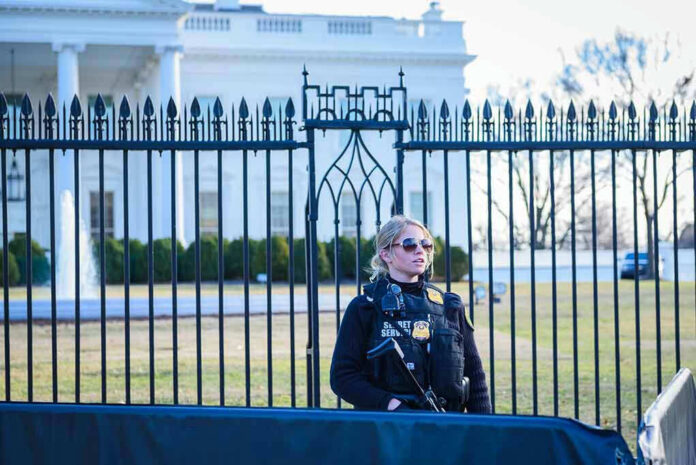
On a crisp Washington afternoon, the crash echoed across Pennsylvania Avenue—another vehicle had rammed the White House’s perimeter, sending a jolt through the capital’s collective conscience. The Secret Service, ever vigilant, responded with the urgency of a military drill. Within moments, they apprehended the driver, locked down the grounds, and began the meticulous process of examining the car for any hidden threats. The President and First Family remained unharmed, insulated by the layers of security that now define the executive mansion. Yet, the symbolism of the moment was inescapable: even the world’s most fortified residence remains a target, and every breach reopens perennial questions about how much security is enough—and when it becomes too much.
Investigators swarmed the scene, forensics specialists combing the battered vehicle, while bomb-sniffing dogs swept for traces of explosives. The suspect, motives unclear, was whisked away for questioning. Law enforcement sources hinted at everything from protest to mental health crisis, but definitive answers would wait for the completion of the investigation. In the meantime, the Secret Service’s rapid response and the lack of injuries offered reassurance to some—and kindled doubts in others about whether the next breach might end differently.
Security Evolution: From Open House to Fortress
The White House was not always a fortress. In the 19th century, citizens strolled its grounds, attending receptions and voicing grievances face to face with presidents. That era ended as threats escalated. After World War II, fences rose and public access receded. The Oklahoma City bombing of 1995 marked a turning point—anti-vehicle barriers sprang up, concrete and steel replacing the genteel ironwork of earlier barriers. The 9/11 attacks added another layer, expanding the security perimeter and tightening airspace restrictions. Each new incident—whether a fence-jumper or an armed assailant—has prompted further reinforcements, culminating in today’s multi-layered defense system of anti-ram barriers, high fences, sensors, and armed patrols.
Recent years have seen the installation of even higher fences, bristling with anti-climb features and reinforced to withstand vehicular impact. Secret Service personnel, supported by advanced surveillance and rapid deployment teams, monitor every approach. But as security has tightened, critics argue the White House risks becoming a citadel, severing the symbolic connection between the people and their government.
Conflicting Perspectives: Fortress or Forum?
Security experts insist that physical barriers, while critical, offer no absolute guarantee. Layered defenses and lightning-fast responses are essential, but so is adapting to new threats—especially as vehicles become weapons of choice for attackers worldwide. Some argue for even stronger fortifications, envisioning a White House impenetrable to any conceivable assault.
Yet, architects, historians, and civil liberties advocates push back. They point to the White House’s origins as “the people’s house,” warning that each new restriction chips away at its openness and accessibility. Mental health professionals often remind the public that many intruders are driven by personal crisis, not terrorism—a distinction with profound implications for prevention and response.
What Comes Next: Policy, Technology, and the Public’s Stake
The Secret Service, already reviewing protocols, faces renewed calls for upgrades—more robust barriers, smarter surveillance, perhaps even further limits on access. Congressional committees may demand answers and additional funding, while the public weighs in on the trade-off between safety and symbolism. The incident will almost certainly trigger a ripple effect: government buildings across the country will reassess their own vulnerabilities and security budgets.
For now, the battered gate stands as a testament to resilience—and to the perpetual tug of war between protection and public trust. As the investigation unfolds and new measures are debated, the nation’s attention returns to Pennsylvania Avenue, wondering not just how to keep the President safe, but how to preserve the White House as a living symbol of democracy, not a fortress cut off from the people who own it.
Sources:
CFA Blog: White House security: It takes more than a fence
Wikipedia: List of White House security breaches