Pro-Palestine protests in the UK gain a new dimension as authorities grapple with chants that blur the lines between free speech and incitement.
Story Snapshot
- UK police warn that certain pro-Palestine chants may lead to arrests under terrorism laws.
- The phrase “globalise the intifada” becomes a focal point in the debate over free speech and public safety.
- Government and police seek to balance civil liberties with counter-terrorism measures.
- The controversy feeds into broader discussions on extremism, protest policing, and cultural tensions.
Police Crackdown on Controversial Chants
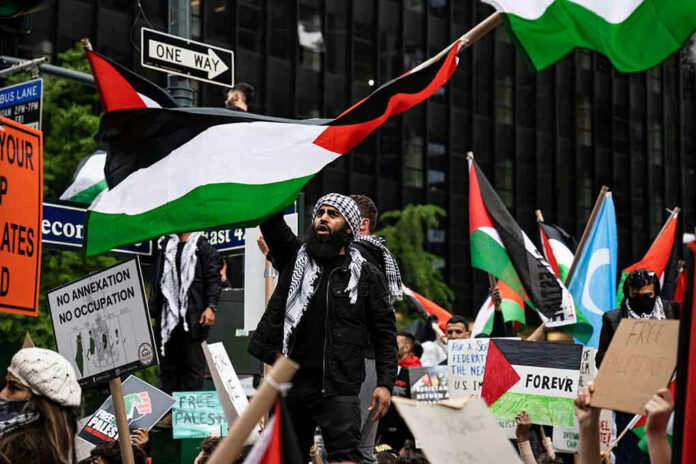
UK police have warned pro-Palestine protesters that chants like “globalise the intifada” could result in arrests. Following the October 2023 Hamas attacks, the UK government and police scrutinized slogans for potential links to terrorism or incitement to violence. The Metropolitan Police highlighted that certain expressions might cross legal thresholds, prompting intervention and possible arrests. “Globalise the intifada” has sparked significant debate over its interpretation and the implications for public order and safety.
Pro-Palestine protesters chanting ‘globalise the intifada’ in the UK face arrest, police confirm https://t.co/cJDHBMt6rj [Independent]
— Stephanie Migot 🇰🇪 🇬🇧 (@MsMigot) December 17, 2025
Protesters in London and other UK cities began chanting phrases such as “from the river to the sea” and “globalise the intifada” during large-scale demonstrations. These chants have historical and political resonance, often interpreted as calls for Palestinian liberation. However, police and governmental authorities argue that they could be construed as supporting terrorism or inciting violence, especially when associated with Hamas, a proscribed organization in the UK.
Legal and Cultural Contexts
The term “intifada” historically refers to Palestinian uprisings against Israeli occupation. Its modern usage can encompass both violent and non-violent resistance. The phrase “globalise the intifada” has gained traction among activists as a call for worldwide solidarity with Palestinian struggles. While some view it as a metaphor for resistance against oppression, critics argue it suggests exporting violent tactics globally, potentially inciting anti-Jewish or anti-Israeli sentiments.
UK law, including the Terrorism Act 2000 and 2006, provides a framework for addressing potential encouragement of terrorism. The Public Order Act 1986 further criminalizes stirring up racial or religious hatred. These laws require police to assess the context and intent behind chants, balancing free speech protections with national security concerns. The ambiguity surrounding terms like “globalise the intifada” complicates enforcement and raises questions about the limits of political expression.
Stakeholder Perspectives
The controversy has engaged various stakeholders, each with distinct motivations and concerns. UK police, particularly the Metropolitan Police, aim to maintain order and prevent hate crimes without infringing on lawful protests. They face pressure to navigate the fine line between under-enforcement and over-enforcement of legal thresholds. The UK government prioritizes counter-terrorism and antisemitism prevention, while civil liberties groups warn against the chilling effects on free speech and protest culture.
"Pro-Palestine protesters chanting ‘globalise the intifada’ in the UK face arrest, police confirm" – The Independent #SmartNews )) Anyone see a problem here?? https://t.co/9iLxyGZG8S
— Max (@NoLayupsMax) December 17, 2025
Pro-Palestine activists contend that robust policing tactics threaten to criminalize legitimate dissent and solidarity with Palestine. Jewish community organizations express anxiety over chants perceived as threatening, calling for strong enforcement against antisemitic or terror-supporting speech. Political parties, media outlets, and commentators add layers of complexity, framing the issue within broader debates on extremism, free speech, and cultural tensions.
Ongoing Developments and Implications
As pro-Palestine demonstrations continue, the future of chants like “globalise the intifada” remains uncertain. Recent police guidance emphasizes context and intent, suggesting that chants near Jewish institutions or accompanied by violent imagery could trigger arrests. Despite this, no definitive legal ruling has classified the phrase as inherently lawful or unlawful, leaving interpretation to police discretion and potential future case law.
The ongoing debate reflects broader UK discussions on extremism definitions, protest policing, and community relations. Activist groups may adjust their messaging to avoid legal risks, while Jewish communities seek reassurance amid rising antisemitic incidents. Police legitimacy and trust remain at stake, with perceptions of bias impacting public confidence across diverse communities. The trajectory of this issue will likely influence future legislative and policy shifts regarding protest and free speech in the UK.