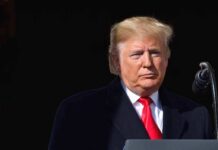
Donald Trump’s eleventh-hour endorsement of Winsome Earle-Sears in Virginia’s gubernatorial race raises a question far more intriguing than the endorsement itself: why did the president wait until the final days to back his party’s nominee?
Story Snapshot
- Trump finally endorsed Winsome Earle-Sears just days before Virginia’s November 4 gubernatorial election, after weeks of conspicuous silence
- Virginia’s race marks the first time both major party nominees for governor are women, with Earle-Sears facing Democrat Abigail Spanberger
- Recent polling shows Spanberger leading by 10 points, with significant support from independents and younger voters
- The timing of Trump’s endorsement highlights complex dynamics within the Republican Party and questions about his influence in swing states
A Historic Race Overshadowed by Hesitation
Virginia’s 2025 gubernatorial election represents a milestone moment: Winsome Earle-Sears and Abigail Spanberger became the first two women to simultaneously secure major party nominations for governor in the Commonwealth’s history. Earle-Sears, the current Lieutenant Governor and first woman of color elected to statewide office in Virginia, could become the nation’s first Jamaican-born female governor. Spanberger, a former CIA officer and three-term congresswoman, brings national security credentials and moderate appeal to a state that voted for Kamala Harris in 2024. Yet the narrative gripping political observers wasn’t about breaking barriers—it was about Trump’s deafening silence regarding his own party’s nominee.
The Endorsement That Took Too Long
Trump’s reluctance to endorse Earle-Sears became a storyline unto itself as early voting commenced on September 19. Despite Governor Glenn Youngkin’s repeated appearances with the Republican nominee and Attorney General Jason Miyares’s vocal support, Trump remained conspicuously absent from the conversation. Political analysts noted the awkwardness: here stood a Republican fighting to win a competitive race in a state Trump lost, yet the party’s most influential figure withheld his blessing. When the endorsement finally materialized in late October, it carried the unmistakable scent of obligation rather than enthusiasm. The delay suggested either strategic miscalculation or deeper fractures within Republican circles about candidate viability and Trump’s own political calculus.
The timing matters because Virginia’s gubernatorial races have historically served as political bellwethers, with voters typically selecting governors from the party opposite the sitting president. This pattern held when Republican Glenn Youngkin won in 2021 during Joe Biden’s presidency. Trump’s tardy endorsement raised uncomfortable questions: Did he doubt Earle-Sears could win? Was he protecting his brand from association with potential defeat? Or did internal polling suggest his involvement might actually hurt rather than help in a state where he remains polarizing?
Spanberger’s Momentum and Campaign Strategy
While Republicans wrestled with endorsement drama, Spanberger built a formidable lead. Emerson College polling from late October showed her ahead by double digits, fueled by strong support from independent voters and younger demographics. Spanberger’s campaign shrewdly highlighted Earle-Sears’s loyalty to Trump as a liability, arguing the Republican nominee prioritized allegiance to the president over Virginia families. This messaging appeared effective in a state where suburban voters, particularly women, have trended Democratic in recent cycles. Spanberger’s background as a CIA officer and her moderate congressional record provided insulation against typical Republican attacks while allowing her to appeal to the same independent voters who powered Youngkin’s 2021 victory.
Early voting data suggested Spanberger’s organizational strength translated into actual ballots. Her campaign emphasized her bipartisan credentials and practical governing approach, positioning her as a contrast to both progressive Democrats and Trump-aligned Republicans. The strategy reflected sophisticated understanding of Virginia’s evolving electorate—increasingly diverse, educated, and skeptical of partisan extremes. Earle-Sears, meanwhile, found herself in the uncomfortable position of defending her association with Trump while trying to replicate Youngkin’s successful formula of focusing on local issues like education and economic growth.
Trump’s Influence at a Crossroads
The Virginia race serves as a laboratory for measuring Trump’s current political potency. His delayed endorsement of Earle-Sears contrasts sharply with his typically eager involvement in Republican primaries and general elections. Some party strategists privately questioned whether Trump’s team recognized that his brand carries different weight in different contexts—helpful in deep red states and Republican primaries, potentially problematic in purple Virginia where Biden won by 10 points in 2020 and Harris maintained Democratic dominance in 2024. The endorsement’s timing, arriving when early voting was already well underway, minimized its potential impact while allowing Trump to claim he supported the nominee without fully investing his political capital in what polls suggested was a losing effort.
Republican observers noted the contrast between Trump’s approach to Virginia and his typical campaign involvement. His hesitation suggested a more calculating political operation, one that weighs risks and potential embarrassments more carefully than his reputation suggests. If Earle-Sears loses despite his endorsement, Trump can argue he provided support too late to make a difference. If she somehow pulls off an upset, he can claim credit for her victory. This hedging strategy, however calculated, reveals vulnerability—the sense that even Trump recognizes limits to his influence in certain electoral contexts. For a politician who built his brand on unwavering confidence and dominance, such hesitation speaks volumes about the changed landscape he now navigates.
Sources:
2025 Virginia gubernatorial election – Wikipedia
Upcoming Elections – Virginia Department of Elections
Virginia Election 2025 Guide: Candidates, Deadlines and Ballot Basics
Election 2025: Who Will Be Virginia’s Next Governor? – VPM
Virginia 2025 Polling – Emerson College