
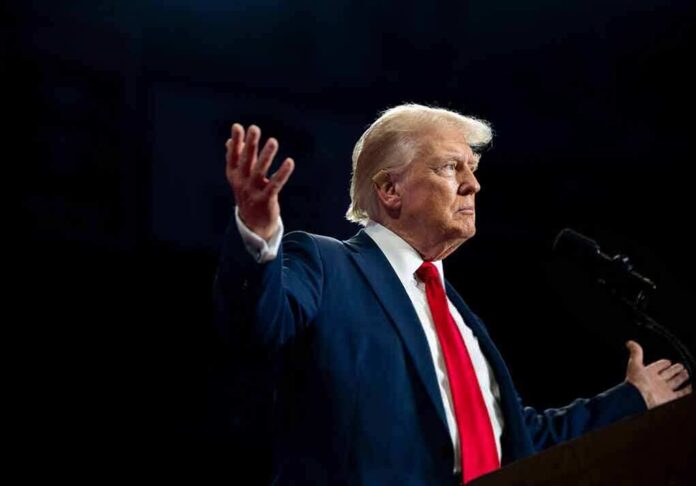
Trump’s abrupt dismissal of the entire board overseeing D.C. construction projects left many wondering about the unprecedented move’s implications for urban planning and federal authority.
Story Highlights
- President Trump dismissed the National Capital Planning Commission’s board in October 2020.
- The move aimed to exert greater control over D.C.’s development projects.
- Concerns arose about politicization and federal-local relations.
- Potential long-term impacts on Washington, D.C.’s planning landscape.
Unprecedented Shake-Up in D.C. Planning
In a move that shook the foundations of urban planning in the nation’s capital, President Donald Trump fired the entire board of the National Capital Planning Commission (NCPC) in October 2020. This agency, tasked with overseeing major construction projects in Washington, D.C., became a focal point for debates on federal authority and urban development. The dismissal raised eyebrows, as it was seen as an attempt by the Trump administration to assert greater control over federal property and reshape the city’s skyline according to its own vision.
While previous administrations have made appointments to the NCPC, the wholesale removal of board members was unprecedented. Critics argued that this decision could undermine the delicate balance between federal oversight and local input, a balance that has been crucial in guiding Washington, D.C.’s development for nearly a century. The capital’s unique status as a federal district means that its governance and planning are subject to federal oversight, a fact that has historically led to tensions between local and federal authorities.
The Trump Administration’s Vision
Throughout his presidency, Trump sought to assert greater federal control over D.C., aligning federal property development with his administration’s political and aesthetic priorities. This included controversial proposals to influence the design of federal buildings, which many saw as a departure from established architectural norms. The administration defended these moves as necessary for efficiency and alignment with their vision, while critics viewed them as part of a broader pattern of politicizing federal agencies.
Replacing the NCPC board members with individuals perceived as loyal to the administration further fueled concerns about the potential politicization of urban planning. The new appointees, some with limited experience in urban planning, faced skepticism about their ability to balance federal and local interests effectively. This shift in power dynamics raised questions about the future role of the NCPC as a mediator between differing interests in the capital.
Political Backlash and Local Concerns
The reaction from local D.C. officials was swift and pointed. Mayor Muriel Bowser and other city leaders voiced their concerns over the loss of local input and the increased federal control over the city’s development projects. They argued that such moves could erode trust in nonpartisan planning processes and diminish the voice of D.C. residents and businesses in shaping their own urban environment.
While some conservative commentators supported the move as a necessary step for federal efficiency, most urban planning professionals and local officials opposed the dismissals. They warned of potential disruptions to ongoing construction projects and uncertainty in planning processes, which could have significant economic and social impacts on the city.
Looking Ahead: Uncertain Future
The long-term implications of Trump’s actions remain uncertain. The Biden administration, which took office in January 2021, faced pressure to review and potentially reverse these controversial appointments. This ongoing debate highlights the challenges of federal-local relations in urban development and the risk of setting a precedent for politicizing planning boards.
The case of the NCPC board dismissal serves as a cautionary tale for other cities with federal oversight, emphasizing the need for a balanced approach that respects both federal interests and local autonomy. As Washington, D.C. continues to evolve, its urban landscape will likely reflect the complex interplay of political power, federal authority, and local advocacy.
Sources:
Washington Post, “Trump fires board that oversees D.C. construction projects,” Oct 2020.
NPR, “Trump administration shakes up D.C. planning board,” Oct 2020.
Politico, “Federal planning board ousted by Trump,” Oct 2020.
National Capital Planning Commission, official records and announcements.
Brookings Institution, urban planning analysis, 2020.