A small plane carrying six people, including two young boys, went down in the Gulf waters off Mississippi’s Horn Island, and rescue crews found only the cabin, three life vests and a life raft.
Quick Take
- The U.S. Coast Guard says four adults and two children were aboard a Cessna that crashed northeast of Horn Island.
- The plane left New Orleans Lakefront Airport and was headed to Page Field Airport in Fort Myers, Florida.
- Crews found the aircraft cabin, life vests and a life raft roughly two nautical miles from the island.
- The Coast Guard, Mississippi Department of Marine Resources, Federal Aviation Administration (FAA) and National Transportation Safety Board (NTSB) are all involved in the search and investigation.
What Happened Off The Mississippi Coast
The U.S. Coast Guard confirmed that six people, four adults and two children, were flying in a Cessna when it went down near Horn Island. CNN identified the aircraft as a Cessna Centurion 210, a single-engine plane commonly used for personal and cross-country travel. The crash happened in open water, far enough from shore that search crews had to work by boat and air to reach the site.
Local station WLOX reported the plane departed New Orleans Lakefront Airport and was bound for Page Field Airport in Fort Myers, Florida, a trip that would have carried the small aircraft across the Gulf coastline. WDSU reported the same departure and destination points, citing the Coast Guard. That route places the aircraft on a path that runs directly past the barrier islands south of Pascagoula, Mississippi, where the wreckage was ultimately found.
Timeline And Search Details Still Taking Shape
Reports place the incident around 3 p.m., with the FAA reporting it lost contact with the aircraft at approximately 3:45 p.m. That gap likely reflects the difference between when something went wrong and when air traffic controllers realized the plane had stopped responding. The crash site sits about two nautical miles northeast of Horn Island, a remote barrier island that’s part of the Gulf Islands National Seashore.
Search crews recovered the aircraft’s cabin along with three life vests and a life raft near the debris field. Finding survival gear separated from the main wreckage often signals that at least some equipment deployed before or after impact, though officials have not released information confirming the condition or location of the six people who were aboard. That detail remains the most urgent unanswered question for families and investigators alike.
Agencies Involved In The Response And Investigation
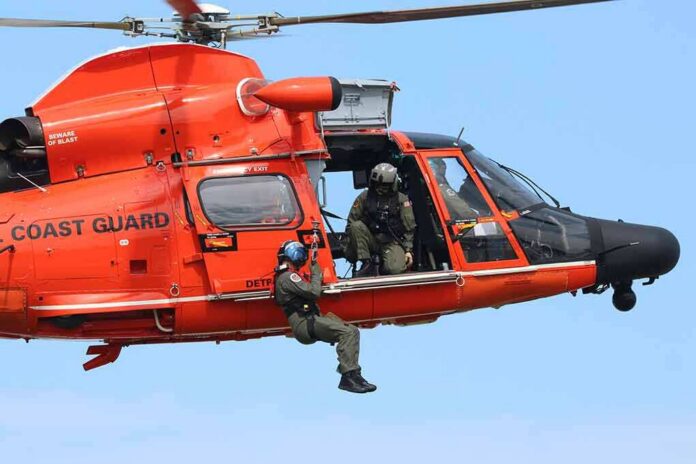
The U.S. Coast Guard led the on-water search, working alongside the Mississippi Department of Marine Resources. The FAA, which tracks flight paths and radio contact, is working with the NTSB, the federal agency responsible for determining what caused the crash. Multiple government agencies responding to the same incident gives the public agencies tracking confidence that the core facts, the departure point, the destination, and the number of people aboard, are solidly established even while other details are still being confirmed.
Why Water Crashes Don’t Always Mean The Worst
A crash landing on water is frightening, but it doesn’t automatically mean a fatal outcome. A study of ditchings in motorized aircraft between 1989 and 2022 found that in cases where search and rescue information was available, the Coast Guard pulled 35 percent of occupants from the water alive, while another 27 percent were rescued by nearby boats or bystanders. Roughly 10 percent of occupants managed to swim or float to shore on their own, which shows water landings are often more survivable than people assume.
That same body of research found that the biggest threats to survival typically come after the initial impact, not during it, pointing to exposure, drowning, and delayed rescue as the real dangers once occupants are in the water. The presence of life vests and a raft near the Horn Island wreckage suggests some form of emergency response took place before responders arrived. Investigators will need wreckage analysis, flight data and weather records to determine exactly what happened in the minutes before the plane went down.
What Comes Next In The Investigation
The NTSB typically issues a preliminary report within about a month of a crash, drawing on wreckage recovery, maintenance records, and radar data to piece together a timeline. Until that report lands, the confirmed facts remain straightforward: six people were aboard, the plane left Louisiana bound for Florida, and it went down short of its destination near a remote Mississippi island. Families and the public will be watching closely for updates on the six people who were aboard.
🇺🇸 UPDATE: LIFE JACKETS, LIFE RAFT, and CABIN located after Mississippi plane crash
A Cessna 210 flying from New Orleans to Fort Myers suddenly lost altitude about 30 minutes after takeoff.
Flight data shows the aircraft descending from 8,800 feet at a staggering 18,000 FEET… https://t.co/YaTGBMo9aT
— Mario Nawfal (@MarioNawfal) November 25, 2026
Search efforts near Horn Island continue as crews comb the surrounding waters and shoreline. Investigators have not yet released findings on what caused the aircraft to go down or confirmed the status of everyone who was aboard. As with any active federal investigation, official conclusions will take time, but the agencies involved have a strong track record of eventually piecing together exactly what happened in cases like this.
Sources:
ksl.com, cnn.com, aircrashdb.com, nola.com, wlox.com
© patriotnewsdaily.com 2026. All rights reserved.