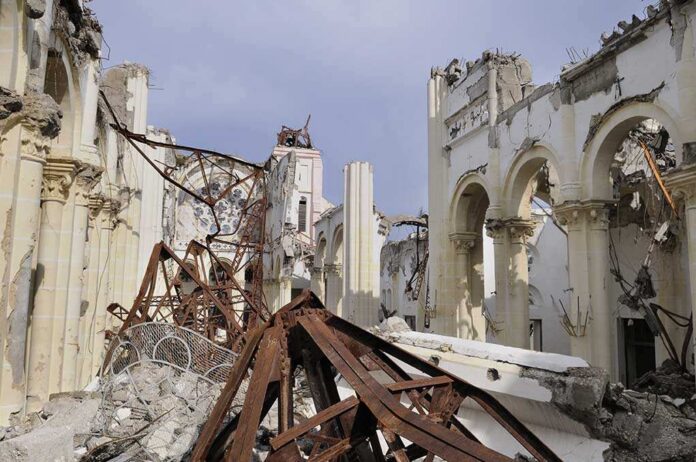
Buffalo fire officials ruled the blaze at the former St. Ann’s Catholic Church arson, and the timing lit a powder keg of local debate.
Story Snapshot
- Officials determined the St. Ann’s fire was arson after a multi-alarm response.
- Investigators first flagged a human element before confirming arson days later.
- The site saw repeat fire activity within months, raising suspicion and fear.
- Public claims link the fire to redevelopment tensions, including mosque proposals.
Arson Finding Ends Doubt, But Not Questions
Buffalo authorities confirmed the former St. Ann’s Church fire was arson four days after crews beat back a three-alarm blaze at the Broadway and Emslie site. That ruling settled the cause, not the motive. The call came after months of heated talk over what to do with the crumbling complex. The property’s fate drew sharp views, from saving sacred art to replacing decay with new uses. That backdrop primed residents to see the fire through a political lens.
🚨🚨BREAKING NEWS 🚨
🇺🇸 Second Blaze Hits 140-Year-Old St. Ann’s in a Week as Conversion Push Intensifies
A 140-year-old church in Buffalo, New York, has suffered its second fire in seven days. St. Ann Church was hit by what authorities are investigating as arson, coming just… pic.twitter.com/aA6MmJKQna
— Corefrontline (@corefrontline) July 23, 2026
Fire investigators had already hinted at human involvement during the first on-scene briefings. Officials said evidence showed a human element, while stopping short of declaring intent until the casework caught up. That caution tracked with standard practice: confirm what happened first, then who and why. When the arson finding arrived, it triggered louder claims that the fire tied to ongoing redevelopment fights. The claim is unproven, but the timing made it stick.
A Site With Repeat Fires Draws Extra Scrutiny
The St. Ann’s complex saw more than one fire response in a short span, including reports of a second incident at the vacant property. Local coverage underscored that the later event was set on purpose, which reinforced public suspicion that someone wanted the site changed in a hurry. Repeat fires at idle buildings often skew toward arson in national patterns. Vacant sites attract trespassers, make easy targets, and lack daily oversight. That mix invites trouble.
Officials across North America treat empty religious structures as high-risk once they sit idle. Cases in Toronto show a similar cadence: a destructive church fire, followed by weeks or months of careful review, and then a formal arson or suspected arson label as new evidence develops. That pattern explains why Buffalo leaders moved step by step. It also explains why the public, seeing smoke twice in a week or season, jumped faster to motive. People remember the flames, not the lab work.
Redevelopment Flashpoint: Faith, Culture, and Property
Debate over St. Ann’s did not start with the fire. Years of decay forced choices: stabilize the shell, convert parts to new uses, or clear the site. The talk turned hotter as some voices pushed concepts that included worship space for a growing Islamic community. That is legal, and it happens in many cities. But it also runs into raw feelings when it involves a Catholic landmark with deep roots. People see heritage at stake and fear erasure more than change.
BREAKING: 140-year-old St. Ann church set on fire in Buffalo, NY
Cause determined to be arson pic.twitter.com/LlA1n5MNsp
— THE GREAT AWAKENING (@Q_1776_United) July 23, 2026
American conservative instincts come down to three tests. First, protect life and property. Arson fails that test hard. Second, follow process and proof, not rumor. The arson ruling answers the “how,” but we still need the “who” and “why.” Third, respect religious freedom for all, while honoring local heritage. Any reuse plan should be earned in daylight, with chartered groups, open meetings, and clear stewardship. Cut corners and you breed backlash. Be transparent and you build buy-in.
What Happens Next Will Decide Trust
Buffalo needs a tight investigation, steady communication, and a credible path for the site. Police and fire should share updates when facts harden and hold back when they do not. Leaders should lock the property down, fund secure fencing and cameras, and post visible timelines for case steps and structural reviews. If private owners stall, the city should use the tools it has to demand safety and care. That is not politics; that is basic duty when buildings burn.
Neighbors deserve straight answers about cost, risk, and options. If a faith group or developer wants the site, make the terms public and tied to real timelines and money. Keep the landmark features that can be saved. Mark what is lost with dignity if they cannot. When tension runs this high, process is not red tape; it is the last guardrail. The fire at St. Ann’s was arson. The next chapter will show if Buffalo can stop the burning and start rebuilding trust.
Sources:
thegatewaypundit.com, wivb.com, wkbw.com, facebook.com
© patriotnewsdaily.com 2026. All rights reserved.