
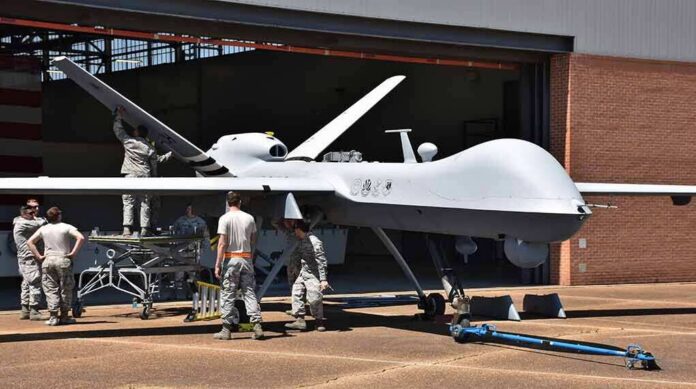
Iran’s military says it hit U.S.-linked bases in Bahrain, Jordan, and Kuwait with drones and missiles, naming targets and damage.
Story Highlights
- Iran’s army and Islamic Revolutionary Guard Corps claimed strikes on U.S. facilities across three countries.
- Targets listed include air bases, radar sites, fuel depots, and housing areas; verification remains limited.
- Regional outlets report interceptions and blasts amid rising U.S.–Iran tit-for-tat strikes.
- Claims of “hits” and claims of “destroyed assets” sit in different proof buckets in fast-moving conflicts.
Tehran names the bases, the phases, and the damage
Iran’s Army public relations office said phases 21 and 22 of “Operation Lightning” sent attack drones at American military facilities in Bahrain, Jordan, and Kuwait. The statement named Sheikh Isa Air Base in Bahrain, Muwaffaq Salti Air Base near Jordan’s Azraq, and sites in Kuwait, and asserted impacts on infrastructure like hangars, fuel, and ammunition storage. Iranian state media also amplified Islamic Revolutionary Guard Corps claims of damaged air defenses and radar in Bahrain’s Muharraq area, and assets tied to U.S. forces across the three states.
Regional coverage described a rolling exchange. Outlets said Iran launched missiles and drones after American strikes on Iranian territory and maritime assets, part of a broader escalation around the Strait of Hormuz. Reports referenced Kuwait’s intercepts and blasts near U.S.-linked locations, with no firm, public proof yet of the specific damage Iran described. That information gap fits the early hours of this kind of cross-border conflict, when claims outpace confirmed assessments.
What is confirmed, what is claimed, and why that gap matters
Iran’s specificity stands out. Officials listed bases, systems, and even categories of targets, such as F-35 hangars and command nodes. Those details make for vivid headlines but still require outside corroboration to confirm effects on capability. Many early reports carry caveats that host nations and U.S. officials have not verified damage from each strike. The responsible stance is to separate “we fired at X” from “we destroyed Y,” because the second claim needs proof beyond a press note.
American conservative readers value clarity over spin. The prudent read places weight on named sites and the admitted launches, while holding back on claimed devastation until satellite images, debris photos, or base-level statements emerge. That approach honors both strength and truth: respond firmly to aggression, but do not trade facts for theater. Iran’s messaging seeks deterrence through shock value; sober analysis checks for evidence that key assets are actually offline.
Escalation track: retaliation, signaling, and risk to partners
This exchange follows rounds of American strikes tied to Iran’s actions in and around Hormuz, and Iran’s push to raise costs by targeting where U.S. forces stage and resupply. Bahrain hosts the U.S. Navy’s Fifth Fleet. Jordan and Kuwait host key air assets and logistics. Hitting those locations—successfully or not—signals reach and resolve. It also pressures partner governments caught between defense ties with Washington and fear of becoming battlefields again.
🟦 MORNING BRIEFING: While You Slept — July 24, 2026
⭕ DEVELOPING
• Iran launched another wave of missiles and drones toward U.S. facilities in Jordan, Kuwait, Bahrain and reportedly Saudi Arabia.
• Jordan said it intercepted seven Iranian missiles and six drones.
• Two… pic.twitter.com/C4WjsSLaP8
— ZIONS OF ISRAEL (@Israeli_Sniper) July 24, 2026
For Washington, two imperatives run in parallel. First, protect the force with layered air defenses, dispersal, and rapid repair. Second, keep strategic focus. If Iran’s goal is to stretch U.S. attention and fracture coalitions, then hardening bases while tightening rules of engagement denies Tehran propaganda wins and keeps allies close. When independent confirmation clarifies what, if anything, was degraded, response options should aim at restoring deterrence without giving Iran the escalation ladder it wants.
Next proof points to watch before drawing firm conclusions
Three checks will turn claims into facts. Satellite imagery that shows new craters, burned structures, or scorched fuel farms at the named bases will be the first tell. Host-nation releases detailing intercepts, debris, or site damage will be the second. U.S. briefings that confirm equipment impairment or personnel impact will be the third. Until then, the record shows Iran announced strikes with granular targets, while much of the reported physical damage remains unverified in the public domain.
Sources:
iranwire.com, middleeasteye.net, nypost.com, aljazeera.com
© patriotnewsdaily.com 2026. All rights reserved.