A single, jarring message—laced with profanity and politics—crashed through the calm of an American airport, revealing how a hacker’s voice can echo far beyond the confines of cyberspace and into the real world, shaking trust in public spaces and sparking questions no security briefing can easily answer.
Story Snapshot
- Harrisburg airport’s PA system was hacked to broadcast an anti-Trump, anti-Netanyahu message.
- The incident spotlighted the fragile state of public infrastructure cybersecurity.
- Travelers and authorities were caught off guard, raising urgent concerns about digital vulnerabilities.
- The event underscores the evolving battlefield for political messaging and protest in the digital era.
Hacker Hijacks Harrisburg Airport’s PA with Profane Political Message
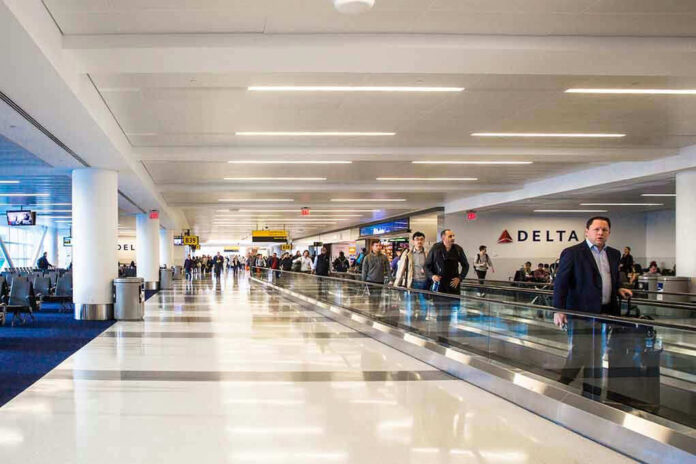
Travelers at Harrisburg International Airport on October 16, 2025, witnessed a disruption rarely seen beyond Hollywood scripts. Instead of boarding calls and flight updates, the airport’s public address system blared an angry, explicit message targeting President Trump and Israeli Prime Minister Netanyahu. The voice was not that of any airport official, but of an unknown hacker who had breached the PA system’s defenses, leaving both staff and passengers momentarily stunned and unsure of what—or who—might come next.
The raw audio, peppered with profanities and a forceful “Free Palestine” demand, turned a routine travel morning into a surreal moment of digital-age protest. The airport’s immediate response was confusion, followed by a scramble to regain control of the sound system. The message’s content, brazen in both language and intent, spread quickly across social media, amplifying the event far beyond the terminal walls.
The Anatomy of a Modern-Day Protest: Why Airports Are a Target
Hackers aiming for maximum impact often bypass traditional digital targets and instead exploit the vulnerabilities of public infrastructure. Airports, with their dense crowds and reliance on interconnected systems, present an irresistible opportunity for those seeking attention. This incident at Harrisburg was not a random act; it was a calculated move to inject a political message into a space where few expect to encounter activism—or hacking. The choice of venue ensured that the protest would disrupt, provoke, and invite commentary from a captive audience.
JUST IN: United States and Canadian authorities have launched an investigation after pro-Hamas hackers took over the PA systems at four North American airports.
"F*ck Netanyahu and Trump," the PA system blared at the airport.
The airports that were allegedly targeted included… pic.twitter.com/VV1oz00A2f
— Collin Rugg (@CollinRugg) October 15, 2025
Airports symbolize order, control, and security—qualities that make any breach feel especially unsettling. The hacker’s ability to seize the PA system, if only briefly, forced both travelers and airport officials to confront an uncomfortable truth: the digital fortresses assumed to protect public spaces may be far more porous than believed. The psychological effect rippled through the airport community, prompting urgent reviews of everything from vendor contracts to staff training protocols.
Political Messaging in the Digital Age: From Flyers to Frequency Hijacking
Political protest has always adapted to the tools of the era. What once required leaflets and bullhorns can now be achieved with a few lines of code and a vulnerable network. The Harrisburg incident marked a new chapter in this evolution, blending old-school activism with high-tech intrusion. By targeting the PA system, the hacker ensured that their message would not only be heard but also remembered, raising uncomfortable questions about the boundaries of protest and the responsibilities of public institutions.
This method of digital disruption also complicates traditional law enforcement responses. Investigators must now trace not only physical evidence but also digital fingerprints, and the perpetrators can vanish into the anonymity of the internet. The attack’s political overtones—criticism of U.S. and Israeli leaders, and an explicit call to “Free Palestine”—remind authorities that infrastructure hacks can be both technically sophisticated and ideologically motivated. Security teams, once focused on physical threats, now face adversaries who weaponize code and connectivity.
Aftermath: Security Overhauls and the New Normal for Public Spaces
The immediate aftermath saw Harrisburg officials pledging swift upgrades to their security systems and a renewed focus on staff vigilance. Cybersecurity experts called for comprehensive audits, warning that this breach might be a harbinger of more frequent, more sophisticated attacks. Travelers, meanwhile, expressed a mix of bemusement and anxiety, acutely aware that the next announcement over the PA might not be routine.
The Harrisburg incident is a case study in how the nature of protest and disruption is changing—moving from the streets into the server rooms, from placards to public address systems. The story is not just about a hack, but about the fragile intersection of technology, security, and free expression in an age where anyone with the right skills can commandeer the public square.
Sources:
USA Today: ‘Free Palestine:’ Hacker plays anti-Trump message over airport PA system