Donald Trump’s recent classification of fentanyl as a “weapon of mass destruction” is causing waves of debate and concern across political and public health arenas.
Story Overview
- Trump’s executive order redefines fentanyl as a national security threat.
- Experts question the WMD classification, citing lack of terrorist use.
- This move aligns with Trump’s hardline rhetoric on drug policy.
- Potential implications for U.S. military and foreign policy actions.
Trump’s Executive Order and Its Implications
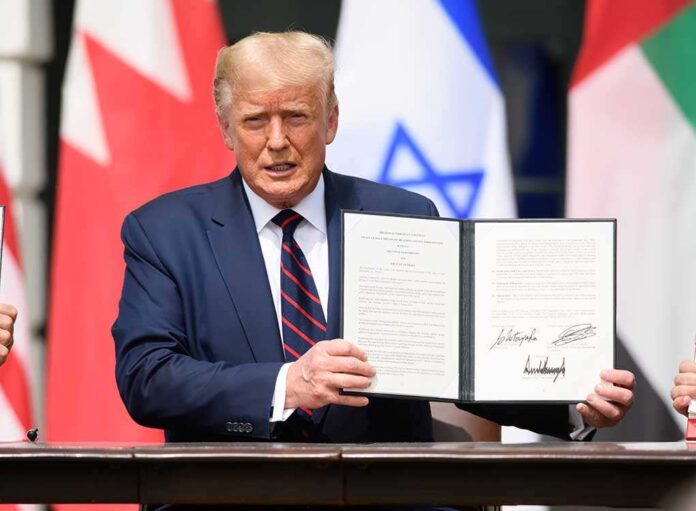
In December 2025, President Donald Trump signed an executive order declaring fentanyl a “weapon of mass destruction” (WMD). This unprecedented move reclassifies the synthetic opioid crisis as a national security issue rather than merely a public health or criminal justice problem. Trump claims that fentanyl’s deadly impact parallels that of chemical weapons, stating that “no bomb does what this is doing.” His order mandates federal agencies to treat illicit fentanyl as a WMD threat, emphasizing military and intelligence efforts to combat its proliferation.
This decision has sparked significant debate. Critics argue that there is no evidence of fentanyl being used as a weapon by terrorist organizations or militaries. Experts like Jonathan Caulkins from Carnegie Mellon University have pointed out that while fentanyl is indeed deadly, its impact remains predominantly within the realm of public health through overdose deaths, rather than as a tool for mass terror attacks.
Historical Context of Fentanyl and WMD Rhetoric
Fentanyl, a synthetic opioid developed in the 1960s, has become central to the North American opioid crisis due to its extreme potency. Its misuse in illicit drug markets has led to a dramatic rise in overdose deaths. Traditionally, WMDs refer to nuclear, biological, chemical, and radiological weapons designed for mass casualties, not substances like fentanyl. However, Trump’s designation aligns with his administration’s militarized anti-drug operations and rhetoric framing foreign actors as adversaries weaponizing fentanyl against Americans.
Historically, the U.S. opioid crisis evolved from prescription opioids to heroin, and now primarily involves illicitly manufactured fentanyl. Trump’s policy shifts towards militarization, however, are seen as a continuation of broader foreign and security policy strategies, reminiscent of past administrations’ use of WMD rhetoric to justify extensive military and security measures.
Criticism and Support
Reactions to the executive order have been mixed. While some support the tough stance as a necessary response to the opioid crisis, public health experts warn that such framing could divert resources away from essential treatment and harm reduction programs. The order’s emphasis on security over public health is seen by some as political posturing rather than a substantive policy shift.
Regina LaBelle, a former White House drug policy adviser, criticized the declaration as more about appearing proactive than implementing effective solutions. The administration’s concurrent cuts to addiction treatment programs further complicate perceptions of its commitment to addressing the crisis comprehensively.
Potential Consequences and Future Directions
The WMD designation of fentanyl could potentially justify expanded surveillance and military operations, particularly in regions linked to drug trafficking like Latin America. Trump’s framing could also increase diplomatic pressure on countries perceived as fentanyl sources, leading to possible sanctions or other coercive actions.
In the long term, this redefinition of WMD could dilute its specific meaning, potentially applying extraordinary measures to a wider array of issues. The move could cement a security-centric approach to the opioid crisis, with implications for both domestic policy and international relations. As the debate continues, the effectiveness and consequences of this policy shift remain to be seen.
Sources:
Truthout: Trump Designates Fentanyl as a Weapon of Mass Destruction in Escalation
STAT News: Trump Declares Fentanyl a Terrorist Weapon, Experts Question