patriotnewsdaily.com — A welfare check turned into a deadly gunfight, a county-wide manhunt, and a $10,000 question about how quickly narratives harden before the evidence is public.
Story Snapshot
- Deputies responding to a welfare check in Carroll County, Virginia were shot; one was killed, one injured [1].
- Authorities launched a manhunt for a named suspect, Michael Puckett, and warned the public he was armed and extremely dangerous [2].
- Media reports describe an “ambush,” but the available source does not yet prove intent or premeditation [1].
- A $10,000 reward and a flood of alerts accelerated the search while key case evidence remains withheld [2].
What Happened And What We Actually Know
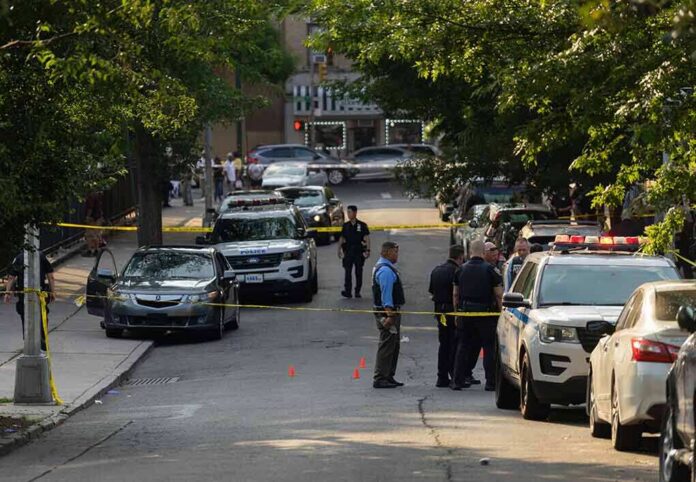
Carroll County deputies arrived for a welfare check and came under fire, leaving one deputy dead and another wounded, according to contemporaneous local reporting [1]. Law enforcement named Michael Puckett as the suspect being sought during the manhunt and told the public he should be considered armed and extremely dangerous [2]. The core facts are stark: a deputy lost his life in the line of duty, a colleague survived, and a community shifted overnight from routine policing to an urgent search for a killer [1].
The report that triggered the public alarm focused on operational urgency—who to look for, where to call, and how to stay safe—while foundational evidentiary pieces remained sealed or unreleased during the active search [1]. The sparse early record does not include the sheriff’s office incident report, dispatcher audio, body-worn camera footage, or a sworn affidavit attributing shots fired to a specific weapon at a specific time. The result is a narrow window into a complex, lethal encounter [1].
The “Ambush” Label And Why Precision Matters
Reporters and posts amplify the word “ambush,” but the provided source does not yet establish intent or premeditation as a matter of evidence or law [1]. That label carries weight with jurors, judges, and the public. Precision matters because intent separates degrees of homicide and shapes charging decisions and penalties. Until investigators release body-camera angles, ballistic trajectories, and radio logs, the best-supported public statement is more limited: a shooting erupted during a welfare check, with fatal consequences [1].
Caution does not minimize the horror faced by deputies who were attacked while serving their community. It respects both the fallen and the rule of law. American conservative values hold two ideas at once: back the blue with no hesitation, and demand careful facts before branding intent. The system cannot protect officers on the street if it abandons evidentiary rigor in the courtroom. Getting the language right now helps prosecutors later.
How Manhunts Shape Public Perception
Active manhunts push agencies to warn fast, mobilize resources, and withhold tactical details that could tip off a fugitive. That’s good policing in the field, but it produces an information vacuum that media fills with what is available—official bulletins and urgent descriptors [1]. A named suspect and “armed and dangerous” alerts prompt vigilance, but repetition can calcify into presumption of guilt before a judge sees a single exhibit. The balance between speed and completeness is never clean in the first 48 hours [2].
#OfficerDown RIP 🕯️
Virginia deputy killed in line-of-duty shooting remembered as 'devoted husband, loving father'
Sheriff Kevin Kemp identified Deputy Logan Utt as the Carroll County deputy killed Friday night. A manhunt continues for suspect Michael Puckett, with a $10,000… pic.twitter.com/LRhyYrXYHe— BreakinNewz (@BreakinNewz01) May 31, 2026
Judging the strength of early claims requires asking simple, disciplined questions. Where is the incident report? What does the computer-aided dispatch timeline show between arrival and shots fired? Which body-camera feeds captured first contact? Where do the casings, bullet strikes, and autopsy findings place the shooter relative to the deputies? Those answers turn a grim narrative into a prosecutable case—and guard against error if the story evolves.
What Accountability Looks Like After The Arrest
Public trust benefits when agencies release sequenced evidence after operational risks subside: incident report, dispatcher and radio audio, synchronized body-camera video, and a redacted probable-cause affidavit. Ballistic analysis tying weapon to wounds, and trajectory diagrams that corroborate officer statements, move the conversation from assertion to verification. If prosecutors charge capital murder of a law enforcement officer, the evidentiary bar will be high; early precision strengthens later justice, not the other way around.
Communities that honor fallen officers can also insist on due process without contradiction. Supporting law enforcement means giving deputies better radios, more realistic training for welfare checks that turn volatile, and prosecutors a clean evidentiary chain to secure convictions. It also means resisting the social-media reflex to fill gaps with confident claims the record has not yet earned. The badge deserves both loyalty and the truth, established step by step.
Where This Story Goes Next
The manhunt frame will give way to court filings, forensic summaries, and sworn testimony. Expect a tighter narrative once investigators publish timelines and the medical examiner’s report. If the evidence matches the initial claims, the case will move swiftly and firmly. If gaps appear, public scrutiny will increase. Either way, the path to justice runs through transparent facts, not impressions. A deputy’s death demands nothing less—from the press, from prosecutors, and from us [1][2].
Sources:
[1] Web – Manhunt underway for suspect after Virginia deputy killed, another …
[2] Web – Virginia deputy killed, second injured in shooting – WTVR.com
© patriotnewsdaily.com 2026. All rights reserved.