
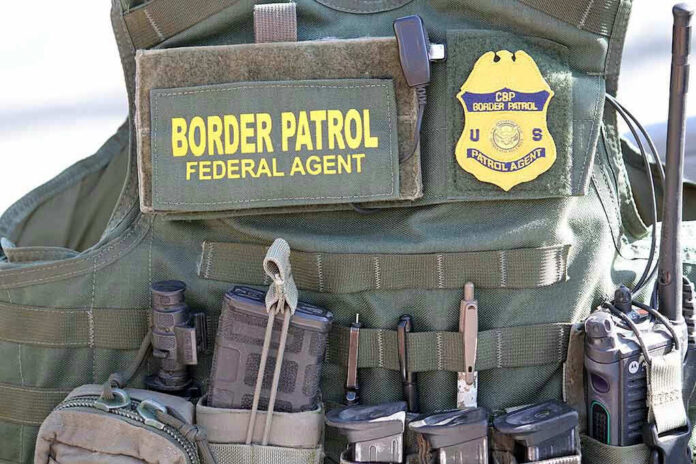
Shots fired at Border Patrol agents in Chicago mark a startling escalation in urban violence against federal law enforcement.
Story Snapshot
- Suspect in a black Jeep targets federal agents during immigration enforcement.
- Incident highlights rising violence against federal authorities in urban areas.
- Department of Homeland Security links the attack to a broader trend.
- Police and federal agencies are on a manhunt for the suspect.
Unprecedented Urban Assault
On November 8, 2025, a seemingly routine immigration enforcement operation by U.S. Border Patrol agents in Chicago’s Little Village neighborhood took a dangerous turn. An unidentified male suspect opened fire on the agents from a black Jeep, then sped away, leaving behind chaos and unanswered questions. This incident, set against the bustling backdrop of Chicago, underscores a troubling uptick in hostility toward federal law enforcement efforts in major urban centers.
Beyond the gunfire, the agents faced additional aggression from agitators who hurled a paint can and bricks at their vehicles. Such acts of violence and obstruction are not isolated events but part of a growing pattern that the Department of Homeland Security (DHS) has been monitoring. The DHS has expressed grave concern over the trend, noting that federal agents are increasingly becoming targets in cities far from traditional border zones.
The Context of Conflict
Federal immigration operations have gradually extended beyond border regions, reaching into the heart of sanctuary cities like Chicago. This expansion has heightened tensions in communities with significant immigrant populations, such as Little Village. The neighborhood, known for its vibrant Latino community, has often been the epicenter of resistance against federal immigration enforcement, making it a flashpoint for confrontations.
Recent months have seen a series of violent episodes targeting federal agents. While incidents involving physical altercations and vandalism have been reported, the use of firearms marks a dangerous escalation. These developments raise critical questions about the safety protocols for federal agents operating in urban environments and the potential ramifications for community relations.
Stakeholders and Motivations
The principal stakeholders in this unfolding situation include the U.S. Border Patrol, DHS, and the Chicago Police Department. Each plays a pivotal role in managing the immediate aftermath and ensuring the safety of both agents and the public. The motivations behind the suspect’s actions remain unclear, though they could stem from resistance to federal enforcement efforts or a broader protest against immigration policies.
Local community members also find themselves at a crossroads. While some may sympathize with federal enforcement objectives, others view the presence of Border Patrol agents as an unwelcome intrusion. This division underscores the complex power dynamics between federal agencies tasked with upholding immigration laws and local communities striving to protect their members.
Current Developments and Implications
As the manhunt for the suspect continues, the incident’s short-term impact is palpable. There is an increased law enforcement presence in Little Village, with tensions simmering between agents and residents. The long-term implications could be more profound, potentially reshaping policies on federal operations in urban areas and necessitating enhanced security measures for agents.
The broader economic, social, and political impacts are significant. The local economy could suffer if heightened security measures deter business activity. Socially, the incident may exacerbate mistrust between the community and law enforcement, while politically, it could fuel debates over the role of federal authorities in sanctuary cities.