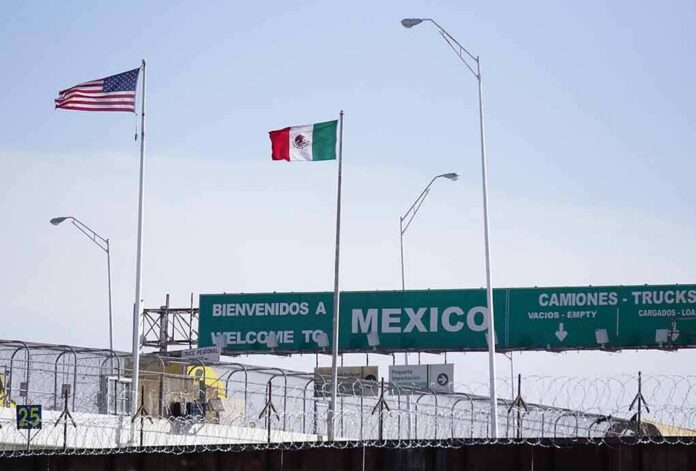
The United States suspended government operations and travel in Mexicali for one day after receiving threat information, and told Americans to avoid government buildings and be ready to shelter if trouble starts.
Story Snapshot
- U.S. government paused activities and official travel in Mexicali on August 25.
- Americans were told to avoid government buildings and prepare to shelter if needed.
- The alert cites a potential threat but withholds details for safety and intelligence reasons.
- This fits a pattern of short, targeted U.S. security advisories across Mexico.
What The U.S. Alert Actually Said
The U.S. Embassy and Consulates in Mexico issued a security alert for Mexicali that paused U.S. government work and official travel there on August 25. The alert aimed to reduce risk tied to threat information. It advised U.S. citizens to avoid government buildings, watch local updates, and seek shelter if an incident occurs. The notice did not list specific actors or methods, a common practice when officials protect sources and tactics while acting on credible inputs.
The U.S. Consulate in Tijuana amplified the guidance on social media, repeating the key steps: avoid government buildings and prepare to shelter if events unfold. That redundancy matters. Travelers often see posts before formal notices, and speed can save lives. Clear, simple actions reduce panic: get inside, stay put, follow official updates, check in with family when safe. The message stuck to that playbook and kept the time window narrow to match the assessed risk.
Why Mexicali And Why Now
Mexicali sits on a major border crossing with heavy trade and daily travel. Threats ripple fast across such hubs. The Overseas Security Advisory Council, which supports private-sector security planning, has flagged the Mexicali Valley before for risks linked to rival criminal groups, prompting U.S. government travel limits in that zone. That history sets the stage for fast, focused alerts when new signals appear, even if public details remain tight for operational security.
The State Department’s Mexico advisory already tells Americans to exercise increased caution nationwide due to terrorism, crime, and kidnapping. That baseline frames local steps like this one-day suspension as a sharper tool pulled from the same kit. When signals spike in one city, the mission can pause movement, narrow the geography, and give clear do-and-don’t-do guidance. The goal is simple: cut exposure during a potential window of risk and restart normal activity once the window closes.
How To Read A One-Day Suspension
Short suspensions usually mean officials saw enough to act but not enough to publish sensitive specifics. That balance is normal, not alarming. Intelligence can be time-bound, and naming it can burn a source or tip off bad actors. A conservative reading of the facts says the mission used its standard risk ladder: alert the public, restrict official movement, and give plain steps to stay safe. That aligns with common sense and with past alerts across Mexico.
The US Embassy in Mexico has issued an urgent security alert for Mexicali near the US border, citing a potential threat and urging travelers to exercise caution.https://t.co/OZ1nREMpzy
— The Traveler (@thetraveler_org) August 25, 2026
Americans on the ground should treat these alerts like wildfire warnings. You do not need to know which tree sparked the smoke to move out of the brush. The actions are the point: avoid obvious targets like government buildings, keep travel plans flexible, and stick to known routes during daylight when activity resumes. Share itineraries with someone you trust. Keep your phone charged and your documents ready. Simple habits beat bravado every time.
What Happens Next
Most alerts of this kind fade as quickly as they arrive. U.S. missions lift restrictions when the immediate window passes or when security partners stabilize the area. Travelers should watch the embassy’s alert page for updates and check with hotels and local contacts. If you must travel soon, build margin into your plan. Rebook a morning drive instead of a late-night run. Common-sense choices stack the odds in your favor without adding drama.
Sources:
insiderpaper.com, heraldodemexico.com.mx, osac.gov, travel.state.gov, infobae.com, kyma.com
© patriotnewsdaily.com 2026. All rights reserved.