California erased 548 death sentences with one signature, and the shockwaves have not stopped.
Story Snapshot
- Governor Gavin Newsom commuted every California death sentence to life without parole.
- The move affects 548 prisoners, the largest death row in the Western Hemisphere.
- Victims’ families split: some call it betrayal; others say it ends years of appeals.
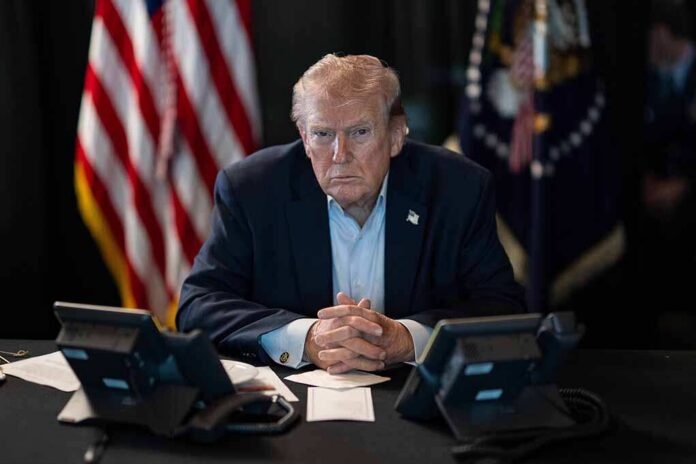
- President Trump blasted the policy as a disaster for justice, elevating the national fight.
What Newsom Did And Why It Matters
Governor Gavin Newsom announced he would commute all California death sentences to life without parole. His open letter put the number at 548 and framed the action as an exercise of constitutional clemency authority. He argued that state-sanctioned killing conflicts with California’s values and that the system is too flawed to carry out executions fairly. This converts every death sentence to life without parole, removing the punishment juries imposed after trials and years of appeals.
The scale alone sets a record. Reporters called it the largest mass commutation of death sentences in United States history. California’s death row has long been an outlier in size and stagnation. The state last executed someone in 2006, and a 2019 moratorium froze the process. Newsom’s order goes beyond a pause; it ends the death penalty’s use for these 548 cases and cements life without parole as the maximum sentence in practice.
The Moral Rationale Versus Jury Verdicts
Newsom’s case rests on morality and fairness claims. He said the death penalty is immoral, unfairly applied, and a costly failure that weakens justice. He described a personal “rocking chair test,” asking if he could live with the choice later in life. That is a clear moral stand. But it also replaces the moral judgment of hundreds of juries, many judges, and years of review with one executive act. Supporters see conscience; critics see an override of democratic verdicts.
American conservative values weigh process, consent, and the equal worth of victims. Juries represent the community’s voice. When a governor sets aside the sentence for every case at once, it signals that individual facts matter less than a broad policy view. That may suit a debate about legislation. It clashes with the principle that punishment should track the crime and the evidence in each case, not just a governor’s philosophy of punishment.
Victims’ Families: One Wound, Two Views
The human stakes are not abstract. Some families say the commutations betray their loved ones and erase the only measure of justice they were promised. Others say endless appeals reopen wounds and that life without parole brings finality sooner. CBS coverage captured that split plainly, with one mother calling the action a betrayal and another relative calling it freeing because it ends the litigation grind. Both reactions are real. Neither cancels the other.
Trump rips Newsom for halting death penalty: ‘Disaster for justice‘
👇https://t.co/WcccKo4AuP— Stoned Ranger (@Stoned_Ranger_) November 15, 2026
Policy must wrestle with that divide. If the state asks families to endure decades of appeals in capital cases, it owes them a path that honors the verdict, moves faster, and treats their voice as more than a talking point. If the state abandons executions, it owes them candor that the sentence they fought for will never occur. Either way, truth and timelines matter. California offered a clean break, but it did not cure the years of delay that fueled much of the pain.
Lawful Power, Contested Wisdom
Newsom cites constitutional clemency power. That authority exists. Reports add that the California Supreme Court may review cases when a prisoner has multiple felony convictions, which could narrow or delay the reach in some instances. The legal footing may hold, but wisdom is a separate question. Sweeping clemency turns a long policy argument into a one-day reality. That speed thrills advocates and stuns those who expected case-by-case justice.
Supporters point to cost and dysfunction, often with striking numbers. They argue that money used to prop up capital punishment could support victims’ services and crime prevention. Critics counter that budgets do not settle questions of moral desert. Dollars can be wasted or saved; a murdered life does not return. On prudence, the cost claims invite reform. On justice, many see a bright line: some crimes merit the ultimate penalty, or the words “most serious” lose their weight.
The National Stakes After Trump’s Rebuke
President Trump condemned the move as a disaster for justice, and that critique hits a nerve. The commutations did not free killers, but they did erase the sentence that juries chose in the worst murders. That is the core tension. If moral doubt about capital punishment rules the day, voters should demand honest repeal in law, not mass clemency by letter. If the state keeps the death penalty on the books, it should fund it, fix it, and carry out lawful sentences with certainty and speed.
Sources:
mediaite.com, gov.ca.gov, afp.com, sfchronicle.com, nwaonline.com, upi.com
© patriotnewsdaily.com 2026. All rights reserved.