One gunshot on a packed bridge turned rush hour into a homicide case that still splits the city.
Story Snapshot
- A near-collision on the George Washington Bridge preceded the fatal shot, investigators said.
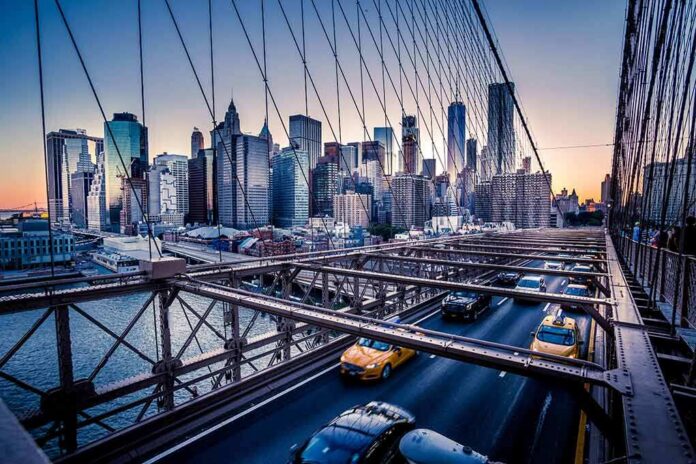
- The incident happened on the upper level around 7:18 p.m. as traffic moved into New Jersey.
- Detectives linked a black Range Rover to retired detective Victor Romero through surveillance video.
- A grand jury later indicted Romero for second-degree murder after initial charges shifted.
What Happened On The Bridge
Investigators said two vehicles nearly crashed just before a gun was fired on the George Washington Bridge. The encounter unfolded on the upper level during the evening rush, when a small error can turn catastrophic fast. Police sources said a bullet entered through the rear of the victim’s car and struck the driver, who then crashed and was found unresponsive. That detail suggests a shot from behind or the side, not head-on, and it drives the legal fight that followed.
Detectives quickly pulled surveillance images and tracked a black Range Rover seen at the scene. They linked that vehicle to Victor Romero, a retired New York Police Department detective, and he was later charged. Both ABC News and the New York Daily News reported the video trail, which gave police a documented path from scene to suspect, not just a tip or rumor. The victim, Koran Irvine, worked for Con Edison and left behind a wife and two children.
Charges, Shifts, And What Prosecutors Chose
Authorities arrested Romero and brought initial counts, then a Manhattan grand jury indicted him for second-degree murder days later. That move raised the stakes and showed prosecutors believed the facts could fit intent or extreme recklessness rather than a split-second mistake. ABC News reported the city’s early framing as a likely road-rage case, and the police kept saying the final call would rest on the full investigation, not an early theory. A trial will test those claims against evidence.
Prosecutors also previewed what they say the video shows. According to their account, Romero followed Irvine aggressively, pulled alongside him, and fired through the rear passenger window. If jurors accept that sequence, it undercuts any idea of an immediate life-or-death threat that left no choice. The defense has the right to challenge how that video is read, the timing, and what angles or context the public has not yet seen.
The Hard Questions The Evidence Must Answer
The record so far does not show that Irvine had a weapon, tried to ram again, or made a second attack at the instant the gun fired. Police sources and reporting describe the near-collision and the bullet path through the rear glass. That fits a shot at a car moving away or parallel, which makes a self-defense claim harder. It does not make it impossible. New York law centers on whether a person reasonably believed deadly force was about to be used against them, unless that person was the initial aggressor.
Two facts can be true at once. Driving can turn dangerous in a blink. Shooting on a crowded bridge adds grave risk to everyone around. Common sense and conservative values demand responsibility in both spaces: control your car and control your gun. When the state upgrades charges, as it did here, it signals confidence in its proof, not a final verdict. One sentence still applies: an indictment is not a conviction. The case will hinge on timing, distance, and why a trigger was pulled.
Why This Case Hits A Nerve Right Now
Road-rage shootings have surged nationwide over the past decade. An analysis found that people shot in road-rage incidents jumped from 92 in 2014 to 481 in 2023, with more than 3,000 shot over that span. That backdrop matters here. The public sees a fatal shot after a near-collision and thinks, there it is again: anger, a gun, and a family left shattered. That lens shapes how jurors and voters hear every claim and counter-claim once the courtroom lights go on.
The Irvine family’s grief has been direct and public. Relatives called the act intentional and reckless and said the video is clear. Their voices speak to loss, not law, but they carry moral weight with a jury pool. The defense will press the core legal test: who started the danger, what the shooter believed at the moment, and what a reasonable person would have done instead. The verdict will tell us whose story matched the facts beyond a reasonable doubt.
Sources:
nypost.com, lohud.com, abcnews.com, freep.com, nydailynews.com, newsday.com, cbsnews.com, nycourts.gov
© patriotnewsdaily.com 2026. All rights reserved.