The Army just practiced leaping across Pacific islands to fight, refuel, and strike before an enemy can blink.
Story Highlights
- Joint Pacific Multinational Readiness Center 27-01 drilled jungle and island combat with allies.
- Soldiers executed long-range maritime air assaults and rapid rocket raids from the sea.
- Partner forces trained side by side to move, shoot, and communicate in harsh terrain.
- The exercise tested real tactics that matter in a fast Pacific fight.
What JPMRC 27-01 Actually Did
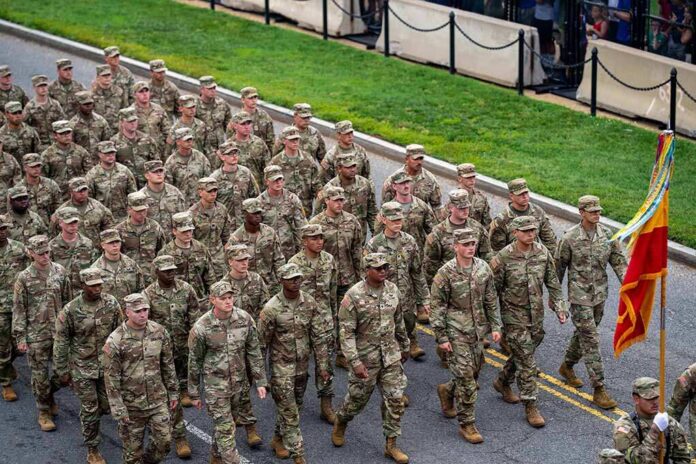
The Army ran a live training rotation built for jungles and islands. Units from the United States teamed with forces from South Korea, Singapore, France, New Zealand, Japan, and the Maldives. They rehearsed how to find, fix, and finish targets while heat, mud, and saltwater punished every mistake. Planners built scenarios across the Hawaiian Islands to mirror archipelagic combat. The stated goal was crystal clear: refine joint skills and dominate tight terrain that hides threats and breaks gear.
Commanders stressed speed and reach. One mission sent helicopters over open ocean to land infantry on contested ground. Crews planned around sea spray, winds, and the short windows that small islands allow. Troops secured a beachhead, pushed inland through broken jungle, then linked fires, drones, and radios under a thick canopy. That chain held well enough to prove the core idea: get combat power onto the right island, at the right time, with enough punch to matter.
Why Island Fires and Fast Logistics Matter
Artillery teams practiced High Mobility Artillery Rocket System raids that start on a runway and end with rockets on target minutes later. Soldiers loaded the launchers, flew them forward with Air Force partners, fired, then moved before counter-fire could find them. That rapid in-and-out profile matches the Pacific problem set, where survival depends on speed, cover, and joint timing that clicks like a watch. The drill showed how small teams can deliver big effects across water.
Terrain forced adaptation. Some ranges were lava rock and steep slopes. Others were dense, wet jungle that kills batteries and blurs maps. Leaders blended old-school fieldcraft with new sensors and better command-and-control kits. Partner forces from the region brought local know-how on heat injuries, navigation, and small-boat moves between tight coves. That mix of skills made communications cleaner and movements quieter, which is what wins the close fight under a canopy.
Allies, Interoperability, And The Real Payoff
Interoperability stood at the center. The Army’s description highlighted common plans, shared radios, and rehearsed procedures, all built to help units talk, move, and resupply under pressure. That approach reflects a long pattern in Indo-Pacific training, where exercises build readiness, test plans, and show resolve to friends and rivals alike. Congress’s nonpartisan researchers describe those aims as the core of regional drills that knit coalitions into a combat team.
Elements of a partner mobile brigade practiced fieldcraft and mobility with U.S. troops in the same tough zones. The training tied their command systems into American networks and forced both sides to solve problems fast. That forge is where trust grows. From a conservative view, this is common sense deterrence: practice hard with capable friends now, so you never have to fight alone later. The Indo-Pacific rewards that discipline, and it punishes wishful thinking.
What This Signals For A Pacific Fight
The rotation framed a blunt message: the United States aims to move forces across blue water, seize key ground, and chain fires from land in hours, not days. Long-range maritime air assault, rocket raids, and tight partner drills all serve that end. The Army placed these reps in places that mimic real combat weather, distance, and fatigue. That design turns training from a show into a stress test that exposes weak seams before a crisis hits.
Exercises never answer every question. They do set habits, reveal gaps, and build muscle memory that carries into the first hours of a conflict. The Army built JPMRC 27-01 to do exactly that in jungle and island terrain. The core facts line up: allies trained together, over-the-water assaults launched, rapid fires hit, and units learned how to survive and strike on small pieces of ground that can shape a big war. That is the kind of preparation that buys peace by raising the price of aggression.
Sources:
realcleardefense.com, army.mil, defence-blog.com, rand.org
© patriotnewsdaily.com 2026. All rights reserved.