The flight turned back because a passenger’s text said he would hijack the plane and crash a row.
Story Snapshot
- A flight attendant reported a passenger’s hijack-and-crash text midair.
- The pilots returned United Flight 1681 to Las Vegas; it landed safely.
- Police arrested a 25-year-old on terrorism-related threat allegations.
- The man told police it was drunken “banter,” not a real threat.
A text with hijack-and-crash language triggered a swift return
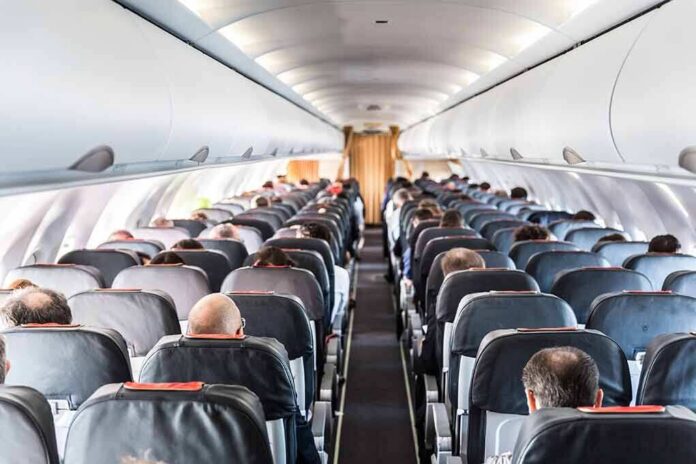
United Flight 1681 left Las Vegas for Newark and did not get far. A flight attendant reported seeing a passenger’s phone display a message that said he planned to hijack the aircraft. Air traffic audio and police accounts say the cockpit was alerted right away. The pilots turned the jet back toward Harry Reid International Airport. The aircraft landed without incident. Police met the plane at the gate and began an investigation on arrival.
Police identified the passenger as 25-year-old Dante Milne. Reports quote the message as, “I’m gonna hijack this b—- and crash ur row only”. Officers arrested Milne on suspicion of making a threat or giving false information about an act of terrorism. He was booked into the Clark County Detention Center after the safe return of the flight. Authorities said the flight carried about 150 passengers and six crew, a full cabin with little margin for doubt.
Cabin report, cockpit decision, and the risk math at altitude
The crew treated the text as an immediate security incident. Federal guidance and common sense both point one way when a threat mentions taking the plane and crashing it. Pilots have a short list of tools: isolate, inform, and divert. Turning around protects everyone on board and those below. That choice also gives law enforcement a controlled setting to sort facts. In this case, the decision kept the cabin calm and avoided an onboard confrontation.
The direct quote matters. Ambiguous chatter may buy a warning. A promise to hijack and crash closes that door. Aviation security builds around intent and capability, but you rarely know both in flight. Procedures lean on the signal you do have. A named method, a target, or violent language pushes the crew to act. These rules exist because seconds count at 35,000 feet. You cannot rewind a missed threat once a bad actor moves.
The arrest, the “banter” defense, and what the law punishes
After landing, Milne told police he had been drinking. He described the text as poorly worded banter with a coworker. He said he did not intend to hijack, crash the plane, or harm anyone. He apologized, according to reports citing the arrest record. That explanation may matter in court, but it does not erase what the crew saw or the impact on the flight. The legal process will decide intent and any penalty.
Police booked Milne on allegations linked to terrorism threats, the standard bucket for grave in-flight statements that cause diversions, searches, and delays. Prosecutors often focus on the act of making a threat that prompts emergency action, not just on whether a weapon existed. Courts have sent people to prison for false bomb or hijack threats onboard because these claims trigger costly and dangerous chain reactions. A cabin is not a comedy club; words carry operational weight.
Why decisive action protects lives and liberty
Air crews face an old problem with new tools: they must judge risk with thin data. The safest path is to act fast on clear threat language and then let investigators test the story on the ground. International civil aviation guidance defines a credible threat by what is said and what could happen, not by perfect proof in the moment. That is why the pilots’ turnback and the quick arrest track with conservative, results-first safety practice and plain common sense.
Hijack text sends a jet back. ✈️
United 1681 Las Vegas → Newark turned back after a flight attendant saw a passenger's hijack texts. Cockpit locked; 156 aboard, no injuries. A 25-year-old was arrested on a threat charge.Crew locks the cockpit first — right call? YES or NO? pic.twitter.com/eYRcVABPK6
— Aviation Daily Report (@AviationDailyRP) October 28, 2026
Some reports differed on aircraft type or exact headcount, which happens in early coverage. The core is not messy. A flight attendant reported a hijack-and-crash text. The cockpit returned to base. The plane landed safely. Police arrested a named passenger. He now says it was a joke. The justice system will sort motive and punishment. The crew already did its job: treat a direct threat as real until you can prove it is not.
Sources:
foxnews.com, fox5vegas.com, casino.org, yahoo.com, cbs12.com, pubsonline.informs.org
© patriotnewsdaily.com 2026. All rights reserved.