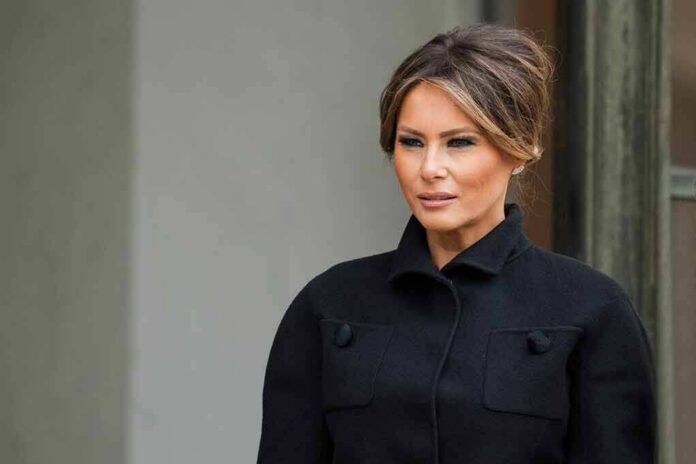
A Republican congressman just said the First Lady of the United States could lose her citizenship and get deported if she lied on her immigration paperwork, and he refused to walk it back.
Quick Take
- Representative Randy Fine told NewsNation that anyone who lied to become a citizen, including Melania Trump and Elon Musk, “should be denaturalized and should be deported.”
- Fine called for reviewing every naturalized citizen back to 1990, not just one political target.
- He admitted he does not know the details of either Melania Trump’s or Musk’s immigration history.
- A Senate hearing this year exposed deep disagreement over how far denaturalization law can legally stretch.
What The Congressman Actually Said
Representative Randy Fine did not flinch when a NewsNation host pressed him on the First Lady. He said the rule should apply to “anyone” who lied on citizenship paperwork, no exceptions for fame or political loyalty. When asked directly about Melania Trump and Elon Musk, he refused to carve out an exemption, insisting the standard has to be universal or it means nothing at all.
Fine went further than a single name. He said the country should “go back to 1990” and “reevaluate everyone” who became a citizen since then. He framed the original target of his comments, a naturalized elected official, as merely “the first” case, not the last. That is a sweeping ask, covering millions of files and decades of paperwork, with no public blueprint for how it would actually get done.
A Catch: He Admits He Doesn’t Know The Facts
Here is the honest complication. Fine acknowledged he has no specific knowledge of wrongdoing by Melania Trump or Elon Musk. He was reportedly unaware of any actual allegations against either of them. That matters. A principle applied evenly to everyone is not the same thing as evidence that a particular person broke the law. Conservatives who value due process should want both pieces in place before any name gets attached to a headline.
The Legal Standard Nobody Can Skip
Denaturalization is not a new invention. Federal law has long allowed the government to strip citizenship obtained through fraud or concealment, but courts require proof that is “clear, unequivocal, and convincing,” leaving no real doubt. Legal scholar Peter Spiro told the Senate that citizenship, once granted, should not be revoked without the “clearest sort of justification,” and that the fraud has to connect directly to the original application, not something that happened years later.
That distinction is the whole ballgame. If someone fudged a form in 1995, that is a naturalization issue. If someone commits a crime in 2024, that is a criminal matter handled by criminal courts, according to testimony at the hearing. Blurring those two categories risks turning citizenship into a conditional status that can be yanked over conduct that has nothing to do with how it was earned.
The Senate Fight Behind The Headlines
This whole debate landed in the Senate Judiciary Committee months before Fine’s comments went viral. Senator Eric Schmitt chaired a hearing titled “Protecting American Citizenship,” arguing citizenship is “sacred” and pushing legislation to expand denaturalization authority. Senator Mazie Hirono fired back that the approach would make naturalized Americans into “second-class citizens,” especially if it reaches unrelated conduct like welfare fraud committed a decade after naturalization.
Both sides agree fraud in the naturalization process is a real problem worth punishing. The argument is over scope. Justice Department data shows denaturalization filings have jumped sharply, with the current administration moving against nearly 90 people since 2025, compared to just 24 cases under the Biden administration’s four years. A faster pace is not automatically a problem, but a bigger engine demands tighter rules, not looser ones, especially once elected officials start floating specific names in television interviews.
Why This Story Will Not Go Away Quietly
Fine’s comments land in a moment when denaturalization is already surging and politically charged. Treating the First Lady and a presidential advisor as hypothetical test cases guarantees attention, fair or not. The bigger question conservatives should be asking is whether Congress wants a narrow fraud remedy with real evidentiary guardrails, or a broad enforcement tool vulnerable to becoming a political weapon against whoever is unpopular that week.
Sources:
mediaite.com, schmitt.senate.gov, rawstory.com, themirror.com, judiciary.senate.gov, congress.gov
© patriotnewsdaily.com 2026. All rights reserved.