One American president just told Iran’s rulers that if they start shooting their own people, the United States might start shooting back.
Story Snapshot
- Nationwide Iranian protests over economic misery and political repression have become the regime’s most serious internal challenge in years.
- Security forces are using live fire, mass arrests, and near-total internet blackouts as the death toll climbs into triple digits.
- Donald Trump has warned Tehran that if it “starts killing people,” the US will “hit them very, very hard where it hurts” and “stands ready to help.”
- Tehran’s leaders brand protesters as “terrorists,” blame the US, and signal even harsher crackdowns ahead.
How Iran Reached Another Boiling Point
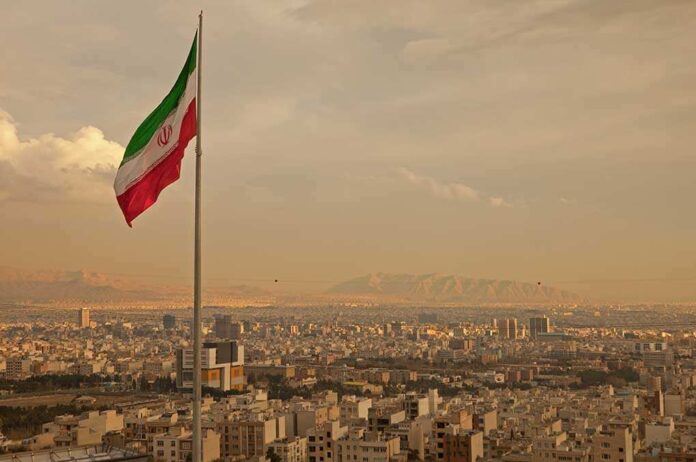
Iran’s latest unrest did not appear out of thin air; it erupted from years of economic punishment and political contempt colliding in the streets. Late December demonstrations over inflation, joblessness, and collapsing living standards quickly spread from Tehran to provincial cities, tapping into a familiar well of anger at corruption and clerical rule. Crowds that once demanded reform now chant directly against Supreme Leader Ali Khamenei and the Islamic Republic itself, reflecting protest fatigue that has hardened into open rejection.
The streets filling again reflects a pattern: 1999, 2009, 2017–18, 2019, 2022—all warnings the system dismissed as foreign plots. Each time the regime survived, but at a cost: more blood, less legitimacy, and a younger generation that has learned not only how to mobilize, but how to openly defy the entire ideological project. That history matters, because it shapes both how Iranians protest and how the state now responds—with maximum fear of where this could end.
Crackdown In The Dark
Iran’s rulers are treating this wave as an existential threat, not a policy complaint. Security forces have fired live rounds and pellet guns at close range, with rights groups outside the country documenting at least 116 deaths so far, including children. Reports describe protesters shot in the head and chest, governor’s offices attacked, and regime symbols burned as crowds press into city centers despite the danger. This is not a controlled protest culture; it is a grinding test of who tires first—those with batons or those with nothing left to lose.
To reduce witnesses, authorities flipped the internet off like a light switch. A near-total blackout now blankets major cities, severing Iranians from each other and from the outside world. American conservatives recognize that tactic immediately: when a regime fears its own people more than foreign armies, it attacks information first. Under that darkness, the judiciary chief promises “decisive, maximum” punishment “without any legal leniency,” while the attorney general brands even helpers of protesters as “enemies of God,” a label that can end at the gallows.
Trump’s Red Line: Kill Protesters, Risk American Firepower
Against this backdrop, Donald Trump has drawn a line no previous US president publicly laid down over Iran’s internal repression. He says Iran is “in big trouble,” that people are “taking over certain cities,” and that if the regime “starts killing people like they have in the past, we will get involved.” He then raises the stakes: America would “hit them very, very hard where it hurts” and “start shooting too” if Tehran turns the streets into a slaughterhouse.
Trump later clarifies that “that doesn’t mean boots on the ground,” but it still signals potential strikes or other military action tied directly to human-rights abuses, not nuclear sites or tanker attacks. That linkage breaks with the old bipartisan script of “we support the Iranian people” but stop at statements and sanctions. Whether one agrees with intervention or not, the logic reflects core conservative instincts: evil regimes respond to credible force, not polite communiqués; deterrence fails when threats never leave the teleprompter.
Tehran’s Counterattack: Blame America, Crush Harder
Khamenei’s response follows a familiar authoritarian playbook: deny agency to his own citizens and cast them as puppets of Washington. He accuses protesters of “ruining their own streets… to please the president of the United States” and claims Trump’s hands are “stained with the blood of Iranians.” Security organs now label demonstrators “terrorists,” a word chosen precisely because it justifies unlimited force and the death penalty within the regime’s legal and religious narrative.
This framing does double duty. Domestically, it tells wavering elites and security personnel that any sympathy for protesters equals treason. Internationally, it recycles the story that unrest is a US-Israeli plot, not a reaction to decades of misrule. From a common-sense conservative perspective, that line collapses under basic reality testing. Ordinary Iranians do not risk sniper fire and torture because a foreign president tweets; they do it because their own government has made normal life impossible and peaceful reform implausible.
What Comes Next If Neither Side Blinks
On the ground, protesters still lack weapons, but they wield something regimes fear more in the long run: legitimacy and numbers. They have gridlocked streets, attacked local government offices, and openly called for exiled Crown Prince Reza Pahlavi to return, a symbolic rejection of the Islamic Republic’s founding story. Pahlavi, for his part, urges people to “prepare to seize and hold city centers” and says he is “preparing to return,” trying to ride the wave while the regime brands his supporters as foreign-backed seditionists.
Abroad, US policy remains mostly rhetorical for now. Trump and Secretary of State Marco Rubio declare that “the United States supports the brave people of Iran” and that “the USA stands ready to help!!!,” but there is no open evidence of strikes or covert aid linked explicitly to these protests yet. Strategists warn that such threats increase the risk of miscalculation: Tehran might assume American escalation is inevitable and overreact, while Washington may underestimate how far a cornered theocracy will go to stay in power.
Sources:
Council on Foreign Relations analysis
Institute for the Study of War update